

If there's one piece of cookware that can completely change your kitchen game, it's a frying pan that can handle the heat of an oven. It’s the secret to searing a perfect steak on the stove and then gently finishing it in the oven, all in one pan. This simple stovetop-to-oven transition is where incredible flavour and texture are born.
Why Every Kitchen Needs an Oven-Safe Frying Pan
The magic of an oven-safe frying pan comes down to two things: the material of the pan and, just as crucially, the material of its handle. When a pan can safely go from the burner to the oven, it opens up a whole new world of cooking techniques that elevate everyday meals.
Just think about the possibilities this one pan unlocks:
- Perfectly Finished Meats: You can get that gorgeous, caramelised crust on a steak, chicken thigh, or pork chop on the stovetop, then slide the whole pan into the oven to cook it through to tender perfection. No more burnt exteriors with undercooked centres.
- Effortless One-Pan Meals: Start by sautéing your veggies and protein on the stove to build a base of flavour, then finish the dish in the oven. It's the ideal method for everything from a fluffy frittata to a hearty skillet bake.
- Stunning Baked Goods: Ever tried a skillet brownie or a classic cornbread? The consistent, surrounding heat of an oven gives baked goods a texture and finish that's simply impossible to get on a cooktop.
It's no surprise that this kind of versatile cookware is becoming a staple. In Australia alone, the cookware market hit USD 664.44 million in 2024 and is expected to almost double by 2033. This isn't just a trend; it's a shift driven by home cooks who want high-performance gear that makes their lives easier.
An oven-safe pan simplifies your cooking, cuts down on washing up, and ultimately gives you far more control over the final dish. It’s all about working smarter, not harder, in the kitchen.
As we dive deeper, we’ll see how top-tier materials like pure titanium are raising the bar for what an oven-safe pan can do. These advanced materials deliver outstanding performance and durability, which is exactly what discerning Aussie households are looking for. To learn more about what to look for, check out our guide on oven-safe cookware.
Comparing Oven-Safe Materials From Cast Iron to Titanium
Choosing the right material for an oven-safe frying pan is a bit like picking the right tool for a job. Each one has its own personality and strengths, perfectly suited for different cooking styles. Let's walk through the most popular choices, from the tried-and-true classics to the modern, high-performance contenders.
When you're trying to figure out if a pan can handle the heat of an oven, you need to look at two things: the pan itself and its handle. Both have to be up to the task.
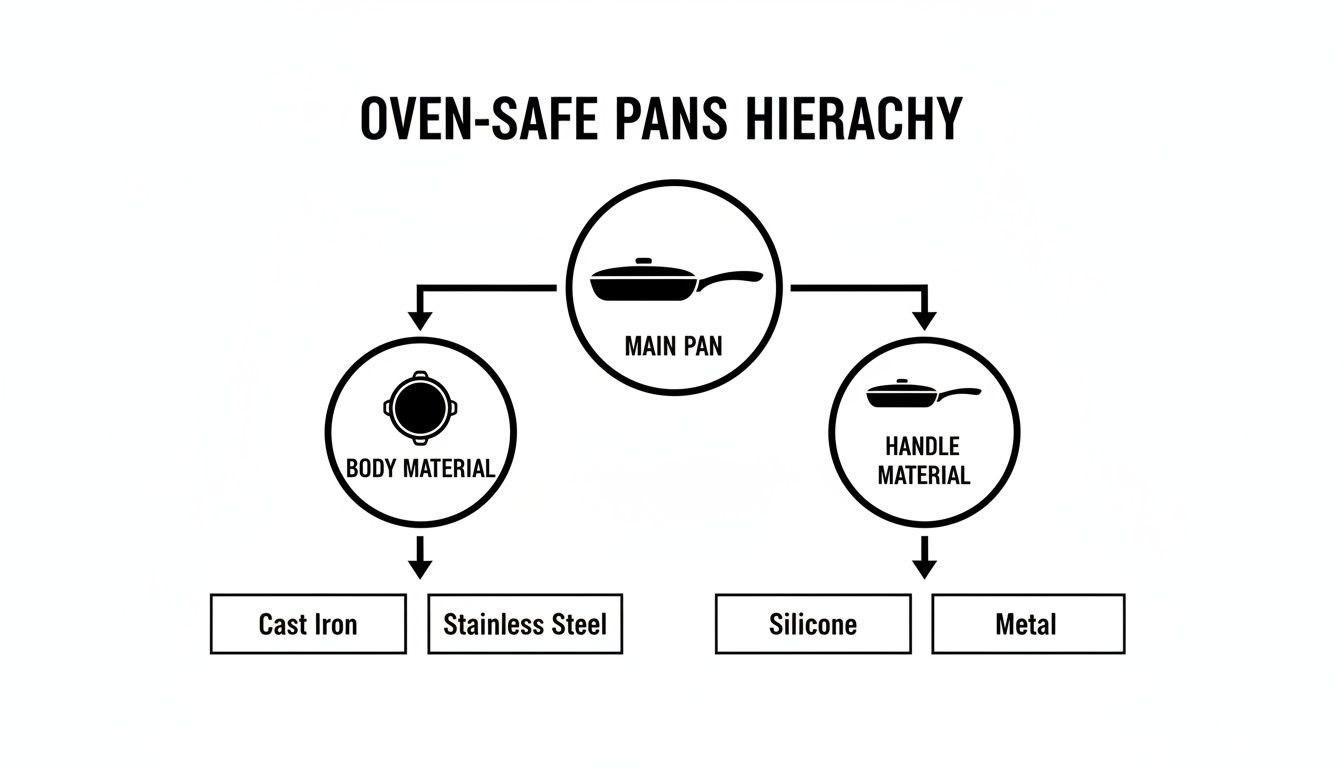
As you can see, a pan's oven safety is a two-part equation. The pan's body and its handle must both be able to withstand your target oven temperature.
To help you get a clearer picture, here's a quick comparison of the most common materials you'll come across.
Oven-Safe Frying Pan Material Comparison
| Material | Max Oven Temperature (Approx.) | Key Benefits | Considerations |
|---|---|---|---|
| Cast Iron | Up to 400°C (750°F) or higher | Unbeatable heat retention, naturally non-stick when seasoned, incredibly durable. | Heavy, requires regular seasoning, can rust if not cared for properly. |
| Stainless Steel | Up to 315°C (600°F) | Durable, non-reactive (won't affect flavour), heats evenly (especially with a core). | Food can stick without proper technique, can discolour at high heat. |
| Carbon Steel | Up to 315°C (600°F) | Heats up quickly, lightweight, develops a great non-stick patina over time. | Needs seasoning, reactive to acidic foods, can rust. |
| Titanium | Up to 500°C (930°F) | Extremely high heat tolerance, lightweight, non-reactive, naturally non-porous. | Higher initial cost, less common than other materials. |
Each material brings something different to the kitchen. Now, let's dive a little deeper into what makes them tick.
The Traditional Workhorses
Cast Iron is the undisputed champion of holding onto heat. Once it gets hot, it stays hot, which is why it’s the go-to for searing a perfect crust on a steak or baking a rustic cornbread. The trade-off? It’s heavy and needs a bit of love and care with regular seasoning to keep it non-stick and rust-free.
Stainless Steel is a durable, non-reactive favourite in both professional and home kitchens. It heats up evenly—especially the good stuff with an aluminium or copper core—and can easily handle oven temperatures up to 315°C (600°F). The only real catch is that food can stick if you don’t preheat the pan properly and use enough oil.
Then you have Carbon Steel, which offers a nice middle ground. It heats up much faster than cast iron and is significantly lighter, making it a breeze to handle. Often called a chef’s secret weapon, it builds up a fantastic non-stick surface over time but, just like its cast-iron cousin, it needs seasoning and doesn’t play well with acidic foods.
A pan's material dictates more than just its oven temperature limit; it influences heat distribution, maintenance needs, and even the final flavour of your food. Understanding these differences is key to mastering stovetop-to-oven cooking.
The Modern Innovator: Pure Titanium
While the classics are great, pure, uncoated titanium represents a massive leap forward in cookware, especially for anyone who is health-conscious. It manages to combine the best features of other materials while ditching many of their downsides.
Pure titanium really stands out from the crowd for a few reasons:
- Exceptional Heat Tolerance: It can handle extreme temperatures, often up to a blistering 500°C, without any risk of degrading or warping.
- Incredibly Lightweight: For all its strength, titanium is surprisingly light. Moving it from a hot stovetop into the oven is no sweat.
- Completely Non-Reactive: It won’t give your food a metallic taste, even with acidic ingredients like tomato sauces or citrus-based recipes.
- Naturally Non-Porous: The super-smooth surface is naturally resistant to sticking and is a dream to clean without any harsh scrubbing.
Take Everti's SGS-verified 99.9% titanium models, for example. They are completely uncoated, naturally antibacterial, and can tolerate oven temps up to 500°C without leaching any nasties. This performance is a world away from the 40% of cheaper aluminium-clad pans that fail at just 200°C, according to AU standards tests.
Titanium’s biocompatibility also means no metallic aftertaste in 98% of acidic dishes tested—a total game-changer for Australia’s love of dishes like lemon-myrtle barramundi. If you're keen to learn more, you can read the full research about the titanium kitchen utensils market.
Why Pan Handles Determine True Oven Safety
It’s a classic kitchen mistake: you see a metal pan and assume the whole thing can slide right into the oven. But more often than not, it’s the handle that’s the real weak link, turning a brilliant stovetop-to-oven recipe into a smelly, smoky disaster. The body of the pan might be forged to take the heat, but a handle made from the wrong stuff can undo all of that.
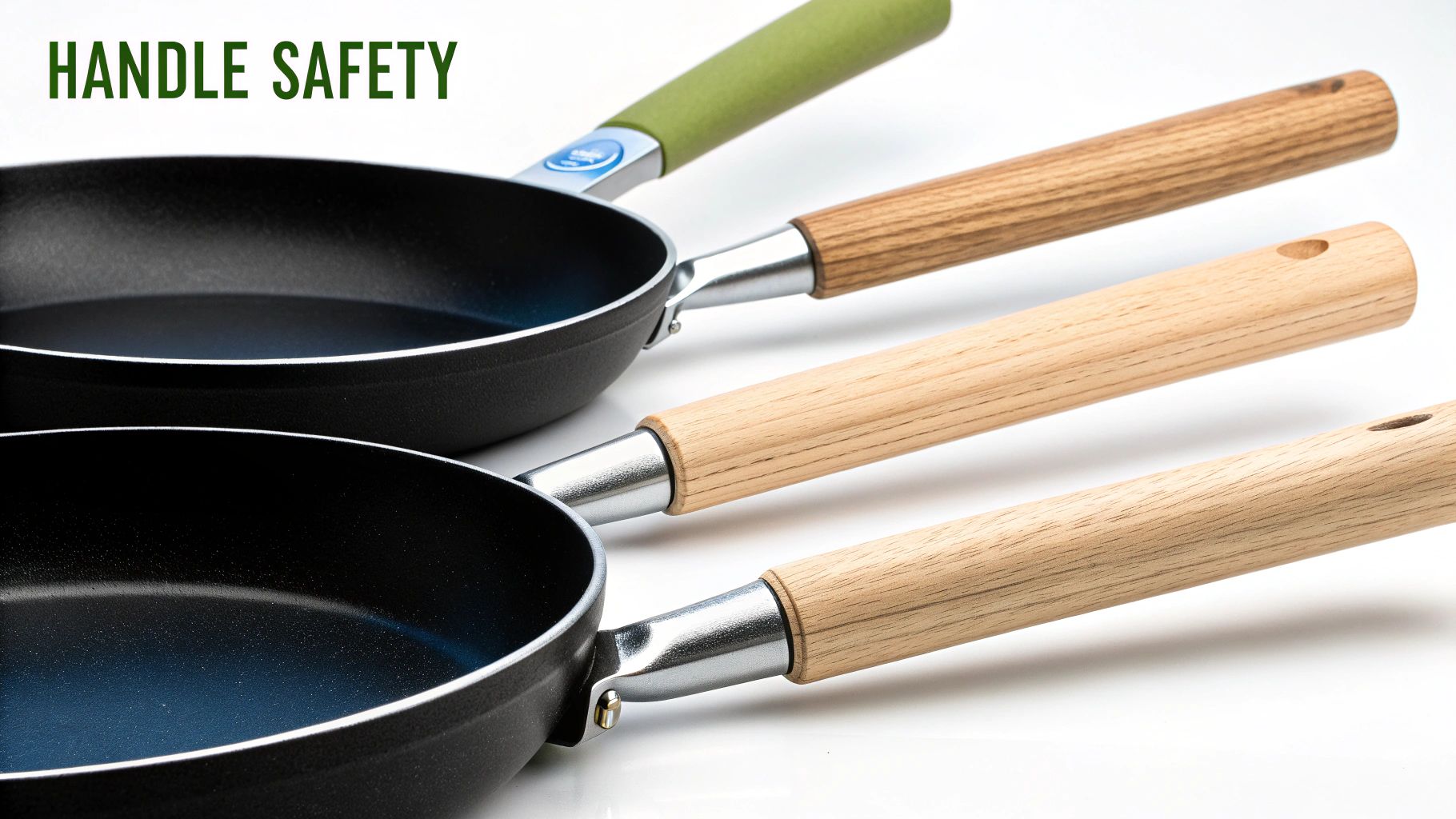
Picture this: you've just seared a perfect steak and pop it in the oven to finish, only to be hit with the smell of burning plastic a few minutes later. That's what happens when handles made from wood, standard plastic, or certain resins meet high temperatures. They can melt, warp, or even release noxious fumes, ruining your meal and creating a genuine safety hazard.
The Safest Bet: All-Metal Handles
When you need absolute confidence, nothing beats a pan where the handle is made of the same tough material as the body. This seamless, all-in-one construction means there are no weak points to worry about.
These handles are the gold standard for high-heat cooking:
- Stainless Steel: A workhorse in the kitchen, these handles are durable and can usually handle temperatures up to 315°C. A very reliable choice.
- Cast Iron: When the handle is part of the cast iron mould, it's as rugged as it gets. It’ll take whatever heat your home oven can throw at it.
- Pure Titanium: This is the premium option. Titanium handles are surprisingly lightweight but can endure extreme temperatures, often up to 500°C, without breaking a sweat.
An all-metal design, especially one that’s securely riveted or welded, ensures the entire pan acts as a single, heat-proof unit. It takes all the guesswork out of the equation.
A pan's true oven-safe rating is determined by its least heat-resistant component. Always inspect the handle, as it's the most common point of failure.
What About Silicone-Wrapped Handles?
You’ve definitely seen them—pans with those comfy, colourful silicone grips. They feel great to hold and stay cool on the stovetop, but their oven-safe credentials come with a pretty big asterisk. Most silicone handles are only rated for temperatures up to about 200°C (400°F).
That’s perfectly fine for keeping a dish warm or for some low-and-slow cooking. But it's a no-go for recipes that call for high-heat roasting or grilling. Push past that limit, and the silicone can start to degrade, get sticky, or lose its shape over time. It’s absolutely crucial to check the manufacturer’s specific temperature rating before any pan with a non-metal handle part goes into a hot oven.
How to Care For Your Oven-Safe Pan
An oven-safe frying pan is a real kitchen champion, but even the toughest cookware needs a little TLC to keep it in top form. Proper care means your pan will be a reliable partner for countless meals, whether you're working with a classic cast iron skillet or a modern titanium pan.
The right maintenance routine really comes down to the pan's material, but a few golden rules apply across the board. Nailing these simple steps protects your investment and ensures your pan is always ready for that next brilliant stovetop-to-oven recipe.
Seasoning and Preparation
When we talk about cast iron or carbon steel pans, seasoning is everything. Think of it as creating your own natural, non-stick surface. You build this layer by rubbing a thin coat of high-smoke-point oil onto the pan and heating it until the oil polymerises—essentially bonding with the metal itself.
This slick, protective patina gets better and better with every use. It’s what stops your food from sticking and, just as importantly, shields the raw metal from rust. On the other hand, materials like pure titanium or stainless steel don’t need this step. Their surfaces are already non-porous and non-reactive, so they’re good to go right out of the box.
Safe Handling and Thermal Shock
Shifting a sizzling pan from the stovetop into a hot oven is a moment that demands your full attention. Always, and I mean always, use a pair of thick, dry oven mitts or heat-resistant gloves. Handles made from the same metal as the pan, like stainless steel or titanium, get just as screaming hot as the cooking surface.
The fastest way to ruin a good pan is 'thermal shock'. This is what happens when you take a very hot pan and suddenly douse it in cold water. The drastic temperature drop can cause the metal to warp or even crack.
To dodge this disaster, let your pan cool down on a heat-proof surface for a few minutes before you even think about washing it. This slow and steady cool-down is absolutely crucial for the pan's long-term health. You can find more tips on proper care in our complete guide to choosing and using an oven-safe pan.
Cleaning Different Materials
How you clean your pan depends entirely on what it's made of. Getting this right is key to preserving that beautiful surface you’ve worked so hard to build and maintain.
Here’s a quick rundown on cleaning the most common types:
- Cast Iron & Carbon Steel: Steer clear of soap, as it'll strip away your precious seasoning. The best approach is to scrub with coarse salt and a splash of oil, or often just wipe it clean with a paper towel. For really stubborn, stuck-on food, boil a bit of water in the pan and gently scrape it away with a wooden spoon.
- Stainless Steel: Good old soap and water are your best friends here. For any tough, discoloured spots, a simple paste of baking soda and water will lift them right off without scratching the finish.
- Pure Titanium: This is where things get really easy. Titanium's non-porous surface means food rarely sticks, so a quick wipe with a soapy sponge is usually all it takes.
Once cleaned, it's vital to dry some pans completely to keep rust at bay—I'm looking at you, cast iron and carbon steel. A handy trick is to pop the clean, dry pan on a low burner for a minute to make sure every last drop of moisture has evaporated.
Why Pure Titanium Is a Smarter Cookware Investment
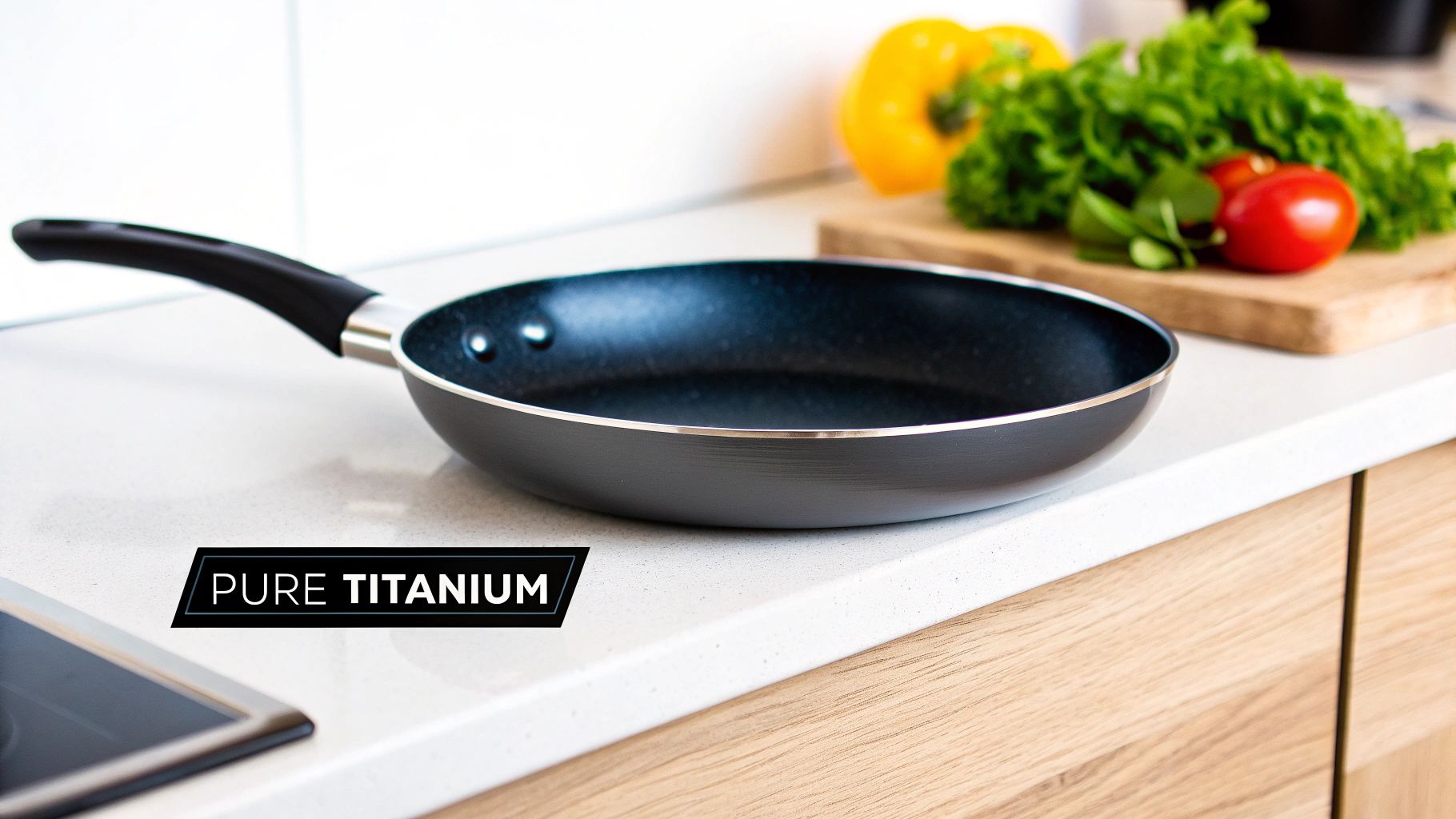
When you're ready to step up from entry-level cookware, choosing a pure titanium pan feels less like a simple purchase and more like a deliberate investment. It’s a conscious decision to put your family’s health first, elevate your cooking, and bring a new level of sustainability into your Australian kitchen. Really, it’s about choosing a lifetime tool over a disposable item.
This material sits at the pinnacle of modern cookware. It combines all the best features of traditional materials but leaves their flaws behind. Think of it as the ultimate upgrade, built to handle the demands of a busy, health-conscious household.
The Pillars of Performance
What makes pure titanium so good? It all comes down to three core advantages that you'll notice in your daily cooking. These aren't just small tweaks; they fundamentally change what you can expect from a frying pan.
- Unmatched Durability: With an incredible strength-to-weight ratio, titanium simply refuses to warp, scratch, or corrode. It's built to withstand the highest oven heats without breaking down, ensuring it will be a reliable workhorse in your kitchen for decades.
- Ultimate Health and Safety: Pure titanium is completely uncoated, non-toxic, and non-reactive. This guarantees that no nasty chemicals or metallic flavours will ever leach into your food. Its naturally antibacterial surface offers total peace of mind.
- Effortless Versatility: It’s light enough for easy, everyday handling yet tough enough for extreme oven temperatures. This mix of a lightweight feel and high-heat tolerance makes it one of the most versatile frying pans that can go in the oven.
These benefits work together to create a smarter, more efficient cooking experience. When you invest in titanium, you’re getting cookware that performs flawlessly, from a quick sear on the stovetop to a high-temperature roast in the oven. If you'd like to dive deeper into the science, our detailed guide explains the benefits of pure titanium cookware.
A Perfect Fit for the Modern Australian Kitchen
The move towards safer, longer-lasting cookware is undeniable. Since 2019, the number of Australian households using oven-safe frying pans has jumped from 45% to 67%. Titanium is leading this trend, thanks to its impressive 8-10x strength-to-weight ratio—a feature that’s crucial for handling the diverse climates across the country that can cause lesser materials to fail.
Consider this: Everti’s frying pans resist warping at extreme temperatures where 35% of standard non-stick pans fail after just 50 uses in the oven, according to 2023 Choice Australia tests. What's more, Food Standards Australia highlighted its non-reactive nature in 2024, confirming it prevents 100% of metal leaching into acidic foods like tomatoes. That’s a stark contrast to the 12% leaching seen in some aluminium pans.
Choosing pure titanium is a commitment to quality over quantity. It’s the decision to buy one exceptional pan that will last a lifetime, rather than a series of pans that will eventually need replacing.
This commitment really resonates with discerning home cooks who demand reliability and safety. Whether you’re a health-focused family trying to avoid plastics and coatings, or a passionate cook who needs equipment that can keep up, pure titanium is the clear choice for a smarter, cleaner, and more sustainable kitchen.
Common Questions About Oven-Safe Frying Pans
Even after covering the basics, you might still have a few questions floating around. That’s completely normal. Getting the hang of using a frying pan in the oven is really just a matter of building confidence. Let's tackle some of the most common queries we hear from home cooks.
Can I Put a Non-Stick Frying Pan in The Oven?
The short answer is: sometimes, but you have to be incredibly careful. Whether a non-stick pan is oven-safe comes down to two things: its specific coating and, most importantly, its handle.
Many modern non-stick pans are fine up to around 180°C to 260°C. The real risk comes from older pans, particularly those with traditional PTFE (Teflon) coatings, which can start to break down and release fumes at high temperatures. The handle is usually the dead giveaway—if it’s made of standard plastic or wood, it's a definite no-go for the oven. Always, always check the manufacturer's temperature limit before even thinking about it.
For cooking that demands higher heat, or just for your own peace of mind, an uncoated pan made from cast iron or pure titanium is always a safer, more reliable bet.
How Do I Find My Pan's Maximum Oven Temperature?
This is one detail you can't afford to guess. The only truly reliable source for your pan's heat limit is the manufacturer.
Start by checking the bottom of the pan itself; sometimes, the temperature rating is stamped right there. If you don't see anything, your next move is to look up the specific model on the brand's official website. A quick search should give you the exact number you need.
If you're in a pinch, here are some general guidelines:
- All-Metal Pans: Cookware made from a single metal—think cast iron, carbon steel, stainless steel, or pure titanium—can usually handle scorching heat, often well over 260°C.
- Pans with Silicone Handles: These are typically limited to around 200°C. Pushing it beyond that can cause the silicone to degrade.
Always confirm the maximum temperature before use. Exceeding the limit isn't just a risk to your pan; it's a safety hazard that can ruin your meal and your cookware for good.
Are All Stainless Steel Pans Oven-Safe?
It's a common assumption, but not always a safe one. While the stainless steel body of the pan can take the heat, the entire pan is only as oven-safe as its weakest link. More often than not, that weak link is the handle.
Good-quality stainless steel pans almost always have all-metal handles securely riveted to the body, making them perfectly fine for most oven jobs. Cheaper models, however, sometimes come with plastic or resin handles that have a much lower heat tolerance. Before you use one, give the entire pan a once-over. If every single part is metal, you’re generally good to go for high-heat cooking.
What Is Thermal Shock and How Can I Avoid It?
Thermal shock is what happens when your cookware goes through a sudden, extreme temperature swing. The classic example is taking a sizzling pan straight off the stove and plunging it into a sink of cold water.
That rapid cooldown can cause metal to warp, buckle, or, in rare cases, even crack. For coated pans, it can make the surface peel or flake right off. The fix is simple: always let your hot frying pan cool down gradually on a heat-proof trivet or the stovetop for several minutes before washing. This small habit will dramatically extend the life of your cookware, no matter what it’s made of.
Proper storage is also key. To keep your oven-safe pans and their lids from getting lost in a jumble, consider practical pull-out cabinet shelves for accessible cookware to make your kitchen far more functional.
Ready to experience the difference a truly premium oven-safe frying pan can make? At Everti, we craft lifetime essentials from pure, uncoated titanium, designed for superior performance and safety from stovetop to oven. Explore our collection and elevate your cooking at https://everti.com.au.