

When it comes to great cookware, a truly good ceramic pan is the result of two things working in perfect harmony: a tough, non-toxic ceramic coating and a high-performance core.
It helps to think of it like a professional chef's knife. The razor-sharp blade is the pan's slick, PFOA-free coating, while the perfectly weighted handle is the pan's body, which controls how well it heats up and holds that heat. Get both right, and you've got a pan that offers incredible heat control, lasts for years, and gives you that effortless non-stick glide you’re looking for.
What Separates Good Ceramic Pans from the Rest
When you’re on the hunt for a genuinely good ceramic pan, you need to look past the fancy colours. The real magic happens in the synergy between its surface and its soul—that is, its coating and its core construction.
You simply can't have one without the other. A beautifully slick non-stick coating on a flimsy base that warps the first time you use high heat is a recipe for disaster. Likewise, a super-sturdy, heavy-gauge pan with a cheap, thin ceramic coating will lose its non-stick magic in no time. Real quality is all about getting that balance just right, so your investment pays off every single time you cook.
The Two Pillars of Quality Cookware
The coating is what everyone notices first. It's the slick surface that lets your morning eggs slide right onto the plate. The best ceramic coatings are made from a sand derivative and are completely free from nasty chemicals like PFOA, PTFE, lead, and cadmium. This makes them a much safer bet for health-conscious homes all over Australia.
But the pan's construction is the unsung hero. The core—usually forged aluminium or a multi-ply stainless steel—is what stops annoying hot spots from forming and makes sure your food cooks evenly from edge to edge. A thick, solid base is also essential for preventing warping, keeping the pan perfectly flat on your stovetop. You can get a better feel for how different materials work for various cooking styles in our guide to https://everti.com.au/blogs/news/ceramic-pans-australia.
This diagram neatly shows the two essential parts of a quality ceramic pan, from its non-stick coating right down to its core build.
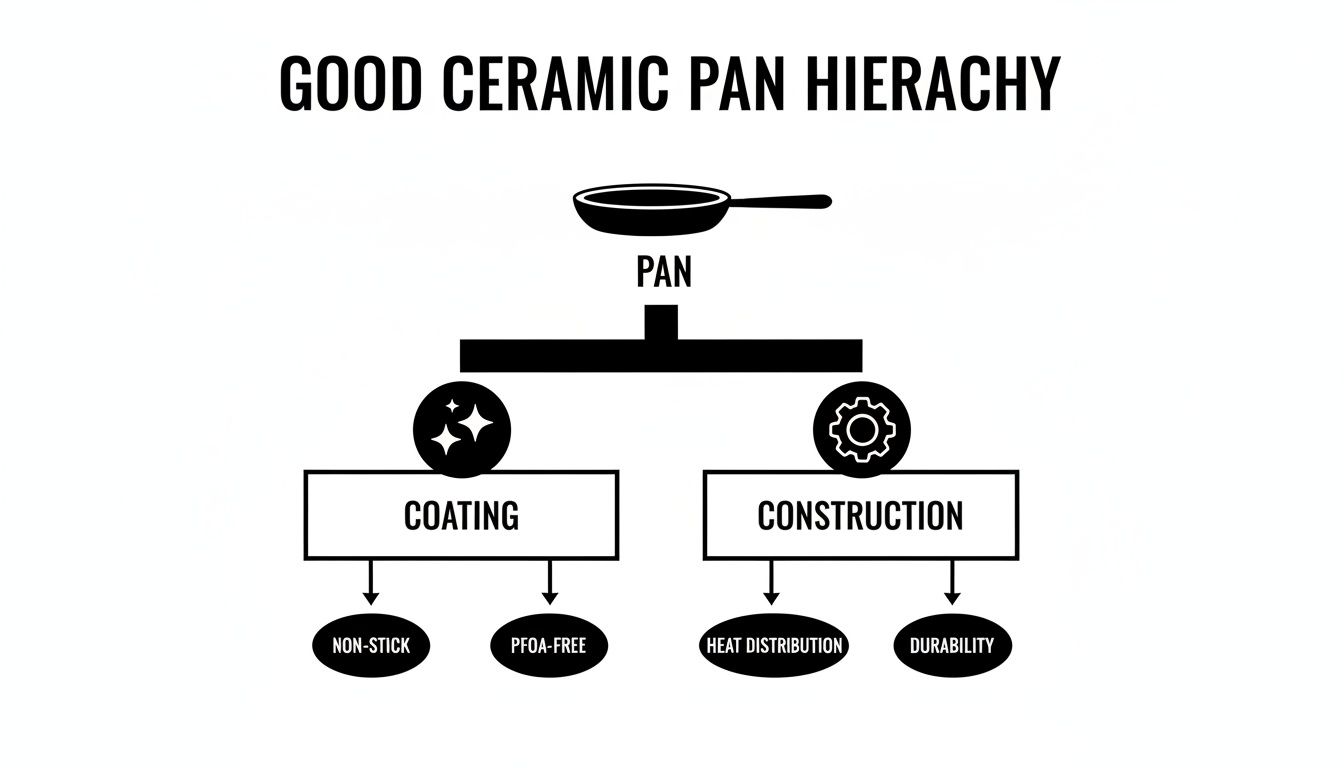
As you can see, a top-tier cooking experience really does depend on both the surface technology and the pan's physical foundation.
Here’s a quick summary of what to look for.
Hallmarks of a High-Quality Ceramic Pan
| Essential Feature | Why It Delivers a Better Cooking Experience |
|---|---|
| Multi-Layer Non-Stick Coating | Offers superior durability and non-stick release that lasts much longer than single-coat pans. |
| Heavy-Gauge Aluminium or Multi-Ply Core | Provides even heat distribution without hot spots and prevents the pan from warping over time. |
| PFOA, PTFE, & Cadmium-Free | Ensures no harmful chemicals leach into your food, giving you peace of mind with every meal. |
| Ergonomic, Cool-Touch Handle | A comfortable, securely attached handle makes maneuvering the pan safe and easy, even when it's hot. |
| Oven-Safe Construction | Adds incredible versatility, allowing you to go from searing on the stovetop to finishing in the oven. |
Remembering these key features will help you sift through the marketing noise and find a pan that truly performs.
The demand for safer, higher-performing cookware is skyrocketing. Australia's ceramic cookware market is set to grow at a huge 9.6% CAGR from a base of USD 91.08 million. This trend is driven by a massive shift in what we want in our kitchens, with over 70% of Aussies now actively looking for non-toxic, PFOA-free options. To see how different brands stack up, check out these comprehensive ceramic cookware reviews.
What Exactly Is a Ceramic Non-Stick Surface?
That slick, glassy finish on a quality ceramic pan isn’t magic—it’s just some very clever science. Unlike traditional non-stick pans that use synthetic polymers, ceramic coatings start with a surprisingly natural ingredient: sand. This sand provides the silicone, which is then transformed into a tough, non-stick surface through a technique called the sol-gel process.
You can think of the sol-gel process like making a space-age jelly. Tiny silicone particles are suspended in a liquid solution, or ‘sol’. This mixture is sprayed onto the pan’s metal body and then cured at high temperatures. As it bakes, the liquid solidifies into a hard, glass-like ‘gel’ that bonds tightly to the pan, creating that beautiful, heat-resistant cooking surface.
This approach is a world away from older non-stick technologies. It results in a strong, mineral-based surface without needing controversial chemicals like PFOA or PTFE, which were the mainstays of traditional Teflon pans. It’s a huge reason why so many health-conscious Australian families are making the change.
Single Layer vs. Reinforced Coatings
Of course, not all ceramic coatings are built the same. The biggest difference you’ll find is between a basic, single-layer coating and a more advanced, multi-layer system. Cheaper pans often have just one thin layer of this ceramic gel. It works fine at first, but it’s much more likely to scratch and will wear out a lot quicker with regular cooking.
In contrast, premium good ceramic pans are built with multiple layers. This construction method builds up strength and durability in stages:
- Primer Coat: This first layer creates a powerful bond with the pan’s aluminium or steel body.
- Mid-Coats: These extra layers add thickness and resilience, and are often reinforced with tiny particles of diamond or titanium to make them exceptionally scratch-resistant.
- Top Coat: The final, silky-smooth layer is what gives you that signature non-stick release.
This multi-layer construction is the secret to a high-quality pan’s long life. It’s what separates a pan that lasts a few months from a trusted kitchen workhorse that serves you well for years. Understanding this is key when you're trying to figure out the best non-stick surface for a frying pan for your own kitchen.
Ceramic vs. Other Materials
It’s easy to get lost in all the different cookware terms. To really get a handle on the science behind your pan, it helps to understand the difference between ceramic and stoneware.
While both are fired in a kiln, the ceramic coating on a pan is a highly engineered, non-porous surface designed specifically for non-stick cooking. This is very different from the more rustic, porous nature of traditional ceramic pottery. Knowing this helps you see past the marketing hype and focus on what really counts for performance in the kitchen.
Why Pan Construction Is Crucial for Even Cooking
A flawless ceramic coating is fantastic, but it's only half the story. The pan's body—its core construction—is the unsung hero that does the heavy lifting, turning a good pan into a great one. Think of the coating as the slick surface of a racetrack, while the pan’s body is the expertly engineered track itself, ensuring a smooth, predictable ride from start to finish.
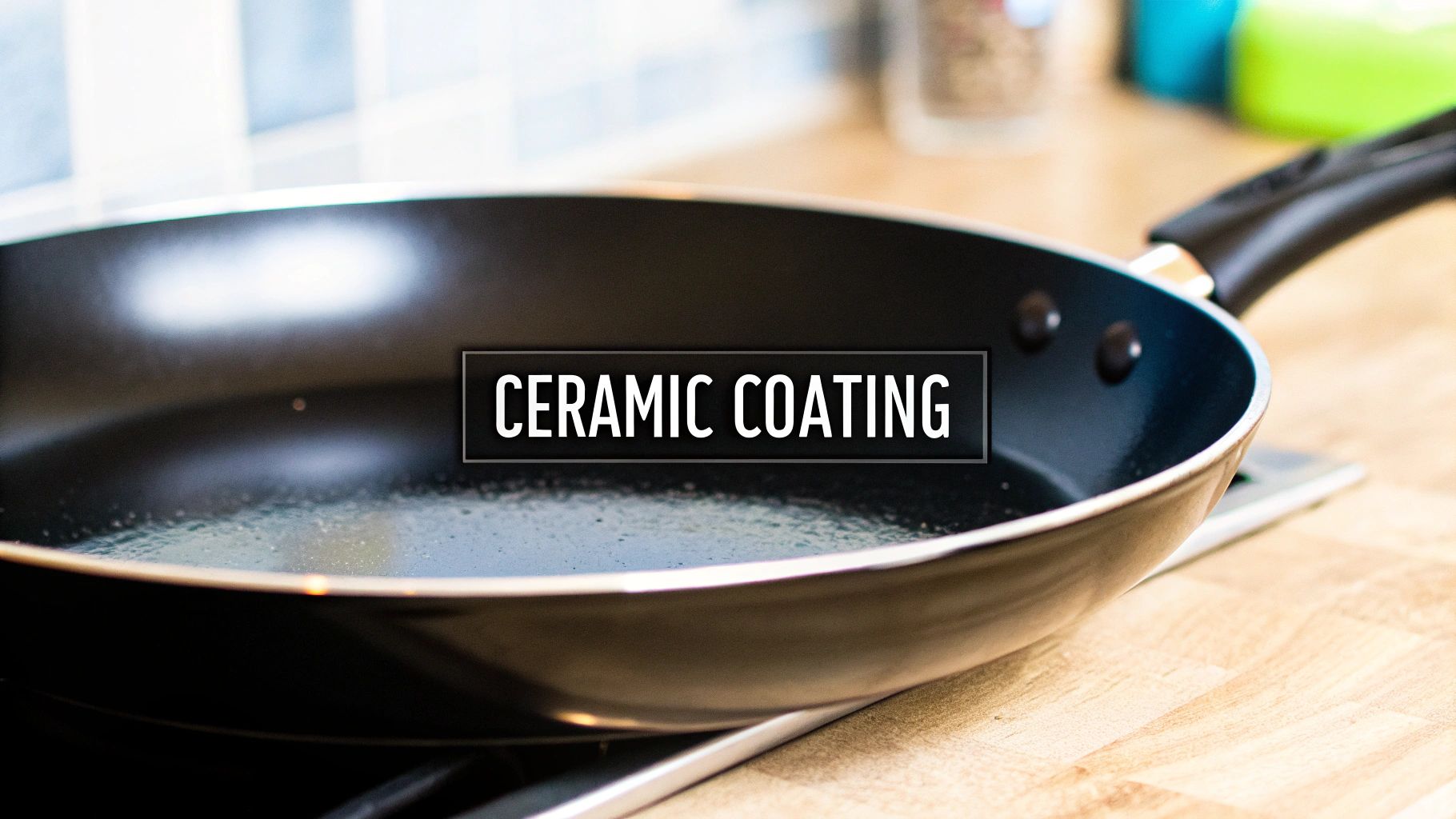
Without a solid foundation, even the best coating will fail. A thin, flimsy base will warp under heat, causing ingredients to slide into the middle while the edges scorch. That’s why getting to know the core material is so important for achieving perfectly even cooking, every single time you step up to the stove.
The Heart of the Matter: Pan Core Materials
The material at the heart of your pan dictates how it absorbs, distributes, and holds onto heat. The two most common and effective options offer different strengths, so choosing the right one often comes down to your personal cooking style.
-
Forged Aluminium: This is a popular choice for good ceramic pans for one simple reason: it’s a brilliant heat conductor. Pans made from heavy-gauge, forged aluminium heat up quickly and respond almost instantly to temperature changes, giving you precise control. It’s ideal for quick meals like omelettes or stir-fries where you need to adjust the heat on the fly.
-
Multi-Ply Stainless Steel: For anyone who loves a perfect, golden-brown sear on a steak or piece of fish, a multi-ply stainless steel core is hard to beat. These pans typically sandwich a layer of aluminium between layers of durable stainless steel. They might take a little longer to heat up, but their heat retention is far superior, providing the powerful, sustained heat needed for that professional-level sear.
The key takeaway is that a substantial core prevents frustrating hot spots—those annoying areas on a cheap pan that get much hotter than the rest, leading to burnt food. A well-constructed pan ensures your entire meal cooks at the same rate.
More Than Just Metal: Practical Design Features
Beyond the core material, a few other construction details make a huge difference in your day-to-day cooking. A thick, warp-resistant base is non-negotiable. It ensures the pan sits perfectly flat on your cooktop, which is especially critical for glass and induction hobs that need direct contact for efficient heating.
Speaking of induction, look for a pan with an induction-compatible base if you have that type of stovetop. This just means it has a magnetic steel plate bonded to its bottom so it can actually work.
Finally, don’t overlook the simple ergonomics. A comfortable, stay-cool handle that is securely riveted to the pan’s body gives you safety and control. A well-fitting lid is also a must, trapping steam and heat to cook food more efficiently. These are the practical details that truly elevate a pan from a simple tool to a trusted kitchen partner.
How to Care for Your Ceramic Pans
When you bring a set of good ceramic pans into your kitchen, you're also adopting a slightly different way of caring for your cookware. It’s a small shift, but an important one. That slick, mineral-based coating is fantastic at what it does, but it needs a gentler touch than you might be used to, especially compared to a rugged cast iron skillet. Think of it as a high-performance tool that shines with the right maintenance.
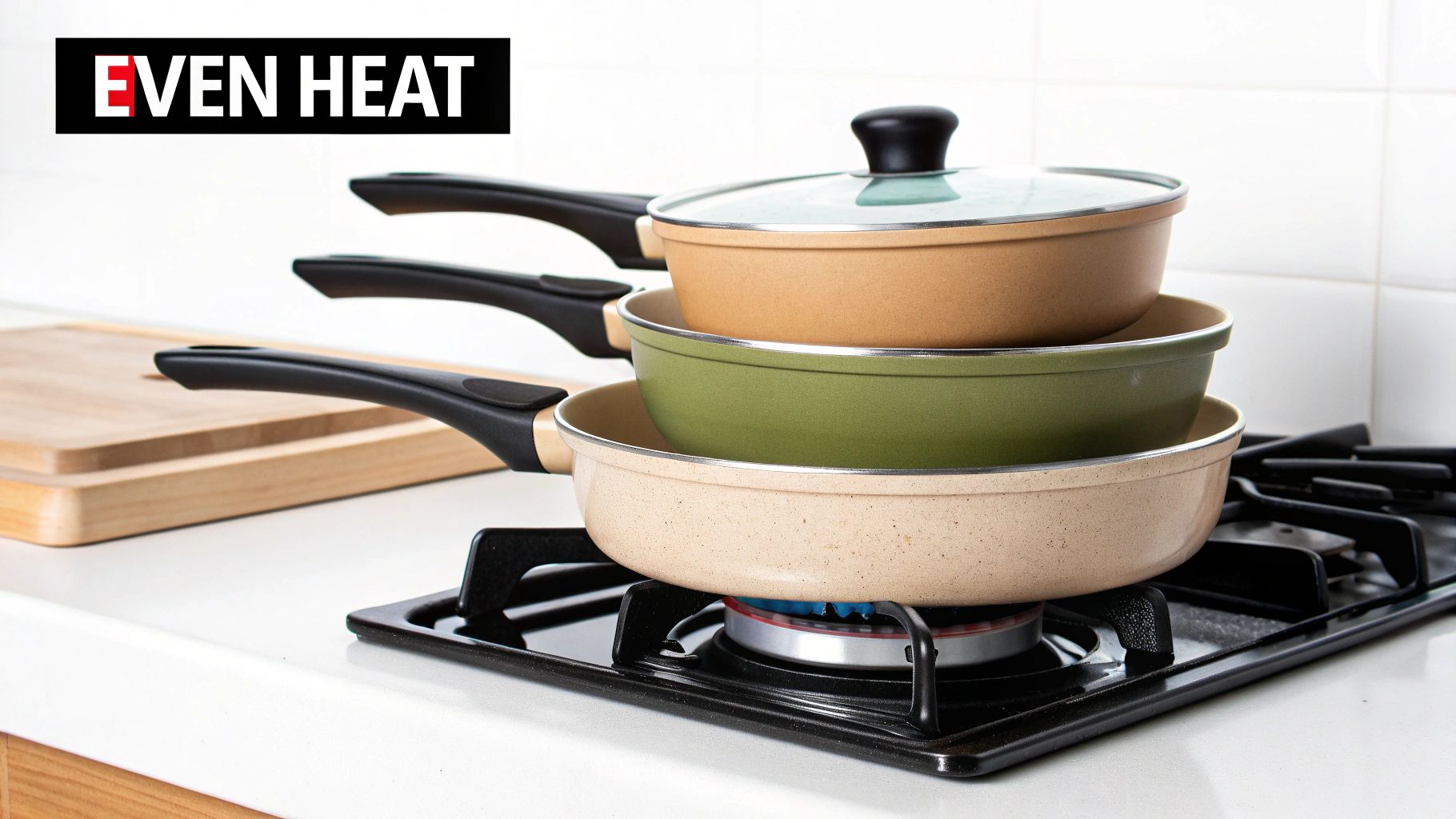
A few simple habits will protect your investment, ensuring your pan keeps delivering that beautiful, easy-release cooking experience for years. From a quick prep at the start to how you clean it after dinner, every little step counts.
Getting Started with Seasoning
You've probably heard about seasoning cast iron, which is a whole process. Thankfully, seasoning a ceramic pan is much quicker but still makes a huge difference. This simple step helps fill in any microscopic pores in the coating, creating an even slicker, more durable surface right out of the box.
Here’s the simple three-step process:
- Wash and Dry: Give your new pan a gentle wash with warm, soapy water and a soft sponge. Rinse it well and make sure it’s completely dry.
- Apply Oil: Put the pan on the stove over low heat. Add a tablespoon of a high-smoke-point oil (grapeseed or avocado oil are perfect) and use a paper towel to rub it all over the interior.
- Heat Gently: Let the pan sit on low heat for just 2-3 minutes. Turn off the burner, allow the pan to cool down completely, and then wipe out any leftover oil. That's it—your pan is ready for action.
This little bit of prep work conditions the surface, setting it up for countless meals to come.
Daily Use Do's and Don'ts
The biggest factor in your pan's lifespan is how you use it every day. That delicate ceramic surface is susceptible to scratches and sudden temperature changes, so a bit of mindfulness goes a long way.
To make things easy, here’s a quick cheat sheet for keeping your pan in pristine condition.
Ceramic Pan Care Cheat Sheet
This simple guide will help you preserve the non-stick surface of your ceramic cookware.
| Do | Don't |
|---|---|
| Use Silicone or Wooden Utensils | Never use metal utensils. They will scratch and permanently damage the non-stick coating. |
| Cook on Low to Medium Heat | Avoid high heat. It degrades the ceramic coating over time and causes food to stick. |
| Allow the Pan to Cool Before Washing | Plunging a hot pan into cold water can cause thermal shock, which may warp the pan or crack the coating. |
| Hand Wash with a Soft Sponge | Always hand wash. The harsh detergents and high heat in a dishwasher are too aggressive. |
Following these simple rules is the secret to a long-lasting pan.
The most common mistake people make is treating a ceramic pan like it’s stainless steel. High heat is the enemy of ceramic coatings. These pans are so efficient at conducting heat that you really only need low-to-medium settings to get a fantastic sear. By avoiding extreme temperatures and abrasive tools, you’re actively preserving the very non-stick properties that make good ceramic pans such a joy to cook with.
The Health and Environmental Benefits of Ceramic
Beyond just turning out a perfectly seared steak, one of the biggest reasons people are switching to good ceramic pans is the sheer peace of mind they bring. When you choose a quality ceramic pan, you’re not just getting a new piece of kit for the kitchen; you’re making a proactive choice for your family's health and the planet.
This confidence really comes down to what isn't in the pan. Proper ceramic coatings are made without the controversial chemicals that have been a sticking point with older non-stick pans for years.
A Cleaner Choice for Your Kitchen
The main health advantage of ceramic is baked right into its DNA. Unlike old-school Teflon, quality ceramic surfaces are made without PTFE (polytetrafluoroethylene) and PFOA (perfluorooctanoic acid). These chemicals belong to a group of "forever chemicals" that have raised health concerns, especially when older pans are overheated and start to break down.
With a ceramic pan, that worry is off the table. You can cook without the nagging thought that if the pan gets a little too hot, it might release nasty fumes into your home. Good brands also go the extra mile to make sure their pans are free from other heavy metals.
- Lead-Free: This is crucial to prevent harmful leaching, especially when you’re simmering acidic foods like a rich tomato sauce.
- Cadmium-Free: Guarantees that no toxic metals will ever find their way into your food.
By choosing cookware free from these materials, you are taking a significant step towards a non-toxic kitchen environment. It’s a simple switch that provides lasting reassurance for every meal you prepare. You can learn more about creating a safer cooking space by exploring other options for healthy cooking pans.
An Eco-Friendly Footprint
The good news doesn't stop at your kitchen door; it extends to the planet, too. The sol-gel process used to create modern ceramic coatings is generally a cleaner, more energy-efficient operation with a smaller carbon footprint than manufacturing traditional PTFE-based coatings.
This eco-conscious angle is a huge part of their appeal. The Australian cookware market, now valued at USD 664.44 million, is seeing a big push towards non-toxic and environmentally friendly options. Ceramic pans slot right into this demand, offering a sustainable choice that resonates with health-focused households from Sydney to Perth.
At the end of the day, investing in a durable, well-made ceramic pan is also a stand against throwaway culture. It means less waste heading to landfill and a more thoughtful approach to what we buy and use.
Still Have Questions About Ceramic Pans?
Even after laying out all the benefits, it's completely normal to have a few questions rattling around before you invest in new cookware. Making the switch to good ceramic pans is a brilliant move for just about any kitchen, but you want to feel confident you're making the right choice.
This section tackles the most common queries we hear day in and day out. Think of it as a troubleshooting guide to help you solve common issues or simply put your mind at ease.
Are Ceramic Pans Genuinely Safe for My Family?
Absolutely. High-quality ceramic pans are widely regarded as one of the safest non-stick options on the market. The coating itself is derived from sand, and it’s made without nasty chemicals like PFOA, PTFE, lead, or cadmium.
This is a massive plus for health-conscious Aussie homes. It means that even if you accidentally overheat the pan, it won’t release the toxic fumes that older non-stick technologies were infamous for. The key is to stick with reputable brands that are open about their materials and clearly state their products are free from these nasties.
Help! My New Ceramic Pan Is Already Sticking!
This is, without a doubt, the number one frustration people run into. Almost every single time, it boils down to one of two things: invisible residue build-up or tiny scratches on the surface.
Aerosol cooking sprays are the main culprit here. Their propellants burn onto the surface, creating a sticky, gunky film that completely ruins the non-stick effect. The same thing happens when you heat oils past their smoke point—that burnt oil polymerises and clings to the pan.
The other cause is physical damage. Using metal utensils or abrasive scourers will carve thousands of microscopic scratches into the coating, giving food particles plenty of places to get stuck. To rescue a sticky pan, try making a paste of bicarb soda and water and giving it a gentle scrub. Going forward, cook on low-to-medium heat and only use silicone or wooden tools.
Sticking is rarely a sign of a faulty pan. More often than not, it’s a sign that the pan needs a deep clean to remove polymerised oil residue, or that the cooking habits used with older pans need to be adjusted for the ceramic surface.
Can I Use a Ceramic Pan on an Induction Stove?
This all comes down to what the base of the pan is made of. The ceramic coating itself isn't magnetic, and induction hobs need a magnetic material to generate heat. For a pan to work with induction, its base must be made of magnetic steel or have a steel plate bonded to the bottom.
Fortunately, most modern cookware brands now offer induction-ready lines to cater for today's kitchens. It’s super easy to check if a pan is compatible.
- Look for the induction symbol on the packaging or stamped on the pan’s base (it looks like a coil of wire).
- When in doubt, do the magnet test. If a regular fridge magnet sticks firmly to the bottom, you're good to go on your induction cooktop.
How Long Should a Good Ceramic Pan Actually Last?
With the right care, you can easily get several years out of a high-quality ceramic pan. The premium models with reinforced, multi-layer coatings will always outlast the cheaper, single-coat pans you see on sale. Ultimately, its lifespan really comes down to your daily habits.
Following the care guidelines we’ve covered is non-negotiable.
- Avoid blasting it with high heat.
- Never let a metal utensil touch the surface.
- Always wash it by hand with a soft sponge.
If you look after it properly, you can expect 3 to 5 years of fantastic non-stick performance before it naturally starts showing its age. This makes it a really solid investment for any home cook.
At Everti, we believe in equipping your kitchen with tools that are safe, durable, and built to last a lifetime. While we champion the unparalleled purity of titanium, understanding the benefits of different cookware materials helps every home cook make informed choices. Explore our collection of lifetime essentials designed for a healthier kitchen.