

You've probably heard the term "green ceramic pan" and pictured something in a lovely shade of sage or forest green. While they certainly can come in those colours, the "green" part isn't about the hue at all—it’s about being a healthier, more environmentally-friendly choice for your kitchen.
What's The Big Deal With Green Ceramic Cookware?
So, what makes a green ceramic pan different? It all comes down to what's on the surface. For a long time, the go-to non-stick pan was coated with materials that often contained chemicals like PFOA (perfluorooctanoic acid), which raised some serious health questions over the years.
Green ceramic cookware takes a completely different path. Its non-stick surface is made from a sand-derived silica that's converted into a hard, glossy layer using a special process called sol-gel. Think of it as a super-tough, glass-like shield for your pan.
The result is a naturally slick cooking surface that's completely free from nasty chemicals like PFOA, PTFE, lead, and cadmium. This means you can sear, sauté, and scramble without worrying about toxins leaching into your food, even if you turn up the heat.
This move towards healthier cookware is really taking off. In a market like Australia's, which hit a value of USD 664.44 million in 2024, people are actively looking for better options. In fact, some studies show that as many as 85% of households now put non-toxic materials at the top of their shopping list when buying new kitchen gear.
At its heart, a green ceramic pan is about a simple, powerful idea: getting that brilliant non-stick performance you love, but without the health or environmental baggage. It’s about cooking with complete peace of mind.
And it’s not just about what's good for you; it’s also about what's good for the planet. A well-made ceramic pan can last two to three times longer than a typical non-stick pan, which means less waste heading to the landfill. If you're interested in learning more about the growing popularity of ceramic pans in Australia, it's a trend that's clearly here to stay. Choosing a green ceramic pan is a small step, but it makes a big difference in creating a cleaner, healthier kitchen.
The Science Behind A Toxin-Free Surface
Ever wondered how something as natural as sand can become a slick, durable, non-stick surface for your frypan? The secret behind a green ceramic pan is a clever bit of science called the sol-gel process. It sounds technical, but it’s actually a pretty straightforward method that’s key to creating a truly toxin-free cooking experience.
Think of it like turning fine sand into a smooth, glass-like shield for your pan. The process starts with silica, which is just a fancy name for a component of sand. This silica is transformed into a liquid solution.
This solution is then meticulously sprayed onto the pan’s metal base—usually a sturdy piece of aluminium or stainless steel. To finish, the pan is cured in a very hot oven. This bakes the liquid solution into a hard, glossy, non-porous ceramic layer. The result? A tough, naturally slick surface, made without a single drop of nasty chemicals like PFOA or PTFE.
This visual really captures the simple, clean journey from raw material to finished product.
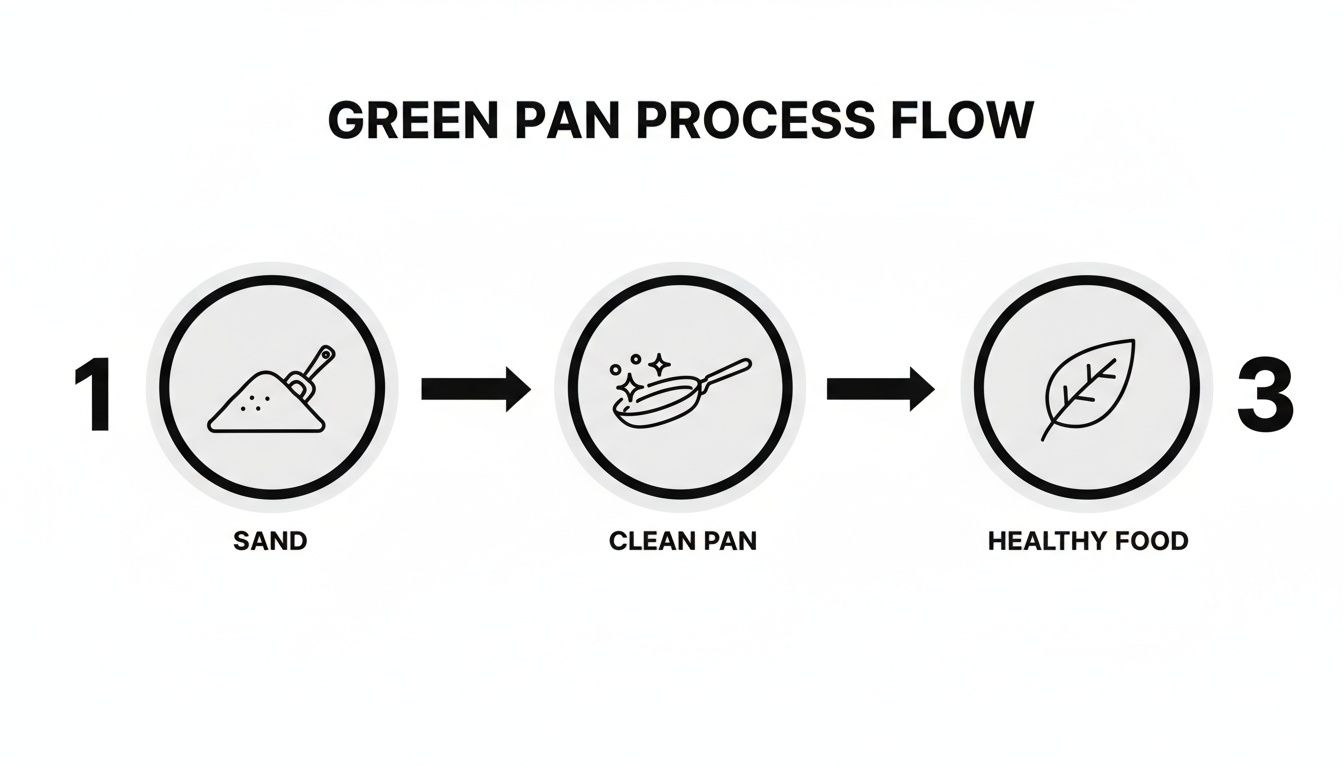
The main thing to remember is that this method builds a protective cooking surface from the ground up, ensuring no harmful substances are ever part of its DNA.
From Sand To Skillet
This production method is a big deal in Australia’s growing ceramic manufacturing scene. In fact, industry revenue is expected to hit $755.0 million by 2025, largely thanks to innovations in eco-friendly coatings like these.
For Aussie families who care about what’s in their kitchen, green ceramic pans can mean 99% less chemical release compared to some older non-stick options. They meet the kind of strict, SGS-like testing standards that brands like Everti are built on.
Once you understand how these pans are made, it’s easy to see the clear link between the innovative manufacturing and the real-world health benefits. It’s not just cookware; it’s science making your kitchen safer.
The sol-gel process is what really sets a green ceramic pan apart from old-school non-stick. It completely bypasses the chemical cocktails of the past and delivers brilliant performance that’s rooted in natural materials.
If you’d like to learn more, our guide to the benefits of non-toxic pans in Australia is a great next step. This whole approach ensures your food only ever touches a surface that is clean by design.
Why Your Health And The Planet Will Thank You
Making the switch to a green ceramic pan is about more than just a kitchen refresh. It’s a deliberate choice that pays dividends for your health and the environment. The biggest win really comes down to what these pans don’t contain. For years, traditional non-stick cookware relied on chemicals like PFOA and PTFE, which could release fumes when things got too hot.
A green ceramic pan completely sidesteps that concern. Its non-stick surface is created from a sand-based solution that’s hardened into a glass-like layer, making it naturally free from these debated chemicals. It’s also free from lead and cadmium, giving you peace of mind that your perfectly cooked meal isn't picking up any unwanted extras from the pan. For a deeper look at this, check out our complete guide on the best cookware for your health.
An Eco-Friendly Choice For Your Kitchen
Looking beyond your personal wellbeing, the environmental benefits are just as compelling. The process of making ceramic coatings is typically more energy-efficient and creates fewer carbon emissions than older manufacturing methods. The real victory for the planet, though, is their durability.
The non-stick cookware market in Australia and New Zealand is a big one, valued at USD 254.62 million in 2024, and it's clear the tide is turning towards more sustainable options. A well-made green ceramic pan can easily last over five years, whereas many traditional non-stick pans often need replacing every couple of years. This longer lifespan drastically cuts down on landfill waste, which fits perfectly with the modern Aussie kitchen's focus on buying quality that lasts. You can discover the latest market insights on non-stick cookware to see this trend in action.
Switching to a green ceramic pan is a simple yet powerful act. You're not just choosing a better way to cook; you're investing in a healthier future for yourself and a lighter footprint on the earth.
This commitment to longevity is also why so many ceramic pans are built tough enough to handle hundreds of dishwasher cycles—far more than their traditional counterparts. At the end of the day, every meal you cook in a green ceramic pan is a small step towards a cleaner, healthier, and more sustainable way of living. It's a choice where top-notch performance and responsibility truly go hand in hand.
How To Choose A Green Ceramic Pan You Will Love
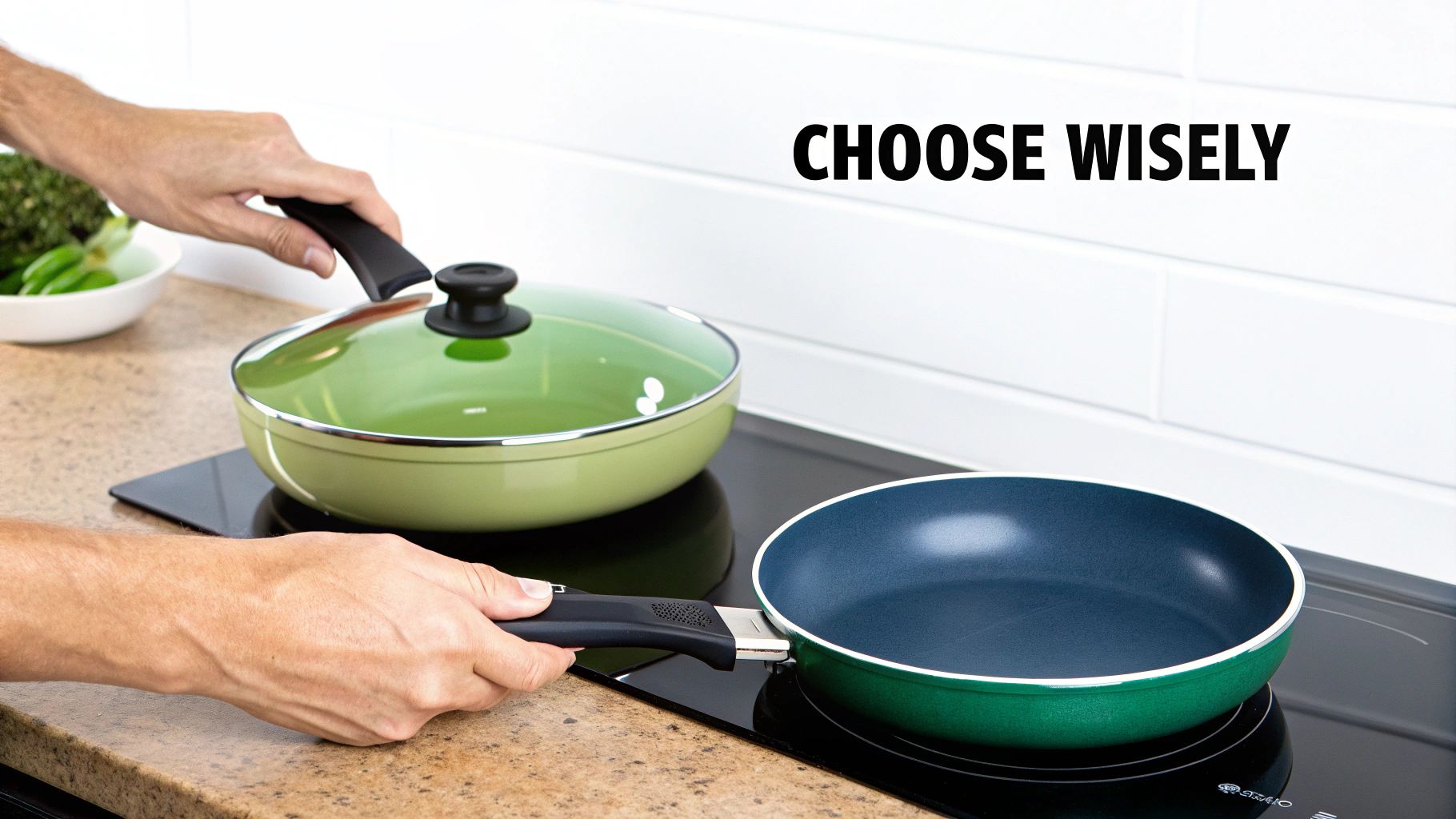
Finding the right green ceramic pan goes a lot deeper than just picking a nice colour. Think of it as an investment in your everyday cooking pleasure. Knowing what to look for is the key to choosing a pan that will perform beautifully for years to come, not just a few weeks.
First things first, let's talk about what's underneath that glossy ceramic surface. The core material is what really dictates how the pan heats up, holds its temperature, and how long it will last.
- Aluminium: This is probably the most common core you'll find. It’s fantastic because it's lightweight and heats up incredibly quickly and evenly. For a pan you'll use daily for quick meals, it's a brilliant, responsive choice.
- Stainless Steel: Often found in higher-end pans with multiple layers (3-ply or 5-ply construction), stainless steel cores are the workhorses of the kitchen. They're heavier, for sure, but they offer incredible durability and are far more resistant to warping over time.
Don't forget to check for cooktop compatibility. If you're cooking on an induction stove, your pan absolutely must have a magnetic base to work. Just flip it over and look for the little "induction-compatible" coil symbol or check the packaging.
Key Features For Everyday Cooking
Once you've sorted out the core material, it's the little details that elevate a good pan to a great one. Pay attention to the handle—is it comfortable and secure in your hand? A well-designed, ergonomic handle that stays cool to the touch makes a world of difference when you're moving a hot pan around.
Also, have a look at the oven-safe temperature rating. A truly versatile pan should be able to handle at least 200°C in the oven. This opens up a whole world of one-pan meals, from searing a steak on the cooktop and finishing it in the oven to baking the perfect frittata. Learning how to choose a green ceramic pan is much simpler when you can see a wide range of options, which you can find in our extensive kitchen cooking category.
And here's the most important tip: always double-check a brand’s non-toxic claims. Good companies are proud to be transparent about being free from PFOA, PTFE, lead, and cadmium. Look for clear statements and third-party verification to be confident you’re getting the safe, healthy cooking surface you expect.
Keeping Your Ceramic Cookware Performing Like New
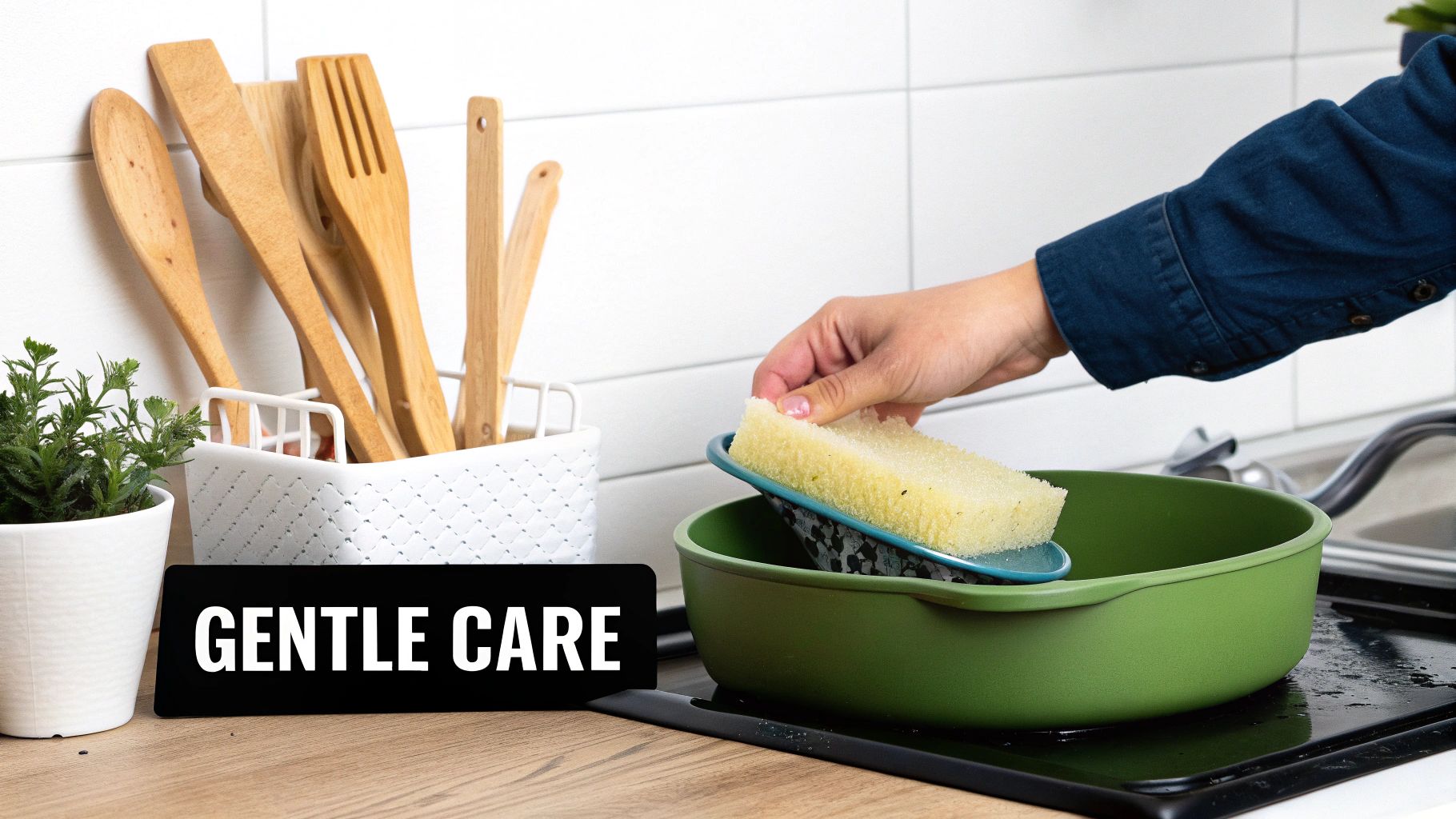
You've invested in a quality green ceramic pan, and with just a bit of TLC, you can keep that brilliant non-stick surface working its magic for years. It really just comes down to a few simple habits that protect the coating and ensure it cooks beautifully every time.
First things first: be gentle. The biggest enemy of a ceramic coating is scratching, so it’s time to retire the metal utensils. Instead, make friends with silicone, nylon, or wooden tools. They’re just as effective and won’t harm the pan's delicate surface.
You'll also want to be mindful of how you use heat. Ceramic cookware is tough, but it doesn't like sudden, extreme temperature changes. This can cause 'thermal shock', which might lead to fine cracks in the coating. The golden rule is to never plunge a hot pan into cold water. Just let it cool down on the cooktop first. When you're cooking, low to medium heat is your sweet spot—these pans conduct heat so well, you rarely need to crank it up.
The Do's and Don'ts of Ceramic Pan Care
How you clean your pan is probably the single most important factor in its longevity. It's not complicated, but getting it right makes a world of difference.
Best Cleaning Practices:
- Do wash by hand using warm, soapy water and a soft sponge. It’s the kindest and most effective way to clean it.
- Don't ever reach for abrasive scourers, steel wool, or harsh detergents. They will strip away the non-stick finish for good.
- Do dry the pan completely before putting it away. This stops water spots and helps protect the surface in storage.
One of the biggest mistakes people make is using aerosol cooking sprays. The propellants in these sprays can burn onto the surface at surprisingly low temperatures, leaving behind a sticky film that’s a nightmare to remove and completely ruins the non-stick performance.
A tiny bit of butter or an oil with a high smoke point, like avocado or coconut oil, is all you need. Stick to these simple tips, and you and your ceramic cookware will have a long, happy partnership.
Still Have Questions About Green Ceramic Pans?
Even after getting the rundown, it's natural to have a few more questions rattling around. Let's clear up some of the most common queries so you can feel completely confident about adding one of these pans to your kitchen arsenal.
Are These Pans Actually Safe to Use?
Absolutely. A well-made green ceramic pan is one of the safest pieces of cookware you can buy. The coating is derived from sand, which means it’s made without nasty chemicals like PFOA and PTFE.
For true peace of mind, though, you’ll want to look for a brand that is upfront about its materials. Make sure they clearly state their pans are also free from lead and cadmium.
The real mark of a safe pan isn't just a "green" label—it's a brand's transparency about what goes into their products. Verified claims beat marketing buzzwords every single time.
Do I Really Need to Use Oil?
It’s a great question. While the non-stick surface is fantastic, a little bit of oil or butter is still your friend. Think of it as a protective barrier that helps preserve the ceramic coating, extending its life and keeping that non-stick performance in top shape for longer.
Here's a pro tip: steer clear of aerosol cooking sprays. The propellants in those cans can leave behind a gummy, almost invisible residue that’s a nightmare to clean off and will eventually ruin your pan’s non-stick magic.
How Long Will My Green Ceramic Pan Last?
With a bit of TLC, a quality ceramic pan can serve you well for several years, often lasting longer than its traditional non-stick counterparts. Honestly, its lifespan really comes down to how you treat it.
To keep your pan in great condition, just remember a few simple rules:
- Be gentle with your tools: Always reach for silicone or wooden utensils to prevent scratching that smooth surface.
- Keep the heat in check: These pans work best on low to medium heat. Never leave an empty pan to heat up on a hot burner.
- Wash with care: A gentle hand wash using a soft sponge is the best way to protect the coating.
Will It Work on My Induction Cooktop?
That all depends on what the pan is made of underneath. For a pan to work on an induction stove, its base needs to be magnetic—usually made from stainless steel or iron.
Many modern ceramic pans are built with induction in mind, but it’s not a given. Always double-check the product description or look for the little induction symbol (it looks like a coil of wire) on the packaging before you buy.
Ready to experience clean, durable cooking for yourself? Explore the lifetime titanium essentials at Everti and discover a healthier way to prepare your favourite meals. Find your perfect kitchen companion at https://everti.com.au.