

Picture this: stepping out onto your balcony to snip off a few fresh, crisp lettuces for tonight's dinner. That's the real magic of growing your own veggies in pots. For so many of us here in Australia, especially in the cities, it's a brilliant and totally achievable way to get our hands on homegrown produce. It's all about reclaiming a little bit of your food source, one delicious harvest at a time.
Why Growing Veggies in Pots is Such a Game Changer
Container gardening has absolutely taken off lately, and it's easy to see why. This isn't just a fleeting trend; it’s a genuinely practical answer for modern life. It lets you turn the tiniest of patios, balconies, or courtyards into your own personal, productive veggie patch. Best of all, it neatly sidesteps many of the usual gardening headaches, which makes it perfect whether you're a complete beginner or have been gardening for years.
The biggest drawcard is the sheer simplicity and control you have. A garden bed is stuck in one spot, but pots are portable. You can move them around to catch the best of the Aussie sun, shift them under cover to dodge a nasty storm, and basically create the perfect little world for your plants with very little fuss. That kind of flexibility is a massive plus, especially with our unpredictable climates.
What's So Good About It, Really?
The benefits go way beyond just saving a bit of space. When you get into growing veggies in pots, you unlock a level of precision that’s almost impossible to get in a big, sprawling garden.
- You're the soil boss: Forget digging into rock-hard clay or sandy soil. With a pot, you can whip up the perfect, nutrient-rich soil mix for exactly what you want to grow, giving your plants the best possible start.
- Fewer creepy crawlies and diseases: Pests like snails and slugs have a much harder time climbing up into a pot. You also get to dodge a lot of the common soil-borne diseases, which means healthier, happier plants from the get-go.
- Gardening for everyone: Let's be honest, all that digging and weeding can be hard yakka. Container gardening is much easier on the back, making it a fantastic choice for anyone with mobility challenges or those of us who just prefer a more relaxed approach.
- It just looks great: A cluster of pots overflowing with vibrant veggies and fragrant herbs can instantly bring a boring space to life. It's a garden that's both beautiful and edible.
This guide is here to cut through the noise and give you a clear, straightforward plan for a thriving container garden. We'll walk through the essentials—picking the right pots, getting your soil just right, and choosing the best plants—so you can kick things off with confidence and aim for a brilliant harvest.
Choosing The Perfect Pots And Soil Mix
Let's get one thing straight: the real secret to a thriving container garden lies in what you put your plants in. It all comes down to two things: the pots you choose and the soil you fill them with. This isn't just about making your balcony look pretty; the right container gives roots the space and drainage they need, while the soil is where all the magic happens, delivering water and nutrients.
Getting this foundation right from the very beginning is probably the most important thing you can do.
Think of it like this: you wouldn't try to bake a cake in a frying pan. The same logic applies here. If you want to grow long, straight carrots, you need a deep, sturdy pot that lets them stretch out. On the other hand, something shallow and wide is perfect for leafy greens like lettuce or spinach that like to spread their wings a bit.
This decision guide can help you map out your options based on the space you have and what you're hoping to grow.
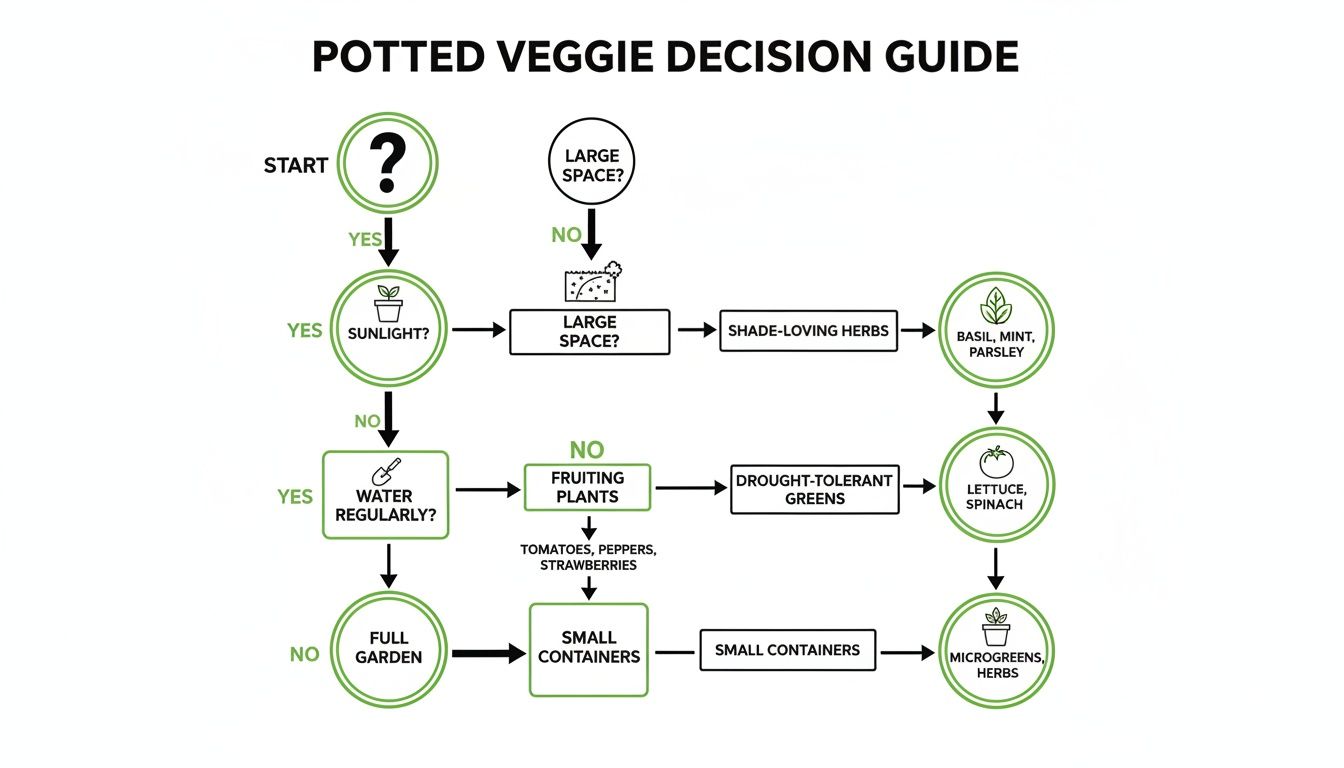
As you can see, growing in pots is an incredibly flexible solution, especially for those of us living in cities with not much more than a patio or a sunny windowsill.
What’s The Best Pot Material?
You might be surprised how much the material of your pot actually matters. Each type has its own quirks that affect everything from how often you need to water to how hot the soil gets.
To make things easier, here’s a quick rundown of the most common options you'll find at your local nursery.
Pot Material Comparison For Vegetable Gardening
| Pot Material | Pros | Cons | Best For |
|---|---|---|---|
| Terracotta | Breathable, classic look, promotes healthy roots by allowing air and water to pass through. | Dries out very quickly (especially in the Aussie sun!), heavy, can crack in a frost. | Gardeners who don't mind watering frequently and plants that hate 'wet feet' like herbs. |
| Plastic | Lightweight, inexpensive, excellent at holding onto moisture, comes in many colours. | Can become brittle and crack in the sun over time; darker colours can overheat the soil. | Thirsty plants like tomatoes and beginner gardeners looking for a low-maintenance option. |
| Fabric Grow Bags | Superior aeration (air-prunes roots for a healthier system), impossible to overwater, lightweight. | Dries out faster than plastic, can look a bit floppy, may require more frequent watering. | Root vegetables and anyone struggling with overwatering or root rot. |
No matter which material you choose, there's one non-negotiable feature: drainage holes. If a pot you love doesn't have them, you absolutely must drill some yourself before you even think about planting.
The goal is simple: create a stable, happy home for your plant's roots. A pot that's too small will stunt its growth, and one without drainage is a guaranteed death sentence from waterlogged soil.
Why You Can’t Just Use Garden Soil
I see this mistake all the time. It's so tempting to just head into the backyard and scoop up some dirt for your pots, but please, don't do it! Garden soil is far too dense for containers. Once you water it, it compacts down into a solid brick, squeezing out all the precious air pockets your plant's roots need to breathe.
Instead, you need to invest in a quality potting mix. This stuff is engineered to be light and fluffy, striking the perfect balance between holding moisture and letting excess water drain away freely. It's the ideal environment for growing veggies in pots.
This boom in urban gardening hasn't gone unnoticed. Australia's horticulture sector hit a local value of $18.0 billion in 2023-24, with nurseries ramping up supply to big retailers to meet our growing demand.
Getting the growing medium right is critical. In fact, learning about things like the best succulent soil for perfect drainage can teach you a lot about preventing root rot in your vegetable pots, too. A premium mix gives your plants the best possible head start.
Selecting The Best Vegetables For Your Containers
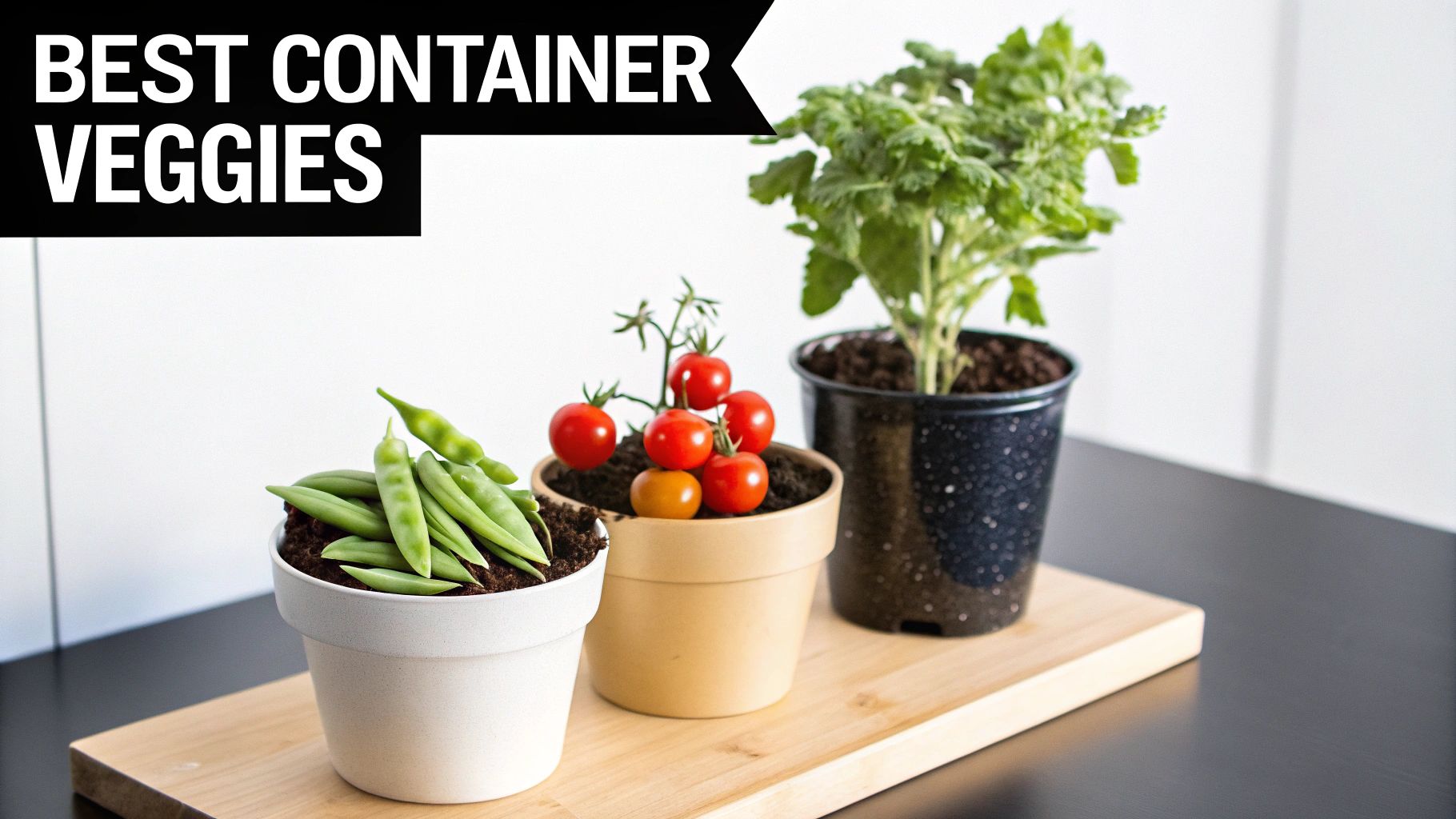
This is the fun part—deciding what you're actually going to grow! While it’s tempting to imagine a huge veggie patch on your balcony, the reality is that not all vegetables are suited to life in a pot. The key to getting a great harvest is to choose varieties that are either bred for small spaces or naturally have a compact, tidy growth habit.
Your success really comes down to matching the right plant to your specific conditions. Most veggies need a solid six to eight hours of direct sun each day. If your balcony is a sun trap, you're perfectly set up for sun-lovers like tomatoes and capsicums. Got a shadier spot? Don't worry, leafy greens and many herbs will be your best mates.
Top Picks For Productive Pots
Instead of getting overwhelmed at the nursery, I always recommend starting with a few proven winners. These are the plants that are known to be productive and relatively low-fuss in containers, giving you a great sense of accomplishment and some delicious food for your efforts.
Here are a few of my favourite starting points for any container garden:
- Bush Beans: Unlike their pole-bean cousins that climb everywhere, bush beans grow into a neat, compact bush. They’re brilliant for pots and are incredibly productive, often giving you a big harvest all at once.
- 'Tiny Tim' Tomatoes: A classic for a reason! These dwarf cherry tomato plants were practically made for containers. They'll give you trusses of sweet, bite-sized fruit without trying to take over your entire space.
- Cut-and-Come-Again Lettuces: I love growing loose-leaf lettuce varieties because you can just snip off the outer leaves whenever you need them. The plant keeps producing new leaves from the centre, giving you a steady supply for weeks.
- Silverbeet and Kale: These hardy greens are champions of generosity. You can harvest leaves regularly, and the plants just keep on giving for months, offering fantastic value from a single pot.
Your goal is to choose plants that deliver a high yield for the amount of space they occupy. Think vertically with climbing peas or focus on compact, productive plants like dwarf tomatoes to make every square centimetre count.
The Power Of Companion Planting
Even when you're just working with a few pots, you can still put companion planting to work for you. It’s an old-school gardening technique where you pair up plants that help each other out. This could mean deterring pests, attracting good insects, or even improving the soil. It’s a simple way to create a healthier, more balanced little ecosystem.
For a classic combination, try popping some basil in the same pot as your tomatoes. The strong scent of basil is known to help keep common tomato pests away. Marigolds are another fantastic companion; they can deter nematodes in the soil and add a welcome splash of colour.
This smart approach to urban gardening is becoming more and more common. In fact, the total value of Australian vegetable production hit $5.7 billion in 2023-24, and the domestic fresh supply grew by 4.3%. With nurseries increasingly supplying big box retailers—powering 48% of all retail sales—more Aussies are turning to pots for fresh, homegrown produce. You can learn more about Australian horticulture statistics to see the full picture.
Ultimately, choosing the right vegetables is a game of matching your space, sunlight, and effort level with plants that will pay you back generously. Start with a few of these reliable options, and you’ll soon be enjoying the incredible flavour of food you've grown yourself.
Planting, Watering, And Feeding Your Potted Veggies
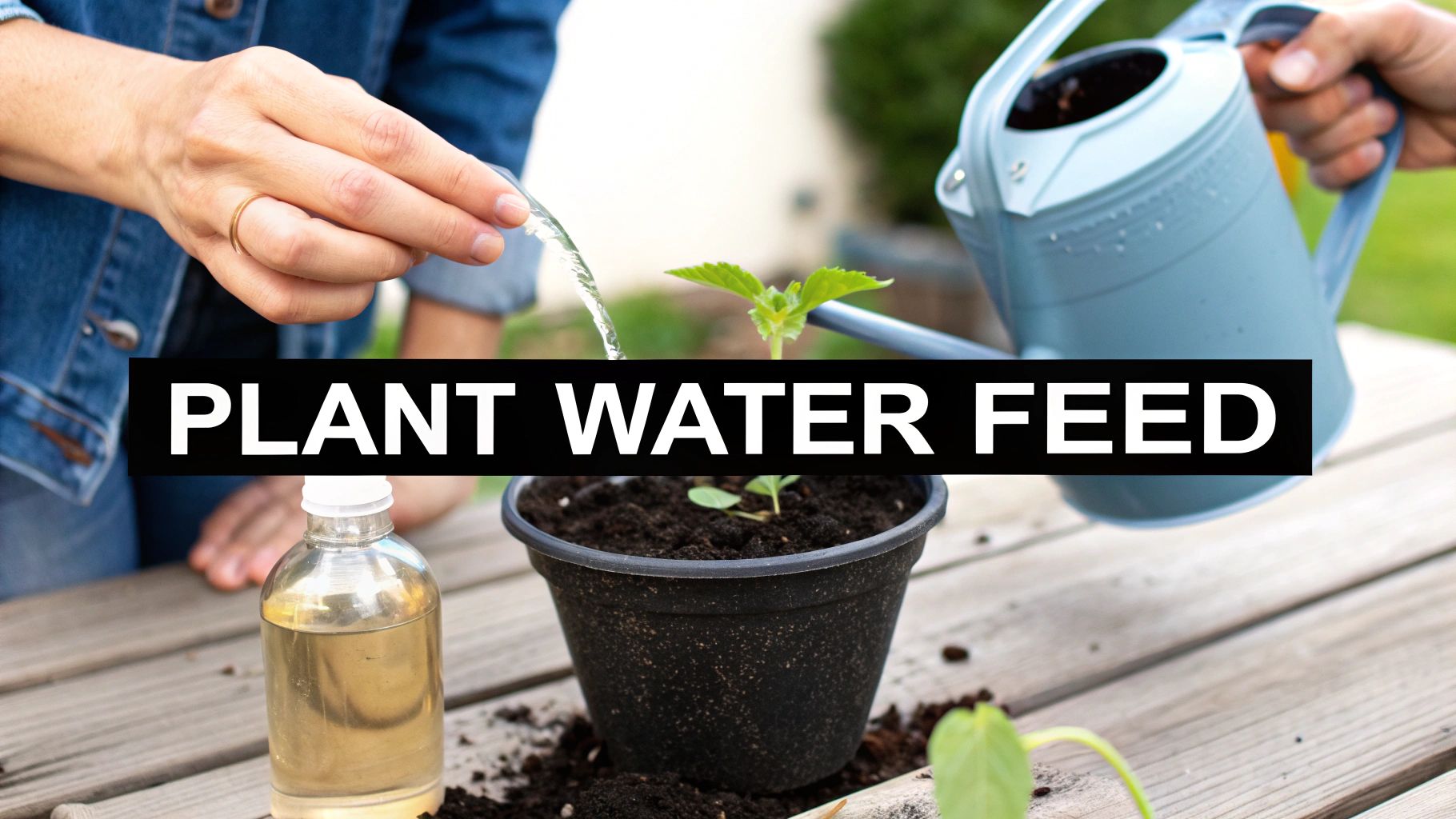
Alright, you've got your pots, sorted your soil, and picked out your veggies. Now for the fun part—bringing it all to life. This is where a little bit of know-how makes a huge difference, setting the stage for a strong, healthy harvest down the track.
First things first, let's get your plants settled into their new home. Whether you're starting with tiny seeds or more established seedlings from a nursery, the basic principles are the same. It's all about giving them enough space and a solid start.
Getting Your Plants In The Ground
If you're planting seedlings, take a moment to gently tease out any roots that are tightly bound at the bottom of the root ball. This simple step encourages them to spread out into the new soil instead of just growing in circles. Dig a hole just big enough for the root ball, pop the plant in, and make sure the top of its soil is level with the potting mix in the container.
For seeds, a good rule of thumb is to plant them at a depth of about twice their diameter. Always double-check the seed packet for specific advice, though. Some tiny seeds, like lettuce, barely need to be covered at all.
Whatever you're planting, remember that spacing is key. It's so tempting to cram everything in, but overcrowding is a classic mistake. It leads to smaller, weaker plants all competing for light, water, and nutrients. Give them room to breathe, and they'll thank you for it. Once everything's in, give the soil a thorough but gentle watering to help it all settle.
Creating A Smart Watering Routine
Watering is where many new container gardeners stumble. Pots dry out so much faster than garden beds, especially on a hot Aussie summer day. The most reliable way to know if your plants are thirsty is the good old 'finger test'.
Just poke your finger about an inch or so into the soil. If it feels dry, it’s time to water. If it’s still damp, you can probably hold off for another day. This simple check is your best defence against both under-watering (which stresses plants) and over-watering (which can lead to root rot).
When you do water, do it deeply. Your goal is to keep watering until you see it running out of the drainage holes at the bottom of the pot. This ensures the entire root zone gets a proper drink, not just the surface.
You can learn more about boosting root health in our guide on the benefits of food-grade hydrogen peroxide for your plants, which is a great way to improve oxygenation in the soil.
Feeding Your Hungry Potted Plants
The nutrients in potting mix don't last forever. Because you’re watering frequently, essential nutrients tend to get washed out of the soil over time. This just means you’ll need to give your veggies some extra food to keep them happy and productive.
There are a couple of main ways to feed your container garden, and both work brilliantly:
- Liquid Fertilisers: You mix these with water and apply them every couple of weeks. They give your plants an immediate nutritional kick that they can absorb quickly.
- Slow-Release Granules: These are little pellets you can mix into the soil when you first plant. They release nutrients gradually over several months, making them a fantastic "set and forget" option.
For truly great results, choosing the right nutrition is crucial. This detailed guide on the best fertiliser for vegetables can offer some excellent insights. Personally, for heavy feeders like tomatoes and capsicums, I find using a combination of both methods gives me the best harvest.
Looking After Your Garden and Reaping the Rewards
Once your plants are settled into their new homes, the real fun begins. Looking after a container garden isn't a chore; it's more like building a relationship. A little bit of regular attention is what will turn your patio setup into a powerhouse of fresh produce. It's all about giving your veggies what they need to really shine.
The number one thing to think about is sunlight. Most vegetables are sun-worshippers and need at least six hours of direct sun every day to give you a decent crop. This is where pots have a huge advantage—they're mobile! Don't hesitate to play musical chairs with your pots throughout the day to catch the best rays. A simple move from the morning spot to an afternoon sun-trap can be a game-changer for a tomato plant.
A Little Snip Goes a Long Way: Simple Pruning
Pruning sounds like a big, serious job, but for potted veggies, it’s usually just a bit of light trimming that makes a massive difference. The idea is to nudge the plant into growing bushier and putting its energy into making delicious veggies, not just growing tall and lanky.
Take herbs like basil or mint, for example. If you regularly pinch off the top sets of leaves, the plant responds by sending out new side shoots. Before you know it, you've got a much fuller, more productive plant. For tomatoes, I always recommend pinching off the "suckers"—those little shoots that sprout out between the main stem and a side branch. This redirects all that growing power straight to the fruit.
Your container garden is a living, breathing space. Simple things like a quick prune, turning your pots to face the sun, and keeping an eye out for pests are the small efforts that lead to a big, flavourful harvest.
Keeping Pests at Bay, Naturally
One of the great things about a contained garden is that it's much easier to spot pests before they get out of hand. Make it a habit to check under leaves and around new shoots every few days for unwanted guests like aphids or spider mites.
If you do find something, always start with the gentlest fix. Often, a strong spray of water from a hose is enough to send most pests packing. If they’re a bit more stubborn, a homemade insecticidal soap spray works wonders. Just a few drops of dish soap in a litre of water is a brilliant organic defence that won't harm your plants or your dinner. It's also a good idea to learn how to prevent cross contamination to keep your tools and pots clean, stopping problems before they start.
The Best Bit: Harvesting Your Homegrown Veggies
Knowing the perfect moment to pick your produce is the final skill you'll master. Harvesting at peak ripeness not only gives you the best flavour but also signals to many plants that it's time to grow some more.
- Leafy Greens: For things like lettuce, silverbeet, and kale, you can start snipping off the outer leaves as soon as they look big enough to eat. This "cut-and-come-again" approach can keep you in fresh greens for weeks.
- Tomatoes: The secret is patience. Wait for them to develop their full, deep colour right there on the vine. A perfectly ripe tomato feels firm to the touch but has a slight softness when you give it a gentle squeeze.
- Herbs: Harvest herbs frequently, especially just before they start to flower. This is when their essential oils are most concentrated, meaning you get the most intense flavour.
Even the smallest balcony garden can be amazingly productive, putting you right in the middle of the local food movement. When you consider that Australian citrus value hit $1.1 billion in 2023-24, it shows just what's possible with good care. You can find out more insights on Australian horticulture production here.
Common Questions About Growing Veggies In Pots
Once you start growing veggies in pots, you'll inevitably run into a few questions. It’s completely normal. From weird-looking leaves to plants that just won’t fruit, knowing what to look for can turn a garden drama into a simple fix. Think of this as your go-to guide for those moments that make you scratch your head.
A question I hear all the time is about pot size. Does it really matter? You bet it does. Shoving a plant into a pot that’s too small is one of the fastest ways to stunt its growth. The roots have nowhere to go, the soil dries out in a flash, and you'll find yourself constantly watering a stressed-out, unhappy plant.
Here’s a little tip I’ve learned over the years: always go for a pot that looks just a little too big for the seedling. This gives the roots plenty of room to stretch out and establish themselves, which is the foundation for a healthy, productive plant.
Then there’s the classic case of the yellowing leaves. It’s a bit alarming to see, but it’s just your plant trying to tell you something. More often than not, it’s a cry for help about either too much water (drowning roots) or a lack of nutrients, especially nitrogen.
Troubleshooting Common Container Garden Issues
Let's dive into a few of the most common hiccups you might face and how to sort them out.
Why are my tomato plants all leaves and no fruit? This is a classic! It usually means the plant is getting too much nitrogen-rich fertiliser. Nitrogen fuels leafy growth, often at the expense of flowers and fruit. Another culprit could be a lack of sun; fruiting veggies like tomatoes need a solid six to eight hours of direct sunlight every day to get the job done.
What’s causing the leaves on my capsicum to curl? Leaf curl is often a sign of stress. It could be from inconsistent watering (swinging from bone dry to sopping wet), a sudden heatwave, or sneaky pests like aphids camping out on the undersides of the leaves. Always check for bugs first, then try to create a more reliable watering routine, especially when the weather heats up.
Can I reuse my potting mix next season? You can, but it needs a bit of a boost first. After a season of growing, potting mix gets compacted and most of the good stuff has been used up. I like to refresh it by mixing it with about 50% fresh, high-quality potting mix and a good few handfuls of compost to bring back its structure and nutrients.
These basic principles of care don't just stop with vegetables. If you're keen to try your hand at something else, many of the same rules apply. For instance, our guide on growing roses from cuttings touches on similar ideas for nurturing young plants.
At the end of the day, growing veggies in pots is a journey of discovery. Don’t be discouraged by a few challenges—each one is a chance to learn more about what your plants need to thrive, making you a better gardener season after season.
At Everti, we believe in creating tools that last a lifetime, pairing perfectly with the fresh, healthy produce from your garden. Discover our range of pure titanium kitchen essentials. Shop the Everti Collection