

For most Australians cooking for one or two people, a 16cm to 18cm small nonstick skillet is the ideal sweet spot. Choose a 20cm pan only if you regularly cook for three or more people or need to fit two eggs side-by-side.
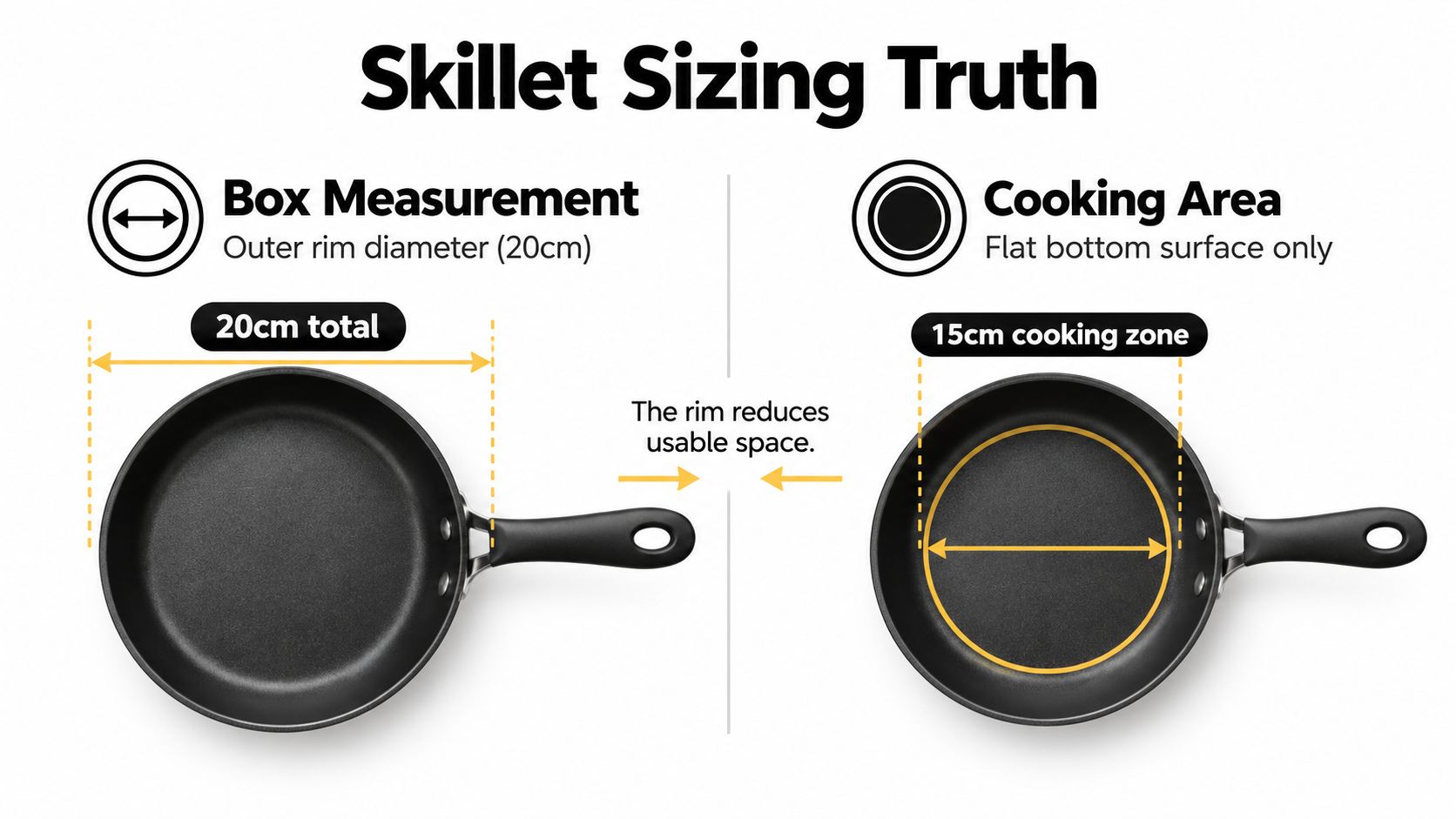
Why do so many “small” skillets feel wrong the first time you use them? The measurement on the box usually describes the outer rim, not the flat surface where your egg, omelette or steak sits. That difference matters more than the badge on the packaging.
A compact pan should make single-serve cooking easier, not force you to chase food around a sloping base. Australian shelves are crowded with 12cm, 13cm, 16cm, 20cm and 24cm formats, but product listings often spend more time on dishwasher claims and coating language than on usable cooking space, as a look at current small frying pan listings in Australia makes clear.
The practical answer is simple. Buy for the flat cooking zone, match that zone to the food you cook, and treat non-stick safety as a use-and-care issue rather than a slogan. A cheap little frypan can be excellent for eggs, while a premium pan can disappoint if its base is too narrow for your hob or its coating is treated roughly.
Understanding Small Nonstick Skillet Sizes
The most common buying mistake is confusing pan diameter with cooking diameter. A skillet labelled 20cm may measure 20cm across its outer rim, while rolled edges and sloped walls leave a noticeably smaller flat base. The food only benefits from that flat base, so a pan can look generous in the cupboard and still feel cramped on the stove.
Match the pan to the food
Use the headline size as a starting point, then think about the flat zone:
- 12cm: Best for one fried egg, melting butter, warming a small portion or making a tiny toasted sandwich. It's specialised rather than versatile.
- 13cm: Still firmly in one-egg territory, but useful where cupboard space is extremely tight or you want a dedicated butter and sauce pan.
- 16cm: The strongest choice for one person. It suits one or two eggs, a compact omelette, reheating leftovers and small portions of vegetables.
- 18cm: The most balanced everyday size for one or two people. It gives an omelette room to move without becoming oversized for a single serve.
- 20cm: Useful for two eggs side-by-side, a larger omelette, a small steak or food for several people. Check the base carefully because the outer measurement may overstate its capacity.
- 24cm: A larger skillet for family breakfasts and broader portions. It isn't a miniature pan in practical use, even if the sides are shallow.
Australian pots and pans are a broad, high-turnover category. Non-stick cookware accounts for about 40% to 45% of unit sales, while pans and woks together held a 52.68% revenue share in 2024, according to Australian pots and pans market analysis. That context explains why retailers offer so many formats, but it doesn't tell you which one suits your breakfast routine.
Measure your existing pan properly
Take a ruler across the flat interior base, not the rim. Measure from the point where the bottom stops being level and the side begins to slope. Then compare that measurement with your stovetop burner or induction zone.
Practical rule: If you mainly cook eggs, buy for the egg arrangement you want, not the pan diameter printed on the front.
A pan that's too small makes an omelette thick and difficult to fold. A pan that's too large spreads a single egg thinly, encourages excessive oil and wastes heat around the food. For most solo cooks, a 16cm to 18cm base gives the best balance. The 20cm format earns its place when you need two eggs beside each other or cook larger portions often.
Choosing the Right Coating for Your Kitchen
Coating choice should follow your habits, not the loudest word on the packaging. PTFE, ceramic and uncoated metal each solve a different problem. The best pan for delicate eggs may not be the best pan for high-heat browning, and “PFAS-free” alone doesn't tell you how long the surface will remain pleasant to use.
| Coating Type | Heat Safety | Durability | Best For |
|---|---|---|---|
| PTFE-based non-stick | Safe for normal cooking when used below its breakdown range and not overheated empty | Smooth release, but vulnerable to scratches, harsh cleaning and sustained overheating | Eggs, omelettes, fish and low-to-medium heat cooking |
| Ceramic non-stick | Performs best over gentle to moderate heat | Can lose easy release when overheated or scrubbed aggressively | Cooks who prefer a ceramic surface and accept careful maintenance |
| Uncoated titanium | No applied non-stick coating to wear away; food release depends on heat, fat and technique | Strong and resistant to coating failure, but not identical to coated non-stick | Durable cooking, outdoor use and cooks willing to manage technique |
What PTFE gets right
A good PTFE-coated small nonstick skillet remains the easiest tool for eggs. Food slides cleanly, cleaning takes little effort and low-to-medium heat is enough for most breakfast cooking. That convenience is why PTFE still makes sense for cooks who want a dedicated egg pan rather than an all-purpose searing vessel.
It isn't indestructible. Metal utensils, abrasive pads and an empty pan left over a strong burner will shorten its useful life. Buy it for controlled everyday cooking, not for aggressive searing or heating until the surface smokes.
Where ceramic fits
Ceramic coatings appeal to shoppers who want to avoid PTFE, but they still need sensible heat and gentle cleaning. They can be pleasant for eggs and pancakes when the pan is warmed gradually, though cooks shouldn't assume ceramic means scratch-proof or permanently non-stick.
Before buying, check whether the manufacturer clearly identifies the coating and gives care instructions. A vague “non-toxic” label is not a substitute for material information. For a more detailed discussion of surface behaviour and frying-pan materials, this guide to non-stick frying pan surfaces is useful background.
What PFAS-free means in Australia
PFAS claims now deserve scrutiny. CHOICE says PFAS-free claims under Australian Consumer Law must be truthful, accurate and evidence-based, and notes that the most harmful PFAS chemicals are banned under the Industrial Chemicals Environmental Management Standard, with Australian governments committed to adopting the ban. CHOICE also reports that PFOA and PFOS have been banned in Australia since July 2025, so claiming that a pan excludes those substances no longer carries the same marketing significance as it once did. Read the CHOICE guidance on PFAS-free cookware claims before treating packaging language as proof of quality.
My recommendation is direct. Choose PTFE for effortless eggs, ceramic if its material story matters to you and you're disciplined with heat, or uncoated titanium if long-term material durability matters more than instant release. None of these choices removes the need to cook within the pan's limits.
Mastering Heat Control and Safety
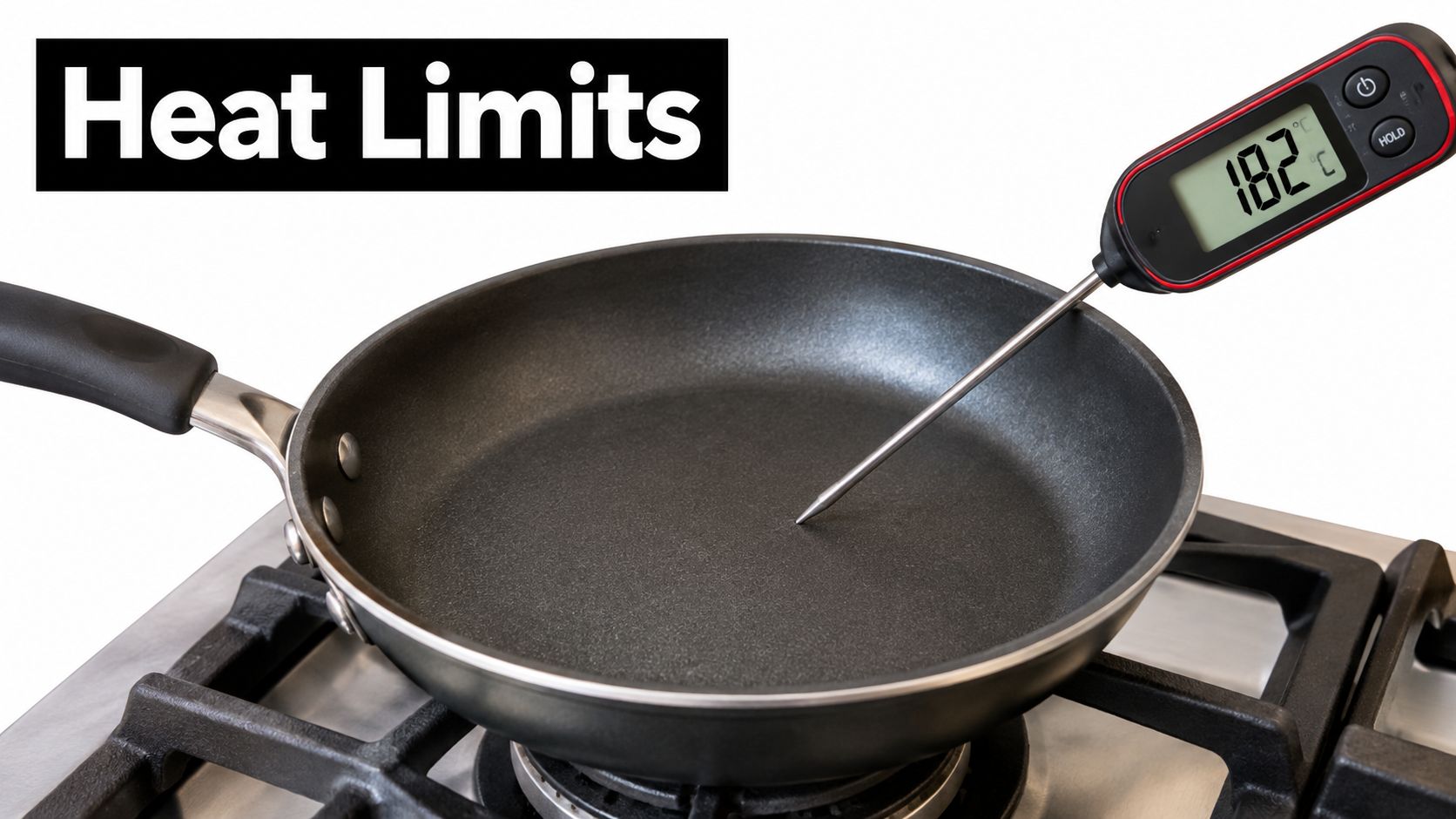
The key safety habit is never leave a small nonstick skillet empty over high heat. PTFE-coated skillets are generally considered safe for normal cooking, but the coating begins to break down at about 260°C, according to SBS reporting on cookware safety. An empty pan can reach that range much faster than a pan containing eggs, butter or vegetables.
Food absorbs and distributes heat, which gives you a useful buffer during ordinary cooking. An empty dark pan on a strong gas flame or induction setting has no such buffer. That's why overheating usually comes from careless preheating rather than from gently frying an egg at a moderate setting.
A safer everyday routine
Add butter or oil before the pan becomes aggressively hot. Set the hob to low or medium, watch the fat rather than the clock, and reduce the heat if it starts smoking. For eggs, butter should melt and foam gently, not darken instantly.
- Gas: Keep the flame beneath the base rather than licking up the sides. Small pans respond quickly, so turn the flame down as soon as the food enters.
- Ceramic electric: Allow for stored heat. Lower the setting early because the element won't cool immediately.
- Induction: Start conservatively. Induction can heat a compatible small pan rapidly, especially when the base closely matches the active zone.
The safest preheat is the one you can see and control. If oil smokes, the pan is too hot for non-stick cooking.
Use low-to-medium heat for eggs, pancakes, sauces and most small portions. You'll get better control and less coating stress than you will from blasting the pan and trying to rescue the food later. If oven use matters, read the manufacturer's exact temperature and handle instructions, along with this guide to oven-safe pans, before transferring any skillet from hob to oven.
Don't use a pan that has obvious peeling or flaking coating. A few surface marks don't automatically mean immediate danger, but they do tell you the skillet has reached the end of its best performance. Replace it when release becomes unreliable or the surface is visibly deteriorating.
Matching Pans to Cooking Scenarios
A 12cm pan is charming until you try to fold an omelette in it. The egg sets quickly at the edges, the filling crowds the centre and your spatula has nowhere to work. For a single fried egg, though, that compact base is exactly right. It keeps the white contained and avoids heating a large empty surface.
Move up to 16cm or 18cm for an omelette. The 16cm format suits one generous serve, while 18cm gives you enough room to push the cooked egg around the base and fold it without tearing. The larger option is also more forgiving if you add cheese, herbs or leftover vegetables.
Breakfast is where size matters most
Two eggs side-by-side expose the difference between a true cooking zone and a headline measurement. They need enough flat space to remain separate, but you don't want a broad pan that makes each egg spread thinly. A well-designed 18cm skillet can handle this neatly, while a 20cm pan is the safer choice if its base is broad and you regularly cook for more than one person.
Pancakes need a different decision. A 16cm pan produces a compact pancake that's easy to flip, but a 20cm pan gives you a more useful working area. Check the lip height and slope, because a steep edge can make a wide pan less practical than its label suggests.
Sauces and delicate food
Small nonstick skillets are excellent for reducing a modest amount of butter sauce, warming spices or finishing vegetables. The shallow depth lets you stir easily, but the narrow base can concentrate heat. Keep the hob moderate and move the pan off the burner before the sauce becomes thick enough to catch.
For fish, eggs and fragile dumplings, choose a smooth coated surface and a silicone or wooden turner. The advantage isn't just release. A compact base gives you better control over a small portion, so you're less likely to overcook the edges while waiting for the centre.
When you need the 20cm option
A 20cm skillet becomes worthwhile for a small steak, two portions of hash browns or a breakfast shared across several plates. It offers more room for browning, but don't mistake a larger pan for a better searing tool automatically. The meat still needs contact with a properly heated flat base, and a shallow non-stick pan isn't the ideal choice for repeated high-temperature searing.
For a deeper look at choosing cookware around browning and searing rather than simple food release, consult the Mise guide to searing pans. My own rule is to keep a small non-stick skillet for eggs and delicate food, then use a separate pan when hard searing is the main job.
Essential Maintenance and Care Tips
A small nonstick skillet doesn't need elaborate rituals. It needs consistent restraint. Most coating damage comes from harsh tools, excessive heat, careless stacking or trying to scrape cooked residue off before it has softened.
Clean it without fighting it
Let the pan cool before washing. A sudden blast of cold water against a hot base can encourage warping, and it's an unnecessary shock to the cooking surface.
Use warm water, ordinary dishwashing liquid and a soft sponge. If residue remains, soak the pan and loosen it gradually rather than attacking it with steel wool, scouring powder or an abrasive pad. The Everti guide to cleaning a non-stick pan covers the same gentle principle in more detail.
Follow this simple routine:
- Cool the skillet: Don't plunge a hot pan into cold water.
- Soak the residue: Give stuck food time to soften.
- Wash softly: Use a non-abrasive sponge and mild detergent.
- Rinse and dry: Remove detergent film and dry the surface before storage.
- Inspect the coating: Look for peeling, chips or areas where food repeatedly sticks.
Don't season a coated pan
Seasoning belongs to cookware such as carbon steel and cast iron. A light wipe of oil after washing can prevent a metal surface from drying or rusting, but it doesn't improve a PTFE coating. Repeatedly baking oil onto a coated skillet creates sticky residue and can make the pan perform worse.
You also don't need cooking spray for routine non-stick cooking. A small amount of butter or cooking oil is easier to control and less likely to leave a persistent film. Use silicone, nylon or wooden utensils, and lift the skillet rather than dragging it across a glass cooktop.
Store it so nothing scratches
If you stack pans, place a soft cloth or pan protector between them. Better still, hang the small skillet or give it a separate shelf position. Don't store a heavy cast-iron pan inside it, and don't leave metal tongs or a whisk resting on the coating.
The right care routine won't turn an inexpensive skillet into a lifetime pan, but it will preserve smooth release for far longer. Treat the surface as a working finish, not as a piece of metal you can scrub without consequence.
Making Your Final Skillet Choice
Start with the food, then the base, then the coating. Brand reputation comes after those three checks. A beautifully marketed skillet with a tiny cooking zone won't solve your breakfast problem, and a chemically impressive label won't compensate for a pan that overheats on your hob.
Use this decision framework:
- Cooking for one: Choose a 16cm skillet for eggs, small omelettes and single serves.
- Cooking for one or two: Choose 18cm when you want more room for fillings, two eggs or compact meals.
- Cooking for three or more: Choose 20cm when you need extra capacity, but measure the flat base before buying.
- Cooking only one egg: A 12cm or 13cm pan is efficient, though it won't replace a versatile everyday skillet.
- Cooking family breakfasts: Consider 24cm, provided your stovetop zone supports it and you have room to manoeuvre.
- Prioritising easy release: Pick a reputable PTFE-coated pan and use moderate heat with soft utensils.
- Prioritising a non-coated surface: Consider pure titanium cookware, accepting that food release depends more on oil, temperature and technique than it does with a conventional coated pan.
Everti offers pure titanium pans and frying pans as skillet-style, stick-resistant cookware for cooks who want an uncoated alternative. That option makes sense when material durability and a simple surface matter more to you than the effortless release of a traditional coating.
Before paying, turn the pan over and inspect the base. It should sit flat, match your hob sensibly and feel stable when you move it. Check the manufacturer's care instructions, confirm whether induction is supported if relevant, and ignore vague claims that don't explain the material or the limitations.
The decisive recommendation is this: buy an 18cm small nonstick skillet if you want one compact pan that does most jobs well. Choose 16cm for a solo breakfast specialist, 20cm for larger portions, and 12cm or 13cm only when you specifically want a one-egg pan. The right skillet is the one whose usable surface matches your food, not the one with the most impressive number on the box.
If you're ready to compare an uncoated alternative with conventional non-stick cookware, visit Everti to explore its pure titanium frying pans and kitchen essentials. Choose the surface that fits your cooking habits, then pair it with the correct size and gentle heat control for better everyday results.