

A premium stainless steel kitchenware set isn't just a purchase; it's the foundation of a great kitchen. It's loved for its professional-level performance, that brilliant shine, and incredible durability. Whether you're in a Michelin-starred restaurant or a bustling family kitchen, this material has proven time and again that it’s the go-to workhorse for just about any cooking job.
Why Stainless Steel Is a Kitchen Cornerstone
Take a peek inside almost any professional kitchen, and you’ll see stainless steel dominating the landscape. There's a good reason why chefs and serious home cooks alike swear by a high-quality stainless steel kitchenware set, and it goes well beyond its clean, modern look. It’s a long-term investment in reliable performance.
Unlike non-stick pans with coatings that inevitably scratch and wear out, stainless steel is built for the long haul. It’s designed to handle intense heat and rigorous, everyday use without giving up. This lasting power comes down to its core properties: it’s tough, fights off rust and corrosion, and importantly, it won’t react with acidic foods like tomatoes or lemon juice. That non-reactive quality is key, as it means the true flavour of your food is what you taste, with no metallic tang.
The Mark of a Quality Set
So, what separates a truly exceptional stainless steel kitchenware set from a mediocre one? It almost always boils down to two things: how it’s built and the grade of the material used. A great set is more than just a random assortment of pots and pans; it's a carefully engineered system designed to make you a better cook.
Here’s what to look for:
- Multi-Ply Construction: The best stainless steel cookware isn’t just steel. It has a core made of a super-conductive metal, like aluminium or copper, sandwiched between layers of durable steel. This layered construction gets rid of annoying hot spots, giving you even, consistent heat from the centre of the pan right to the edge.
- Weight and Balance: A well-made pan should feel solid and balanced in your hand. That bit of heft isn't just for show; it helps the pan hold heat better and stops it from warping over time, a common problem with thinner, cheaper cookware.
- Secure Handles and Lids: Check for handles that are firmly riveted to the pan’s body—you don't want any wobbling. The lids should also fit snugly to lock in heat and moisture, which is crucial for so many dishes.
At its heart, choosing the right stainless steel kitchenware set is about investing in consistency. It's about having the confidence that your tools will perform flawlessly every time you fire up the stove, letting you focus on the creative side of cooking.
Decoding Stainless Steel Cookware Grades
When you start shopping for a new stainless steel kitchenware set, you'll quickly notice a bunch of numbers thrown around—18/10, 18/8, and 18/0. These aren't just technical jargon; they’re the key to understanding exactly what you're buying. Think of it like the thread count on high-quality sheets—those numbers tell a story about the material's quality, durability, and even how it looks.
These numbers simply break down the percentage of two key metals added to the steel: chromium and nickel. The first number is always chromium, and the second is nickel. So, a pan labelled "18/10" is made of an alloy that’s 18% chromium and 10% nickel.
That simple formula is the secret behind what makes stainless steel such a workhorse in the kitchen.
The Role of Chromium and Nickel
Chromium is the real hero here. It’s what puts the "stainless" in stainless steel. It works by forming a microscopic, invisible layer on the surface of the metal that acts as a shield, fiercely protecting it from rust and corrosion. You’ll find that any food-grade stainless steel worth its salt will contain a healthy amount of chromium, typically between 16% and 18%.
Nickel, on the other hand, is the supporting act that adds a bit of polish and extra muscle. It boosts the cookware’s ability to stand up to acidic foods—like your slow-simmered tomato sauce or a zesty lemon marinade—and gives it that beautiful, silvery shine. Generally, the more nickel, the brighter and more corrosion-resistant the finish.
This blend of elements is what gives stainless steel its reputation for durability and performance.
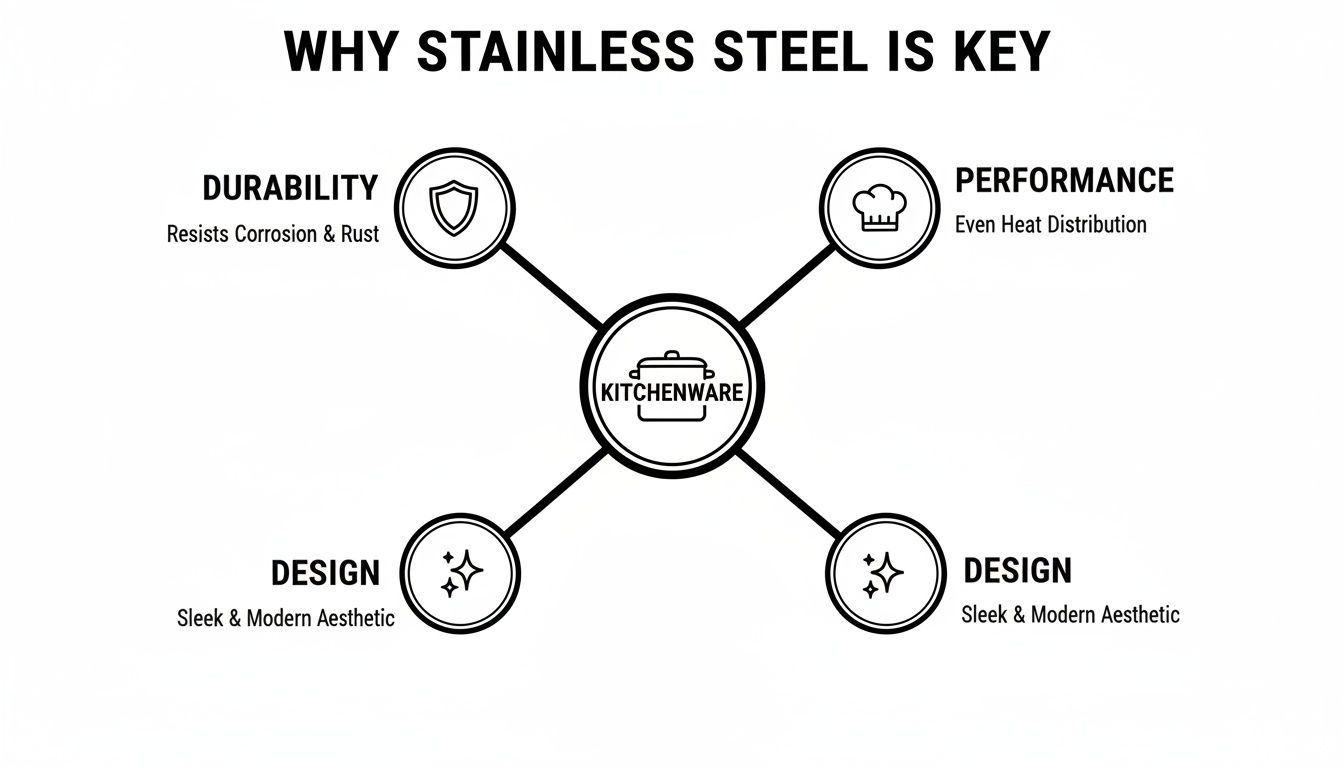
As you can see, the material’s design, strength, and cooking performance are all connected, stemming right from its fundamental composition.
Common Grades and What They Mean for You
To help you cut through the marketing fluff, let’s look at what the most common grades actually mean for your cooking.
When you're comparing different pots and pans, the grade is one of the best indicators of real-world quality. Here’s a quick rundown of the main players you’ll see on the shelves.
A Practical Comparison of Stainless Steel Grades
| Grade | Composition (Chromium/Nickel) | Key Feature | Ideal For |
|---|---|---|---|
| 18/10 (304 Grade) | 18% / 10% | The gold standard. Highest rust resistance and a brilliant, lasting shine. | Premium cookware, cutlery, and high-use kitchen tools. |
| 18/8 | 18% / 8% | Almost identical to 18/10, with excellent durability and shine. | High-quality cookware, food storage containers, and drink bottles. |
| 18/0 (430 Grade) | 18% / <0.75% | Magnetic (induction compatible) but less corrosion-resistant. | Budget-friendly cookware, mixing bowls, and utensils. |
Understanding this table makes you a much smarter shopper. You can now see why an 18/10 pan will look great and perform reliably for years, while a cheaper 18/0 option might not hold up as well against daily wear and tear.
It's no surprise that stainless steel holds such a commanding position in Australian kitchens, mirroring its global market dominance of 38.2%. Its reputation for being tough, non-reactive, and easy to clean really resonates with home cooks who want reliable, low-maintenance gear.
Ultimately, picking the right grade is about balancing what you want to spend with the performance you expect. A higher nickel content usually means a higher price tag, but it’s an investment in a beautiful and resilient stainless steel kitchenware set that could genuinely last a lifetime. To see how it stacks up against other popular materials, you might find our guide on stainless steel versus carbon steel an interesting read.
Getting to Grips with Stainless Steel in the Kitchen
Look, no cookware is flawless, and a stainless steel kitchenware set is certainly no exception. It’s praised for being tough and looking the part, but it has a unique personality that takes some getting used to. Before you invest, it’s worth understanding both its shining moments and its potential frustrations to see if it’s the right fit for you and the way you cook.
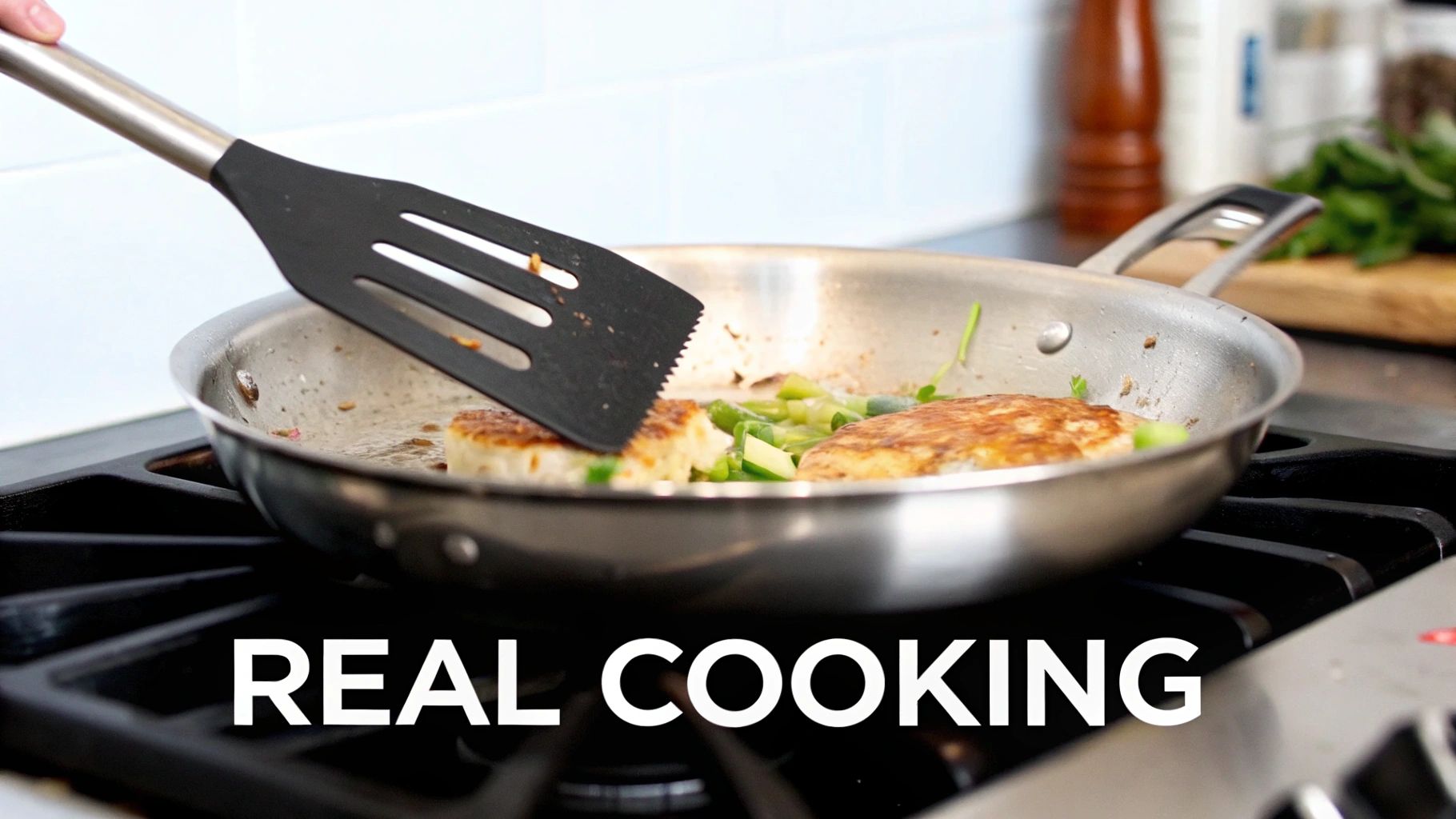
On the plus side, there's a reason pro chefs and keen home cooks swear by it. Stainless steel brings some serious benefits to the table, making it a true kitchen workhorse you can rely on day in, day out.
The Upside: Why Chefs Love It
One of the biggest wins for stainless steel is its non-reactive surface. Think about simmering a tangy, acidic tomato sauce for a few hours. In a pan made from something like cast iron or plain aluminium, the acid can actually react with the metal, which can mess with the flavour and even the colour of your food. Stainless steel doesn't do that; it’s completely neutral, so your food tastes precisely how you intended it to.
That non-porous surface has another trick up its sleeve: it won’t hold onto strong odours or flavours. You can sear garlic-heavy fish one night and whip up a batch of delicate crepes the next morning without any weird taste crossover. For anyone who cares about clean, pure flavours, that’s a massive plus.
Then there’s its sheer versatility. A good stainless steel pan is happy to go from the cooktop straight into a screaming hot oven to finish off a steak or bake a frittata. This ability to handle seriously high heat for a perfect sear while also being gentle enough for a slow simmer makes it incredibly adaptable.
The Downside: Common Kitchen Headaches
Now for the reality check. Anyone who has ever used a stainless steel kitchenware set will tell you there’s a bit of a learning curve. The number one complaint? Food sticks. Especially delicate things like eggs and fish fillets. This isn't really a flaw in the pan itself; it’s usually down to how it's being used.
The secret is all in the heat control. Unlike a non-stick pan that gives you a safety net with its coating, stainless steel asks you to create a temporary non-stick surface yourself. You do this by preheating the pan properly before a single drop of oil goes in. It takes a bit of practice, but once you nail it, you unlock what the cookware is truly capable of.
Pro Tip: The best way to know if your pan is ready is with the water test. A properly heated stainless steel pan will make a droplet of water dance and skate across the surface without instantly turning to steam. This is called the Leidenfrost effect, and it’s your green light to start cooking.
Another crucial thing to know is that stainless steel, by itself, is a pretty terrible conductor of heat. If a pan were just a single sheet of steel, you’d get nasty hot spots that burn your food in one area while leaving another part of the pan lukewarm. It would be a nightmare.
This is precisely why you always see stainless steel cookware advertised as "multi-ply" or "clad." It's not just marketing speak; it's essential. To fix the heat distribution problem, manufacturers sandwich a core of a super-conductive metal—usually aluminium or copper—between layers of stainless steel. This layered construction is what allows the pan to heat up fast and, most importantly, spread that heat evenly.
So, that’s the honest truth of it. Stainless steel demands a bit more attention and skill from the cook. But for anyone willing to learn its little quirks, the payoff is incredible control, pure flavour, and a set of pans that could genuinely last a lifetime.
Looking After Your Cookware For The Long Haul
A good quality stainless steel kitchenware set isn't just a purchase; it's an investment that should last a lifetime. But like any good tool, its lifespan really comes down to how well you look after it. With a few simple habits, you can keep your pots and pans in top-notch condition for decades.
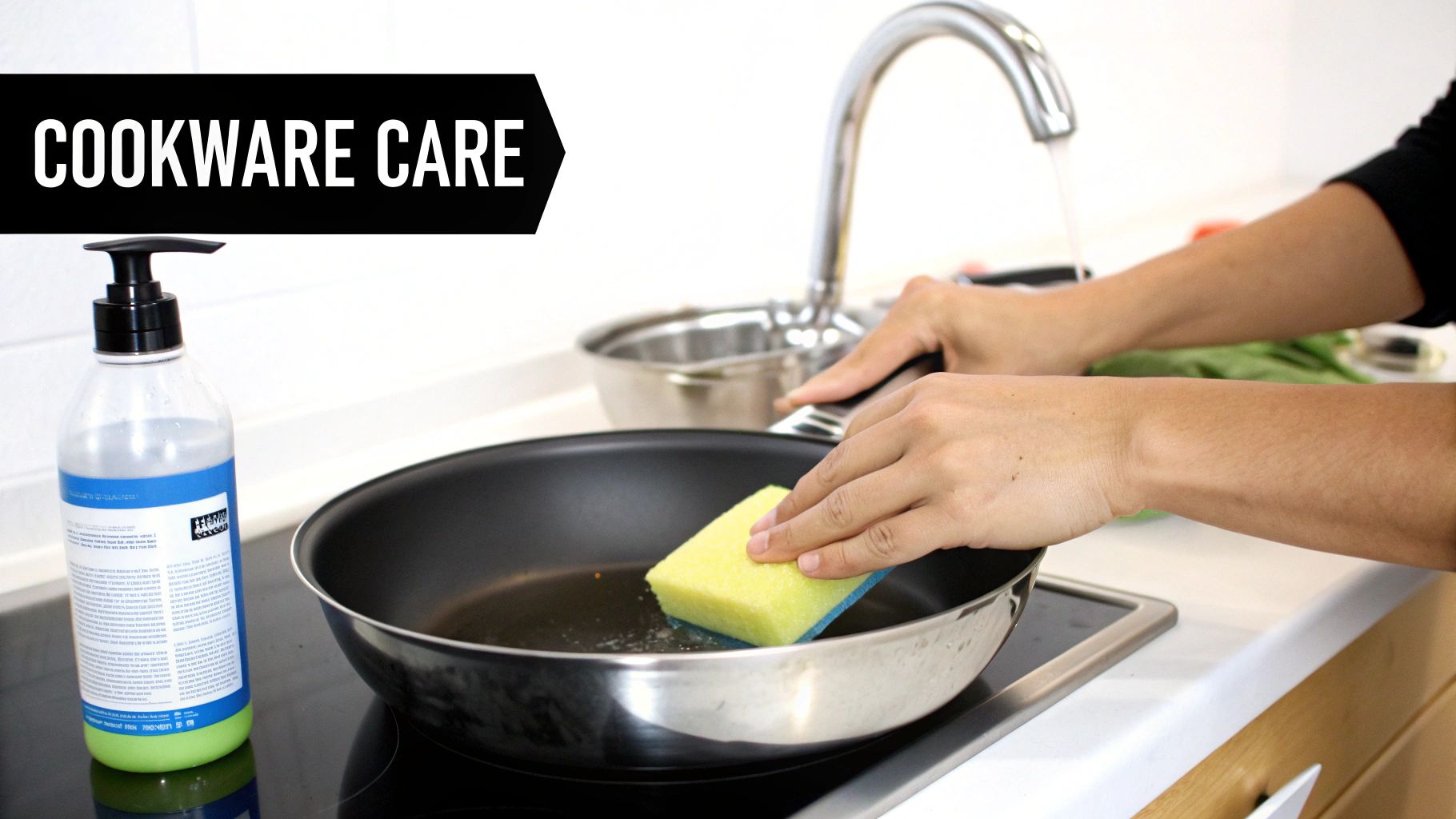
Great cookware care starts before you even begin cooking. As we mentioned earlier, getting your heat control right is the secret to both preventing food from sticking and protecting the pan itself. Always give your pan a minute or two to preheat over a low to medium flame before adding any oil. This simple step creates a temporary non-stick surface that makes cooking and cleaning so much easier.
Day-To-Day Cleaning and Maintenance
When it comes to daily washing, gentle is the way to go. Let your pan cool down for a few minutes before you wash it. Throwing a piping hot pan into cold water can cause thermal shock, which is a surefire way to warp the metal over time. For most meals, a quick wash with warm, soapy water and a soft sponge is all you need to get it sparkling clean.
Steer clear of harsh scrubbers like steel wool or abrasive powders. While they might get the job done fast, they'll leave behind a network of fine scratches that will dull that beautiful, mirror-like finish. The scratches won’t ruin how the pan cooks, but they will take away its shine.
The whole point of daily care is to clean your pans well without causing any damage. A little bit of consistent, gentle cleaning is always better than an aggressive scrub every now and then.
What about the dishwasher? It's a common question. We've put together a full guide on whether your stainless steel pans are truly dishwasher safe. While many brands will say it's fine, we almost always recommend hand washing to keep your cookware looking its best for years to come.
Dealing With Pesky Stains and Marks
Even the most careful cook will eventually run into a few common stainless steel issues. Don't worry, they look worse than they are and are usually incredibly easy to fix.
- Stubborn Burnt-On Food: If you've got some seriously stuck-on bits, just fill the pan with water, bring it to a gentle simmer, and use a wooden spoon to nudge the food off. For really tough spots, a simple paste of baking soda and water acts as a gentle, effective abrasive.
- The Rainbow Stain: Ever noticed a weird, rainbow-like shimmer on your pan? That's just heat tint, and it happens when the pan gets a little too hot. It's completely harmless and disappears instantly with a wipe from a cloth dipped in a bit of white vinegar.
- Chalky White Spots: These little spots are usually just mineral deposits from hard water. The fix is easy: boil a mix of one part vinegar to three parts water in the pan for a few minutes, give it a normal wash, and they'll be gone.
These simple kitchen remedies will sort out almost any problem you'll encounter. The principles are the same across most stainless steel products, so if you want to dive deeper, learning how to clean stainless steel grill grates offers some great transferable tips.
Finally, think about storage. To keep your pans from getting scratched up, try not to stack them directly inside one another. If you're tight on space and have to stack, just place a tea towel, a bit of paper towel, or a proper pan protector between each one. It's a small step that makes a big difference in keeping your cookware looking brand new.
Exploring Titanium as a Superior Alternative
While a top-notch stainless steel kitchenware set is a brilliant workhorse in any kitchen, it’s not the last word in cookware. For anyone who puts health, purity, and lifelong performance at the top of their list, another material has emerged as a serious upgrade: pure titanium. It’s less of a replacement and more of a conscious evolution from a trusted classic to a modern material built for absolute peace of mind.
Think of it this way. Stainless steel is like a well-built, reliable family sedan. It’s safe, it does the job day in and day out, and it’s a perfect fit for most people. Pure titanium, on the other hand, is the high-performance electric vehicle crafted from aerospace-grade materials. It's lighter, stronger, and engineered from the ground up for a purer, more direct experience with zero compromises.
This isn't just about how it performs on the stovetop. It’s about the fundamental way your cookware interacts with your food. Titanium is so incredibly inert that even the best stainless steel can't quite compete, making it a compelling choice for the health-focused home chef.
The Purity and Performance of Pure Titanium
The biggest drawcard for pure titanium is that it’s completely non-reactive. It’s 100% non-toxic and biocompatible—the very reason it’s the go-to material for medical implants like hip replacements. In the kitchen, this means it will never, ever leach metals or other substances into your food, no matter how acidic your tomato sauce or how alkaline your ingredients are.
This purity translates into real, tangible benefits when you're cooking:
- No Metallic Taste: Food tastes exactly as it should. You’ll never get that weird metallic tang that can sometimes spoil delicate flavours.
- Completely Coating-Free: Unlike most non-stick pans, pure titanium doesn’t need any chemical coatings that can break down and release questionable compounds over time.
- Microplastic-Free Cooking: With no coatings to scratch, flake, or peel, you completely remove the risk of tiny plastic particles ending up in your meals.
On top of all that, pure titanium has natural antibacterial properties. Its surface is simply a less friendly place for bacteria to grow compared to other materials, which adds another layer of hygiene to your kitchen. It’s an exceptional choice for everything from searing a steak to chopping fresh veggies on a cutting board.
Strength Without the Weight
The first time you pick up a piece of titanium cookware, you'll be amazed at how light it is. It boasts the highest strength-to-weight ratio of any metal. That means you get all the rugged durability of steel at roughly half the weight. A heavy-bottomed stainless steel pan can be a real wrist-wrencher, but a titanium equivalent is a breeze to handle.
But don't let its lightweight feel fool you. Titanium is incredibly resistant to warping, scratching, and denting, ensuring it can handle the chaos of a busy kitchen for a lifetime. This is a material that truly embodies the "buy it for life" philosophy, standing up to decades of daily use without breaking a sweat. For a deeper look into all its benefits, our complete guide to the titanium cookware set has all the details.
Pure titanium isn't just an alternative; it's an elevation of the cooking experience. It provides the professional performance of the best cookware materials but with an added layer of purity and safety that is unmatched.
The appetite for quality kitchen gear is undeniable. The Australian Stainless Steel Cookware Market was recently valued at USD 71.2 million, and it's set to climb to USD 123.98 million by 2033. This growth shows a clear trend: Aussies are increasingly willing to invest in quality, and titanium sits at the very peak of that investment. You can discover more insights about the Australian stainless steel cookware market.
For the discerning cook, choosing titanium is a deliberate decision. It’s for those who want to remove any doubt about what might be interacting with their family’s food. While a stainless steel kitchenware set is a fantastic and reliable choice for most, pure titanium offers the ultimate assurance in health, performance, and longevity.
How to Choose the Right Set for Your Kitchen
So, how do you make the final call? The right cookware set for you really comes down to what you value most in the kitchen. Both a premium stainless steel kitchenware set and a pure titanium collection are fantastic long-term investments, but they're built for slightly different priorities. Knowing what you need is the secret to picking the perfect culinary partner.
For most home cooks, a high-quality, multi-ply stainless steel set is an absolutely brilliant and dependable choice. It’s incredibly versatile—you can get a perfect sear on a steak and then slide that same pan straight into the oven. Its durability is legendary, and with just a bit of care, it will serve you well for decades, delivering reliable, even heat for thousands of meals. There's a reason it's the undisputed workhorse in both professional and home kitchens.
Your Final Decision Checklist
However, if health and material purity are at the very top of your list, pure titanium is a compelling upgrade. It’s about more than just cooking performance; it’s about total peace of mind.
Titanium is completely non-toxic and won't react with your food, meaning you never have to worry about anything leaching into your meals. This makes it the ultimate choice for health-conscious families or anyone trying to remove coatings and potential allergens from their kitchen. The fact that it's so lightweight is just a fantastic bonus, making it a joy to handle.
To help you decide, ask yourself these three questions:
- What’s your go-to cooking style? Do you rely on heavy-duty searing and the stovetop-to-oven flexibility where stainless steel really shines?
- What are your health priorities? Is cooking with a completely inert, non-toxic, and biocompatible material your number one concern? If the answer is yes, titanium is the clear winner.
- What’s your long-term budget? Stainless steel gives you excellent value over its long life. Titanium requires a higher initial investment for its superior purity and lifetime durability.
Choosing your cookware is a personal decision that reflects your values. Whether you opt for the proven reliability of stainless steel or the unmatched purity of titanium, you are investing in a foundation for healthier, more enjoyable cooking.
As you weigh your options, don't forget about sustainability. For more ideas on making conscious choices in your cooking space, you can explore a wide range of eco-friendly kitchen products. By thoughtfully matching your needs with the unique strengths of each material, you can confidently choose the set that will serve you and your family for years to come.
Got Questions? We’ve Got Answers
Stepping into the world of premium cookware can feel a bit overwhelming. Let's clear up some of the most common questions that pop up when you're choosing and using a top-notch stainless steel kitchenware set.
Is An 18/10 Stainless Steel Kitchenware Set Really Worth the Extra Money?
In a word: absolutely. When you see 18/10 stainless steel, it means the alloy contains 18% chromium (for rust protection) and a crucial 10% nickel. It's that higher nickel content that makes all the difference, giving the cookware its brilliant shine and incredible resistance to corrosion.
Sure, it might cost a bit more upfront, but think of it as a long-term investment in your kitchen. This grade is built to withstand the test of time, fighting off stains and pitting for years, so it looks and performs just as well as the day you bought it.
How Do I Stop Food from Sticking to My Stainless Steel Pans?
This is the big one, and the secret isn't in the pan, it's in the technique. The most common mistake people make is rushing the preheating process. Good heat management is everything.
Start by heating your empty pan over medium heat for a minute or two. To know when it's ready, try the water test: flick a few drops of water onto the surface. If they form little beads that dance around, you've hit the sweet spot. Now you can add your oil, wait for it to shimmer, and then add your food. This simple ritual creates a temporary non-stick layer, making cooking a dream.
Mastering stainless steel is all about understanding the dance between heat, oil, and the pan itself. It’s a skill, not a sign of a faulty product.
Is Stainless Steel Safer Than Old-School Non-Stick Cookware?
Yes, high-quality stainless steel is hands down one of the safest materials you can cook with. It's completely free from chemicals like PFOA and PTFE, which are often found in traditional non-stick coatings and have been linked to health concerns, especially when they start to break down at high heat.
Better yet, stainless steel is non-reactive. That means you can simmer a rich tomato sauce or deglaze a pan with wine without worrying about any metallic tastes or chemicals leaching into your meal. If you're building a non-toxic kitchen, a quality stainless steel kitchenware set is a brilliant, reliable foundation.
For those who want to take purity and performance to the next level, Everti offers a range of pure titanium kitchen essentials, truly designed to last a lifetime. Discover a new standard of clean cooking at https://everti.com.au.