

A stove to oven pan is one of your kitchen's best-kept secrets. Think of it as the ultimate multi-tasker, built to go straight from searing on the cooktop to finishing in the oven without a second thought. This simple transition is a game-changer, making complex recipes easier, slashing your washing-up time, and helping you nail that restaurant-quality finish at home.
Your Kitchen’s Secret Weapon
Picture this: you're searing a thick-cut steak, getting that perfect, deep-brown crust on the stovetop. But instead of fumbling to transfer it to a separate baking dish, you just slide the entire pan straight into a hot oven. The result? A steak that's cooked to a perfect medium-rare, juicy and tender all the way through.
That’s the magic of a stove to oven pan. It’s more than just cookware; it’s a technique for building incredible depth of flavour and texture that you just can't get when juggling multiple pots. By doing everything in one pan, you hang onto all those delicious caramelised bits stuck to the bottom—the fond—which become the foundation for an amazing pan sauce.
From Sizzling on the Stove to Roasting in the Oven
Let's look at a few ways this workhorse pan can make a real difference in your cooking:
- Flawless Proteins: From chicken thighs with unbelievably crispy skin to a tender pork loin or even delicate fish fillets, the method is beautifully simple. Sear for that gorgeous colour and flavour on the stove, then let the oven's gentle, all-around heat finish the job.
- Easy One-Pan Dinners: A hearty frittata is the perfect example. Sauté your onions, capsicum, and other fillings on the cooktop, pour in the eggs, and move the whole thing into the oven. It'll puff up into a fluffy, golden masterpiece, ready to serve.
- Next-Level Roasts: Get your roast dinner started by browning carrots and onions on the stove to build flavour. Then, nestle your joint of meat on top and transfer the entire pan to the oven. You've just created a deeply flavourful base for the best gravy you'll ever make.
The ability to switch from direct, high heat to indirect, ambient heat is what takes a meal from good to truly great. This two-stage cooking locks in juices and guarantees a tender, perfectly cooked result every single time.
But hold on—not just any pan can make this journey. The move from the intense heat of a cooktop burner to the sustained high temperatures inside an oven puts a massive strain on your cookware. This is why it’s so important to know what makes an oven safe pan.
So many pans on the market have plastic or silicone-wrapped handles that simply can't take the heat, making them a serious hazard in the oven. The secret to a true stove-to-oven pan lies in its construction and, critically, the materials it’s made from. We’ll dive into that next.
Why Your Pan's Material Matters Most
When it comes to stove-to-oven cooking, the material of your pan isn't just a detail—it's everything. Think of it like choosing the right tyres for a car; the rubber you choose directly impacts how the car performs, how safe it is, and how well it handles the journey. The same goes for your pan as it moves from the intense, direct heat of the cooktop to the all-encompassing heat of the oven.
Every material brings its own set of pros and cons to the table. The classics, like cast iron, are famous for holding onto heat, which is why they give you that perfect, deep sear. But anyone who owns one knows they're seriously heavy and need a bit of TLC to keep them from rusting. Stainless steel is another old favourite, known for being a durable, reliable all-rounder in the kitchen.
It’s no surprise that in the busy Australian cookware market, versatile pots and pans pull in a huge 44.48% revenue share in the stainless steel category. That figure is driven by home cooks and professional chefs who need gear that can keep up. You can explore more data on this trend and what it means for the local market.
The Modern Alternative: Pure Titanium
While the old faithfuls have their place, titanium has stepped up as a top-tier modern option, solving many of the problems that come with traditional cookware. It brings a unique blend of features that are just right for a high-performance stove-to-oven pan.
The first thing you'll notice is how incredibly light it is for its strength. A titanium pan gives you all the durability and heat resistance you need for oven cooking, but without the back-straining weight of cast iron. That makes moving a hot pan from the stove to the oven much easier and, frankly, a lot safer.
Titanium’s natural properties create a cooking experience that isn’t just about performance—it’s also about health. It’s a choice that puts both culinary results and your well-being first.
On top of that, high-quality titanium cookware, like the SGS-verified pure titanium Everti uses, is naturally non-stick without any chemical coatings. This means no PFOA, PTFE, or microplastics getting into your food. You just get the clean, pure flavour of your ingredients shining through.
Unpacking the Benefits of Titanium
So, it's lightweight and non-toxic, but the advantages of pure titanium don't stop there. Several other key features make it a standout choice for a stove-to-oven pan, turning it into a genuine lifetime investment for your kitchen.
- Incredible Corrosion Resistance: Titanium doesn't care about acidic ingredients. Tomatoes, lemon juice, wine—none of it will cause rust or corrosion, unlike cast iron which can react and need re-seasoning.
- Inherent Antibacterial Nature: Because the material is naturally non-porous, it resists bacteria, helping you maintain a more hygienic cooking surface.
- Superior Durability: It's incredibly tough and fights off warping, scratching, and denting, so it will keep its shape and performance even after years of high-heat cooking.
If you're wondering about the pan you already own, this quick decision tree can help you figure out if it's ready for the oven.
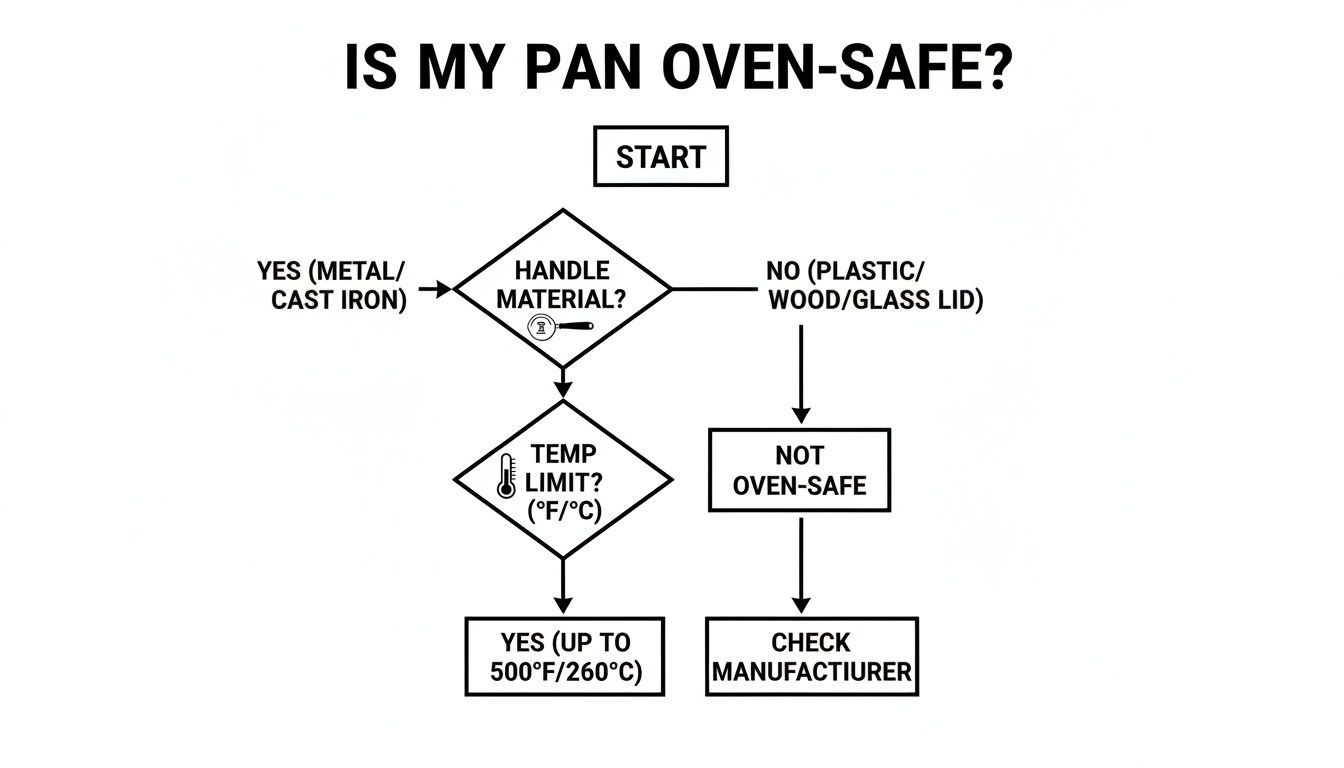
As the flowchart shows, the two biggest weak points are often the handle material and the manufacturer's temperature limits. By choosing a pan made entirely from a heat-stable material like pure titanium, you completely remove those worries. It just lets you get on with your cooking, confidently.
Investing in a Lifetime of Healthy Cooking with Titanium
Choosing a premium titanium stove-to-oven pan isn't just about adding another piece of equipment to your kitchen. Think of it as a real investment in your long-term health and your love for cooking. This isn't a pan you'll be replacing in a few years. It's a foundational tool, built to serve you and your family for a lifetime, ensuring your wellbeing with every single meal.
The biggest win here is actually what titanium doesn't have. Unlike so many coated pans out there, Everti's pure titanium cookware is completely free from microplastics, BPAs, and toxic coatings like PFOA or PTFE. This means you can sear, sauté, and roast with absolute confidence, knowing that no harmful chemicals will ever leach into your food, even when you're cooking with acidic ingredients or cranking up the heat.
Purity in Every Detail
We're obsessed with material purity. Our stunning Aura collection gets its iridescent colours from a specialised heat treatment, not from any dyes, paints, or chemical coatings. This clever process simply alters the surface oxide layer of the titanium itself. The result? The pan remains 99.9% pure titanium, and nothing else ever touches your food.
This commitment to purity brings some real, tangible health benefits to your daily cooking:
- No Chemical Leaching: Go ahead and cook with tomatoes, lemons, or wine-based sauces. You'll never have to worry about strange chemical reactions or a metallic aftertaste.
- Naturally Antibacterial: The non-porous surface of pure titanium is inherently resistant to bacteria, making it a much more hygienic choice for your kitchen.
- Allergen-Free Surface: Titanium is biocompatible, which makes it a fantastic option if you or someone in your family has a nickel allergy or other metal sensitivities.
This growing focus on safe, non-toxic gear is really shaking up the Australian market. Premium cookware, especially the versatile stove to oven pan, is booming. The market value is projected to leap from USD 78.04 million to an incredible USD 117.19 million by 2033. This surge is being driven by health-conscious home cooks—who make up 60% of buyers—demanding safer, longer-lasting pans.
A Pan Built for Forever
Health benefits aside, a titanium pan is simply built to last. It’s a one-time purchase that breaks the frustrating and wasteful cycle of constantly replacing worn-out cookware. This long-term value is backed up by practical features designed to withstand a lifetime of heavy use.
An investment in pure titanium cookware is an investment in peace of mind. It’s the confidence that comes from knowing your pan is safe, durable, and will perform flawlessly for decades to come, backed by a lifetime warranty.
For example, the surface of an Everti pan is remarkably blade-friendly. You can cut food directly in the pan without having to worry about dulling your good knives, a common problem with ceramic or glass surfaces that can ruin a blade's edge. This kind of durability makes it a tough, forgiving tool that's perfect for any busy kitchen.
By choosing a material that won't chip, peel, or degrade over time, you're not just buying a pan; you're adopting a more sustainable and healthy way of cooking. For a deeper dive into what makes this material so special, check out our guide on titanium cookware in Australia. It’s the clear choice for families who prioritise safety and chefs who demand nothing less than the best performance.
Mastering Your Stove to Oven Cooking Techniques
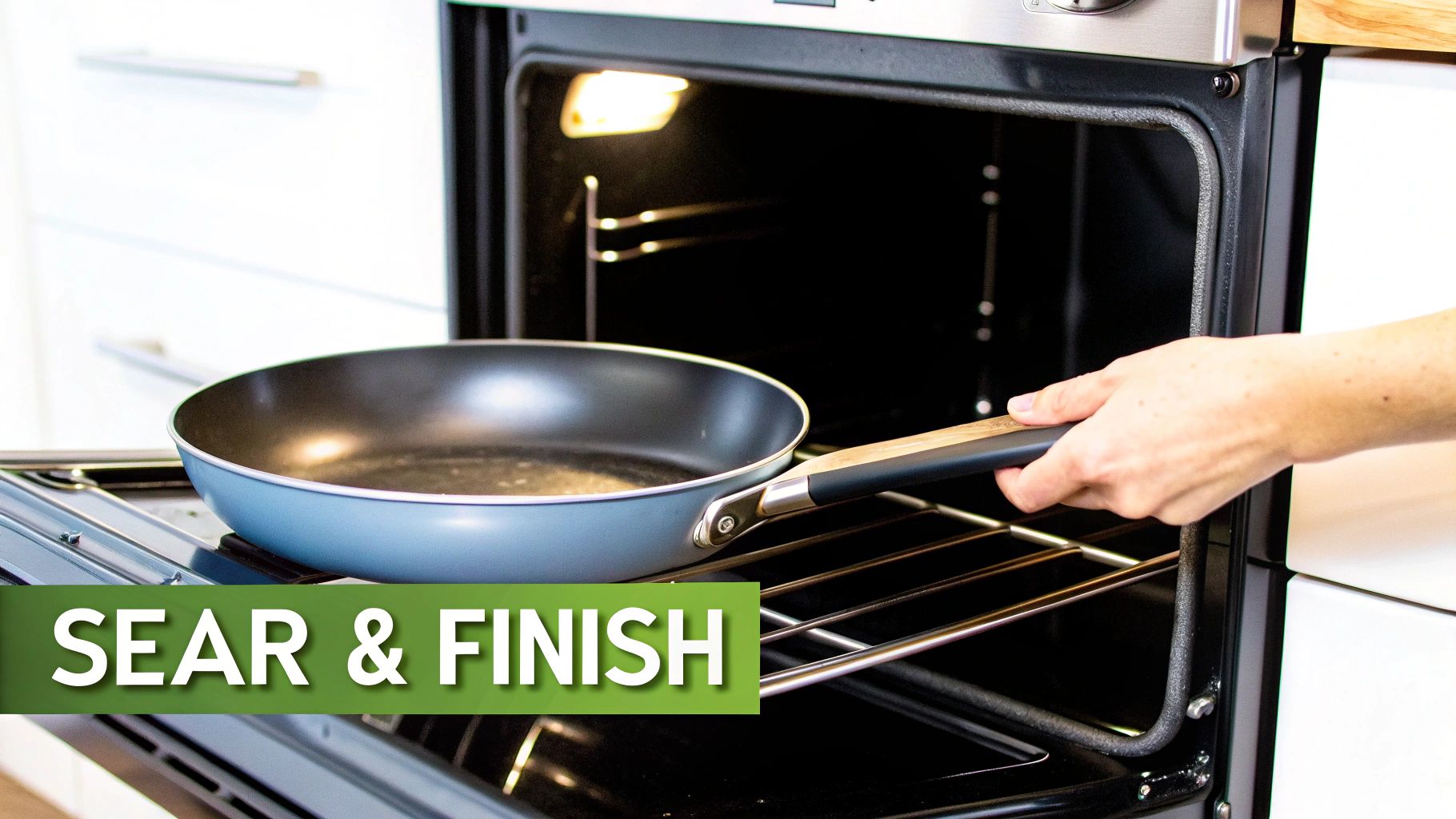
Owning a great stove to oven pan is the first step, but knowing how to use it is where the magic really happens. Mastering the techniques that make the most of this seamless transition from stovetop to oven will completely change your cooking. It’s not just about convenience; it’s about building incredible layers of flavour and texture you can’t get any other way.
The whole idea is beautifully simple: start with the high, direct heat of the stovetop and finish with the gentle, all-around heat of the oven. This two-step dance lets you get that perfect, deep-brown sear on the outside while the inside cooks through evenly, without a hint of burning.
The Science of the Sizzle
Ever wonder how a steak gets that amazing, flavour-packed crust? It's not just cooking; it's chemistry. This is the Maillard reaction in action—a wonderful process that happens when amino acids and sugars in your food get hot. Searing on the stove is what kicks it all off, creating hundreds of new aroma and flavour compounds that make food taste incredible.
Once you’ve got that perfect crust, sliding the pan into the oven lets the food finish cooking gently. This is an absolute game-changer for thicker cuts of meat, dense vegetables, or even a frittata. An all-titanium pan really shines here; it’s so much lighter, making the move from a blazing hot cooktop into the oven far safer and easier than wrestling with a heavy, clunky pan.
The stove-to-oven method isn't just a cooking shortcut; it's a culinary technique that separates good results from great ones. It ensures a juicy, tender interior is protected by a perfectly caramelised exterior.
A Perfect Pan-Seared Salmon Dinner
Ready to give it a go? Here’s a simple recipe that really shows off what your pan can do. It looks impressive but is surprisingly easy.
- Preparation is Key: First things first, pat your salmon fillets completely dry with a paper towel. This is the secret to getting that fantastically crispy skin. Season them well on all sides with salt and pepper.
- Preheat the Pan: Get your titanium pan on the stove over medium-high heat. You need to let it get properly hot for a couple of minutes before you add a little bit of oil.
- Searing for Flavour: Gently lay the salmon fillets skin-side down in the hot pan. Listen for that satisfying sizzle—that’s the sound of flavour being made. Let them sear, untouched, for about 3-4 minutes, until the skin is beautifully golden and crisp.
- Add Your Veggies: Flip the salmon over, and then toss your veggies (asparagus spears or cherry tomatoes work perfectly) into the pan around the fish.
- Finish in the Oven: Immediately slide the whole pan into your preheated 200°C oven. Let it all roast for another 5-7 minutes, or until the salmon is cooked just how you like it and the vegetables are tender.
The best part? This entire meal comes together in one single stove to oven pan. All those delicious flavours from the salmon seep into the vegetables, and when you’re done, cleanup is an absolute breeze. It’s the perfect way to turn a standard weeknight dinner into something special with hardly any extra effort.
How to Care for Your Pan for a Lifetime of Use
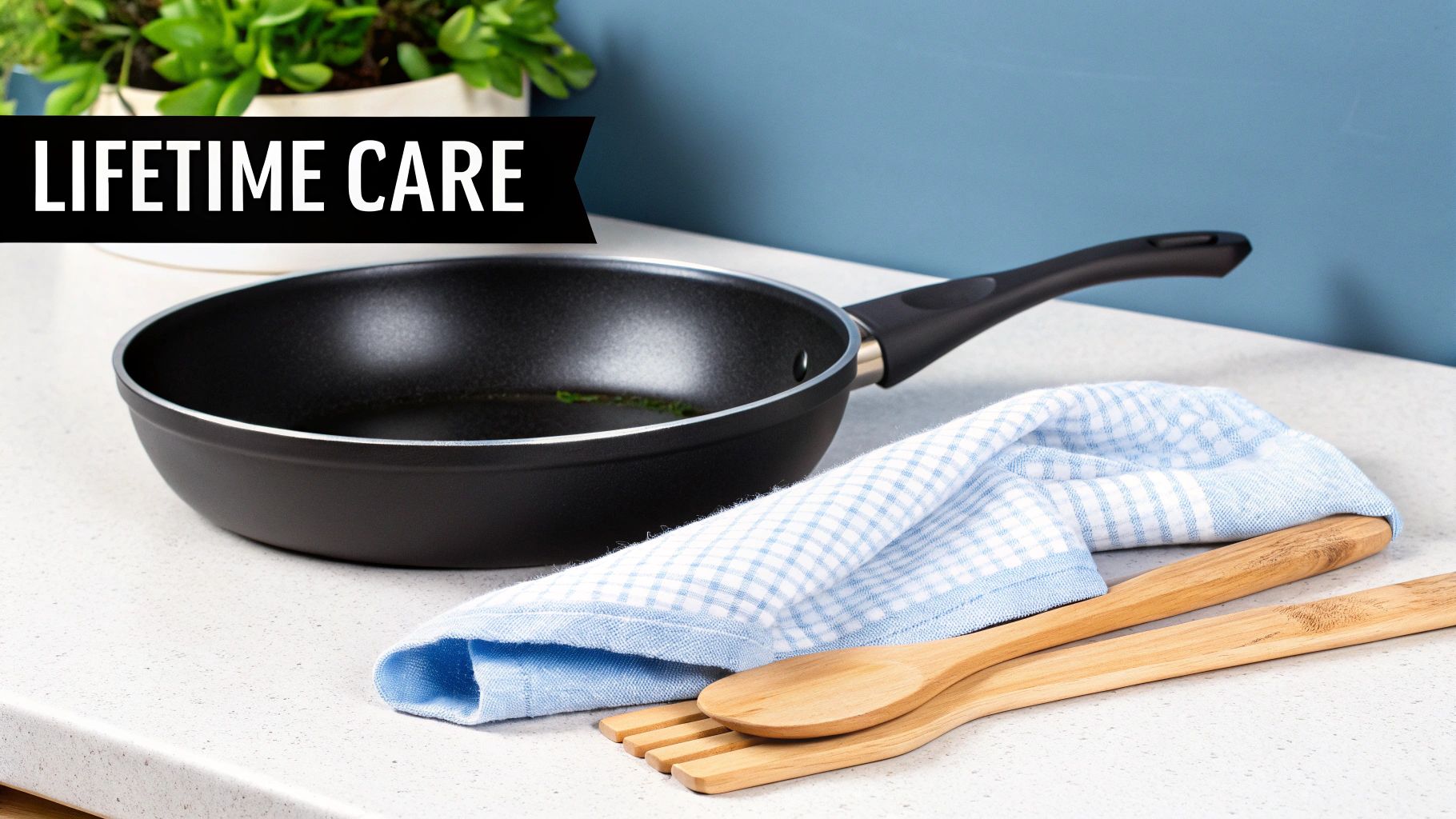
When you invest in a premium stove to oven pan, you’re not just buying a piece of cookware; you’re choosing a kitchen partner built to last for decades. Looking after it properly means it will perform beautifully for a lifetime, and the good news is, it’s far simpler than you might think—especially with a material as tough as pure titanium.
Everti's titanium pans are designed to be seriously low-maintenance, a welcome change from traditional cookware that can be quite demanding. Forget the fussy seasoning rituals of cast iron or the constant fear of scratching a delicate non-stick coating. Titanium’s natural resilience to stains, odours, and corrosion handles it all.
This shift towards durable, non-toxic materials is something we're seeing all across Australia. The local cookware market is expected to surge from USD 664.44 million to a massive USD 1,369.43 million by 2033. A huge driver of this growth? The 65% of Australian households now making healthier cooking a priority and actively seeking out pure, uncoated options like titanium. You can dive deeper into the data over at IMARC Group.
Simple Steps for Everyday Cleaning
Cleaning your titanium pan after a good sear or a long roast is refreshingly easy. The golden rule is to avoid drastic temperature changes, as this can cause any metal to warp over time.
- Let It Cool Down: Before you even think about washing it, let your hot pan cool on the stovetop for a few minutes. Plunging it straight into cold water is a definite no-go.
- Gentle Washing: A bit of warm, soapy water and a soft sponge or cloth is usually all you need. Since pure titanium is naturally slick, food doesn't tend to weld itself on, so aggressive scrubbing is rarely necessary.
- For Stubborn Bits: If you do have a few caramelised bits stuck on (which are often the best bits!), simply deglaze the pan. Just add a splash of water or stock while the pan is still warm, and they'll lift right off. Alternatively, a short soak will do the trick.
The real beauty of a pure titanium stove to oven pan lies in its resilience. It won’t hang onto the garlic from last night’s dinner, so tonight’s meal tastes exactly as it’s supposed to.
Utensils and Storage Best Practices
While Everti's titanium is tough enough to stand up to metal utensils used with a bit of care, sticking with the right tools will keep your pan looking its best. Silicone, wood, or nylon utensils are fantastic for daily use as they are gentle on the surface and won't leave a mark.
When it's time to put it away, a little thought goes a long way.
- Avoid Stacking: The ideal way to store your pan is to hang it from a pot rack or place it on a shelf by itself.
- Use a Protector: If you absolutely have to stack your pans, just pop a soft cloth or a pan protector in between to prevent any scuffing.
Proper cleaning is key, and you might be wondering if you can just pop it in the dishwasher for ultimate convenience. For a full rundown, check out our guide on dishwasher-safe pans—it explains the best practices for all different types of cookware.
Your Stove-to-Oven Pan Questions, Answered
When you're searching for a workhorse pan that can go from the stovetop straight into the oven, a few questions are bound to pop up. It makes sense—you want to be sure you're making a smart investment for your kitchen. We’ve heard them all, so we’ve put together some straight-talking answers to the most common queries.
Think of this as a quick chat with a kitchen pro. We’ll cut through the confusion around materials, safety, and cooking styles, so you can choose your next pan with total confidence.
Are All Stainless Steel Pans Safe for the Oven?
You’d think so, but it’s not always the case. The pan itself might be fine, but the handle is often the Achilles' heel. Many stainless steel pans come with plastic or silicone-wrapped handles, and these often have a surprisingly low heat limit—sometimes as low as 180°C. Push it past that, and you risk a melted, fuming mess.
This is where a true stove to oven pan proves its worth. Pans forged entirely from a single metal, like Everti's all-titanium cookware, are built differently. There are no weak points, no meltable components. You can sear on the cooktop and slide it into a ripping hot oven without a moment's hesitation. It completely removes the guesswork.
What Makes Titanium a Healthier Cookware Option?
This really gets to the heart of why so many people are switching to titanium. It’s an incredibly inert and biocompatible material, which is just a technical way of saying it’s completely non-toxic and won't react with your food. Ever.
Unlike cookware with synthetic non-stick coatings, Everti's pure titanium pans are free from PFOA, PTFE, and the worry of microplastics shedding into your meal. You can cook with acidic ingredients like tomatoes or a splash of wine at high heat and be confident that nothing is leaching into your dinner.
It doesn't stop there. Pure titanium also has natural antibacterial properties, which helps keep your cooking surface more hygienic. For anyone who puts health first, it’s a reassuring choice that guarantees the only thing you taste is the pure flavour of your food.
Can I Use My Titanium Pan on an Induction Cooktop?
Great question, and the answer isn't as simple as you might think. On its own, pure titanium isn't magnetic, so it won’t work with an induction cooktop. But that's where clever engineering comes into play.
Manufacturers like Everti have found a way around this. We bond a layer of magnetic stainless steel to the base of the pan. This simple but brilliant design gives you the best of both worlds: you get the unmatched health benefits and performance of a pure titanium cooking surface, plus all the speed and energy efficiency of induction cooking. Just be sure to double-check the product specs for induction compatibility before you buy any pan.
Is Titanium Cookware Really Non-Stick?
Pure titanium has fantastic low-stick properties, but it's important to understand it works differently from a synthetic PTFE coating. With the right technique, it’s a dream to cook on. The secret? Proper preheating and using a little bit of fat, like oil or butter.
When you let the pan get hot before adding your ingredients, you create a perfect surface for getting a beautiful sear on a steak, caramelising onions, or even cooking delicate eggs. It’s a healthier, more durable way to cook, offering a genuine alternative to traditional non-stick pans whose coatings inevitably scratch and break down over time.
Ready to feel the difference a true stove to oven pan can make? Explore the Everti collection and find a partner for a lifetime of healthy, versatile cooking. Shop Now.