

White cookware isn't safer because it's white. That popular shortcut confuses appearance with material performance. A pale pot can make residue, staining and damage easier to see, but food-contact safety depends on what sits beneath the colour, how that surface was tested and whether you use it within its limits.
That distinction matters if you're shopping for white pots and pans in Australia. White can be an excellent practical choice, particularly when you want early visual warning of burnt oil, mineral film or chips. It can also be a frustrating choice if you expect a white ceramic coating to tolerate aggressive heat, metal utensils or careless cleaning.
My recommendation is simple: buy the surface system first and the colour second. Check whether the pan is enamel, ceramic-coated or polymer non-stick. Confirm cooktop compatibility, heat ratings and food-contact documentation. Treat white as an inspectability advantage, not a health claim.
Why White Cookware Looks Cleaner Than It Actually Is
White cookware flatters itself. The colour reads as fresh, tidy and food-safe even when the surface is carrying oil film, dried detergent, scale or early wear. That is exactly why white can be useful, but only if you treat it as an inspection aid rather than proof that the pan is in good shape.
Its real advantage is contrast. On a white interior, browned food, polymerised oil, scorch marks, mineral deposits and chipped areas show up fast. You spot trouble earlier, clean with the right method, and stop cooking on a surface that has moved from stained to damaged.
What the colour reveals
Burnt-on food usually looks dark, uneven and localised around the spill or hot spot. It sits on the surface and often loosens after soaking. Polymerised oil behaves differently. It leaves a thin amber or brown film with a glossy cast, built up gradually as fat heats again and again until normal washing stops shifting it.
Mineral residue has its own look. It is usually chalky, cloudy or dusty, and it often appears after water evaporates on the pan. Australian care guidance also notes that white marks can come from mineral deposits or dried cleaning product, with hard-water areas more likely to show the problem Australian cookware care guidance.
Use the colour as a warning system.
That matters because the question is never whether white looks clean. The question is what the white layer is, and whether it is still intact. Enamel, ceramic-coated cookware and white polymer non-stick finishes can all look similar from arm's length, but they fail in different ways. Colour does nothing to improve heat tolerance, scratch resistance or manufacturing quality.
If you care about safety, verify the surface and the testing. For ceramic or enamelled cookware, ask for evidence that the exact product was assessed for lead and cadmium release under food-contact conditions. The U.S. FDA guidance on cadmium from ceramic foodware is a better model for the question you should be asking than any marketing claim about “pure” or “clean” cookware.
My advice is blunt. Buy white cookware if you want better visibility of residue, staining and chips. Do not buy it because the colour makes the pan look hygienic. White helps you inspect the surface. It does not certify the surface.
The Three Finish Types Behind Most White Pots and Pans
White cookware usually falls into three buckets: vitreous enamel over metal, a ceramic coating over a metal body, or a polymer non-stick coating with white pigment. They can look nearly identical in photos and on a store shelf. They do not behave the same in your kitchen, and the white colour does not by itself make any of them cleaner or safer. What it does do is make wear easier to spot, which is far more useful.
Vitreous enamel
Vitreous enamel is a glass-like surface fused to steel or cast iron. It feels hard and smooth, not soft or tacky like some non-stick finishes. This is the white finish I trust most for casseroles, Dutch ovens and any pot meant for simmering, braising or oven work.
It still has limits. A hard knock can chip the enamel, and a chip matters because you need the surface intact, not just pretty. Cast iron versions hold heat well but are heavy. Enameled steel is easier to lift and faster to respond, but usually won't hold heat as steadily.
White enamel also has real kitchen history behind it. The NSW Migration Heritage Centre shows a white-enamel pressed-metal draining board dated to approximately 1890–1910, with the familiar dark edging common at the time. That history explains the look. It does not certify the quality of a modern pan.
Ceramic coatings
Most modern white “ceramic” cookware is not ceramic through and through. It is usually a sol-gel coating applied over aluminium or another metal body. New pans often feel slick and look great, whether the finish is matte or glossy, and they can work well for eggs, fish and other gentler jobs.
The weak point is wear. High heat, abrasive cleaning and day-to-day friction can all shorten the coating's best performance. If you're shopping in this category, use this guide to white ceramic cookware as a prompt to check the basics properly: the body material, the actual cooking surface, the oven limit and the care instructions. If a listing says “ceramic” but stays vague on construction, move on.
Polymer non-stick
A white polymer non-stick pan is usually the fussiest option. It can be excellent for quick breakfasts and low-oil cooking, but it gives you the smallest margin for overheating, scratching and rough cleanup. A pan can still look bright white after the release has dropped off, so appearance is a poor test of condition.
The practical rule is simple. Treat coated white pans as lower-heat tools. The CHOICE ceramic cookware guide recommends low-to-medium temperatures for ceramic-coated cookware and points high-heat searing toward stainless steel or cast iron instead. A white surface doesn't change the thermal limits of the coating underneath.
Matching a White Pan to Your Cooktop and Cooking Style
A white pan succeeds or fails on the hob, not on the shelf. Choose for heat source first, then for the kind of food you cook.
For induction, the pan needs a ferromagnetic base. The label on the material is not enough by itself. Some enamelled steel and stainless-steel pans work well, while aluminium, copper, glass and ceramic-only cookware usually do not unless the maker has added a magnetic base.
Gas is less forgiving than many people expect. Burner heat climbs fast at the centre and can punish a thin pan, especially a pale coated one that still looks fine even after the cooking surface has started to wear. If you use gas often, prioritise a thicker base and keep the flame under the bottom of the pan instead of licking up the sides. That protects the coating, reduces hot spots and keeps sidewalls from discolouring.
Glass and ceramic electric cooktops call for a flat, smooth underside. A warped base heats unevenly and can leave marks on the cooktop. Lift cookware instead of dragging it, and confirm that the manufacturer says the pan suits your cooktop type before you buy it.
Match the surface to the food
| Cooking task | Sensible white format | Why it fits |
|---|---|---|
| Slow braises and stews | Enameled cast iron | Holds heat and handles long, gentle cooking |
| Eggs and delicate fish | Ceramic-coated pan | Slick release at controlled temperatures |
| Quick low-oil sautés | Polymer non-stick | Convenient release and easy cleanup |
| High-heat searing | Stainless steel or cast iron | Better suited to intense heat than coated white surfaces |
Now match that cooktop choice to your habits. If dinner usually means braises, soups and oven-to-table dishes, white enamel makes sense. If you cook eggs, fish or soft vegetables and value easy release over brute-force heat, a white coated skillet is the better tool.
Use coated white pans with discipline. Preheat briefly with oil or food in the pan, stay attentive, and skip the habit of leaving an empty skillet on a live burner while you do something else. White helps you inspect the surface for staining, scratches and worn patches. It does not make the pan tougher.
Your upkeep tolerance matters just as much. Cooks who run hot and fast should put demanding jobs on enamelled cast iron, stainless steel or bare cast iron. Cooks who stay in the gentle-to-moderate range can get plenty from a white coated pan, as long as they treat it as a consumable surface rather than a lifetime tool.
Comparing White Cookware Formats Side by Side
White cookware is easiest to buy badly as a set. Matching pieces look tidy in product photos, but they often share the same limits. If your cooking runs hot, fast, and messy, a full white lineup can leave you babying every pan instead of using it hard.
Buy for jobs, not for colour coordination. One white piece that earns its keep is better than four that all struggle with the same heat, utensils, or cleanup habits. The smart mix is usually contrast. A white enameled Dutch oven plus a stainless frying pan. A white ceramic skillet plus cast iron for searing.
White Cookware Formats Compared
| Format | Best For | Heat Ceiling | Weight | Upkeep |
|---|---|---|---|---|
| Enameled cast iron | Braises, casseroles and display | High within maker's rating | Heavy | Gentle washing, protect chips |
| Enameled steel | Lightweight pots, camping and everyday boiling | Moderate to high within rating | Light to moderate | Watch for chips and exposed metal |
| Ceramic-coated aluminium | Eggs, fish and low-oil meals | Low to medium recommended | Light | Avoid overheating and abrasives |
| White polymer non-stick | Quick, low-fat cooking | Low to medium | Light | Replace when release declines |
| White-bodied stainless steel | General cooking with a visible interior | High, subject to construction | Moderate | Accept cosmetic marks and polish gently |
The advantage of white is visibility. You can spot residue, scorching, worn patches, and chipped areas faster than you can on black or grey cookware. That helps you inspect the pan easily. It does not make the surface safer by itself. Safety depends on what the pan is made of, how the glaze or coating is applied, and whether the finish stays intact under normal use.
That distinction matters when you compare formats. Enameled cast iron and enameled steel give you a hard, inspectable surface, but chips matter because exposed base metal changes how the pan behaves. Ceramic-coated aluminium and white polymer non-stick are lighter and easier for delicate foods, but they demand better heat discipline. White-bodied stainless is the least precious option of the group. It shows marks clearly, and many of those marks are cosmetic rather than structural.
For a small kitchen, buy one hero piece instead of a matching set. Family cooks should judge capacity, handle comfort, and weight when full, not just how light the pan feels empty. Entertainers can justify a white casserole that goes from oven to table without apology. Renters should check storage space and cooktop compatibility before committing to anything heavy or bulky.
Use white where inspectability helps, especially on the interior of a pot or everyday skillet. For high-abuse jobs, stainless steel or darker cookware is usually the more forgiving choice.
Why White Pans Stain and How to Read What You're Seeing
White pans are honest. That is their best trait. They show residue fast, but the colour itself does not tell you whether a mark is harmless, removable, or a sign the finish is failing. Read the stain before you reach for a scrubber.
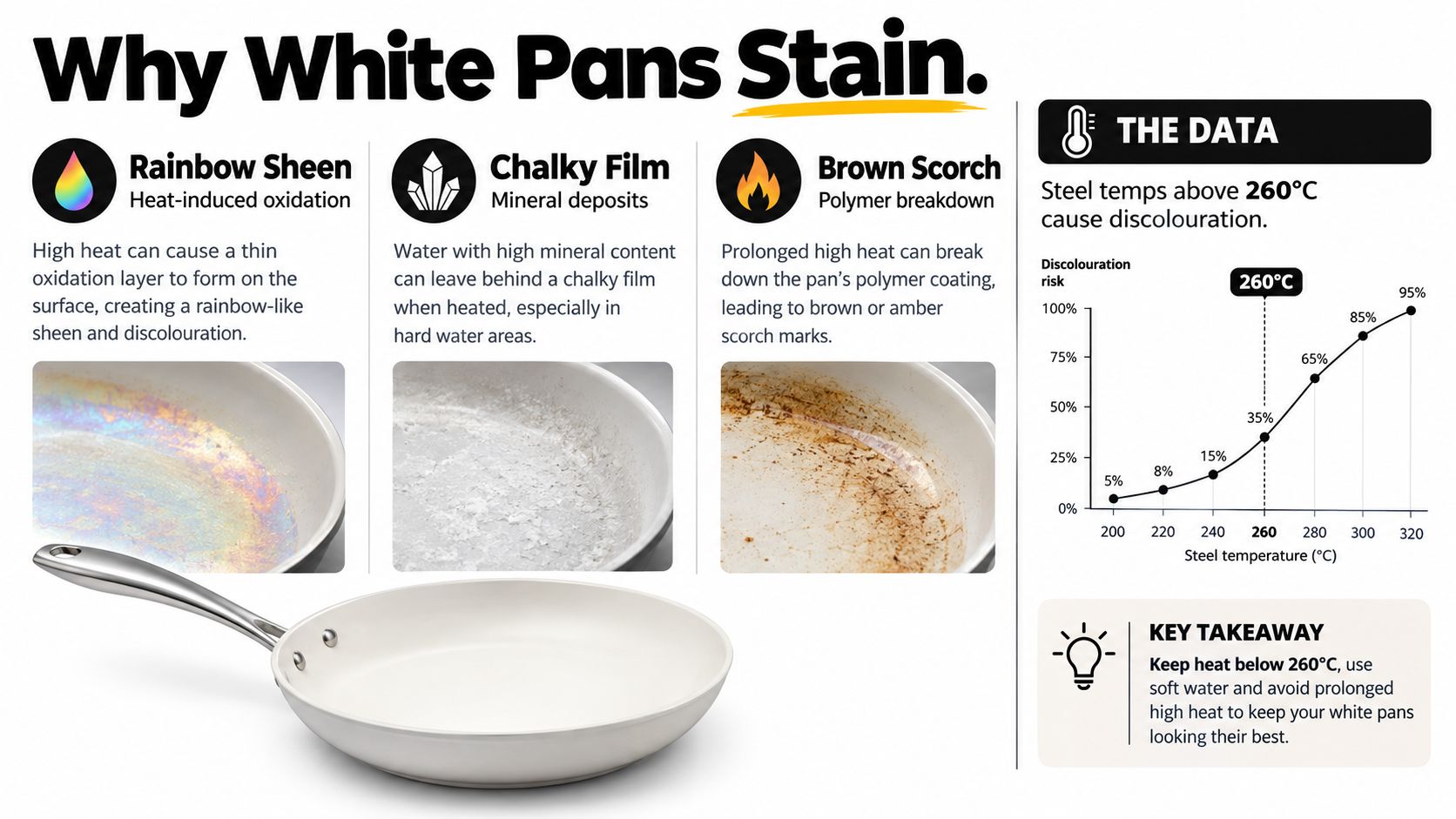
Diagnose before cleaning
A rainbow sheen usually means heat tint on exposed steel, not food residue. According to stainless-steel care guidance, blue, gold, and rainbow discolouration on stainless steel is generally cosmetic, even though it also shows the pan got very hot. The practical takeaway is simple. Steel temperatures above 260°C can cause discolouration. If you see that pattern on a white pan with any exposed steel, review your burner setting before you worry about appearance.
A chalky white film points in a different direction. That is usually mineral residue from water or detergent left to dry on the surface. The useful test is how it behaves. If the mark looks cloudy, wipes unevenly, or returns after boiling and air-drying, treat it as a deposit problem first, not as coating damage. Use a mild acid only if the finish allows it.
Brown staining inside a ceramic-coated pan deserves less optimism. Sometimes it is just baked-on oil. Sometimes it is the start of coating wear from repeated overheating. Run your fingertips across the cooled surface. If it feels rough, if the colour looks patchy instead of stained, or if you see bubbling, flaking, or a clear drop in food release, stop chasing a cosmetic fix and decide whether the pan still earns a place in your kitchen.
Ask better questions. What caused this mark? What surface am I about to scrub? Is the finish still smooth and intact?
Start with the least aggressive method that matches the cause. Soak stuck food. Use warm water and gentle detergent for delicate coatings. Save stronger options for surfaces that can handle them. If you are comparing finishes before you buy, understanding choosing non-porous materials helps explain why smooth surfaces are easier to inspect, while still able to collect residue or show wear.
Skip steel wool, harsh abrasive powders, bleach, and oven cleaner unless the manufacturer explicitly approves them. The goal is not a factory-new look. The goal is a clean pan with its finish still intact.
Cleaning, Storing and Living With White Cookware
White cookware rewards a calm cleaning routine. Let the pan cool naturally, soak stuck food and use a soft sponge with warm water and mild detergent. Pouring cold water into a very hot pan can create thermal shock, while aggressive scrubbing can dull a coating or scratch a polished surface.
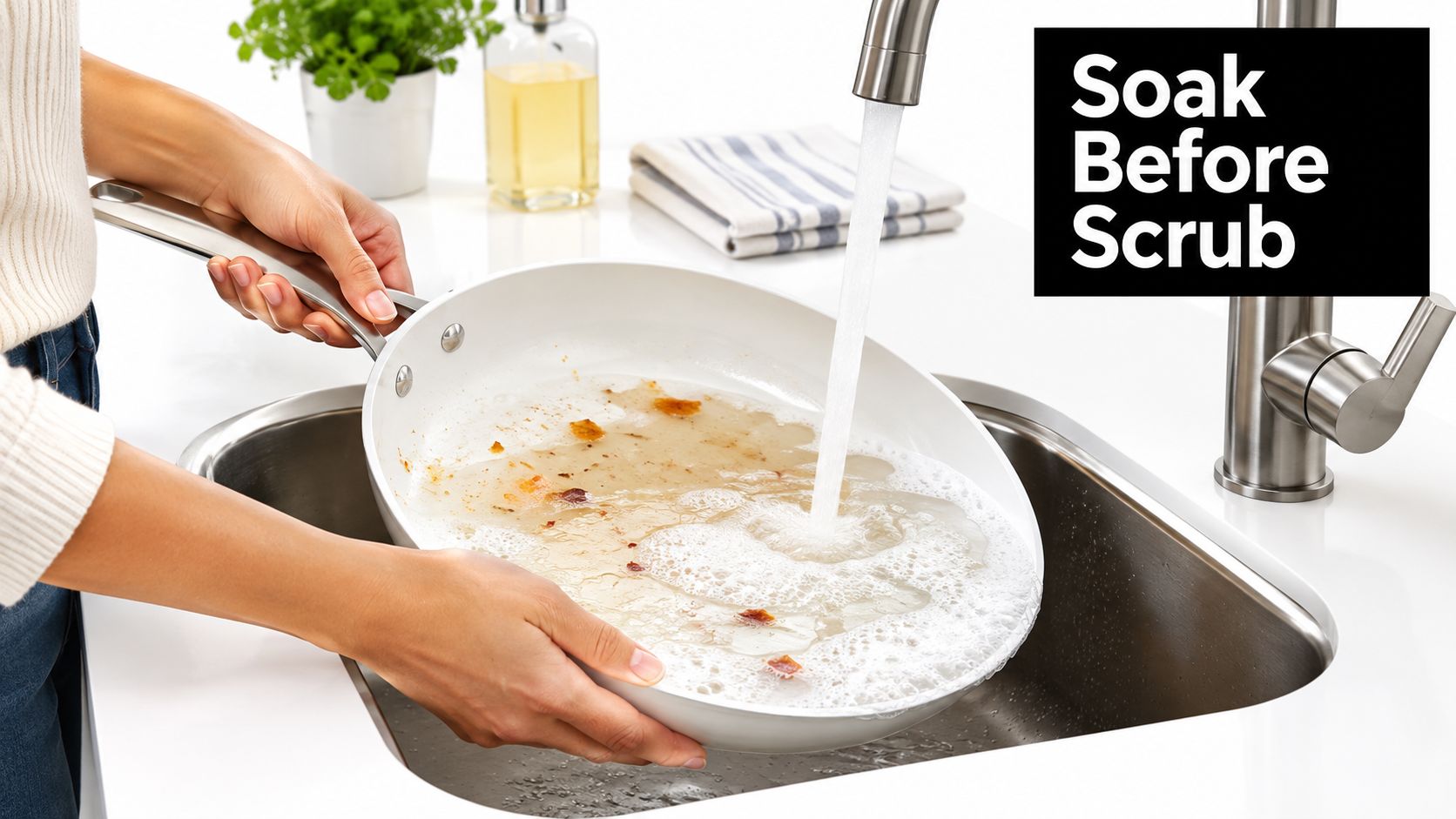
A routine that protects the finish
- Cool it first. Set the pan on a heat-resistant surface and allow the temperature to fall before washing.
- Soak the residue. Warm water loosens food more safely than immediate scraping.
- Use a soft tool. Choose a non-abrasive sponge, silicone scraper or wooden utensil.
- Treat marks by cause. Use mild acid for compatible mineral deposits, not automatically for every stain.
- Rinse and dry. Water marks are easier to prevent than remove, especially on enamel.
- Store with protection. Place a soft cloth or pan protector between stacked pieces, and don't trap moisture under lids.
For broader metal-surface maintenance, these stainless steel cleaning tips for facilities reinforce a useful principle: cleaning products need to match the material. A product that works on stainless steel may damage ceramic, enamel or polymer non-stick.
Dishwasher claims need the same scrutiny. “Dishwasher-safe” doesn't mean repeated cycles are the gentlest option for a premium white finish. Check the maker's care instructions and see what dishwasher-safe pots and pans really require before stacking a valued piece into a crowded machine.
Retire a white pan when polymer non-stick no longer releases food reliably, when ceramic coating flakes or when enamel chips expose the underlying metal. For storage, keep heavy cast iron at a stable, accessible height and avoid knocking rims together. A weekend reset can be simple: soak, wash gently, inspect the rim and cooking surface, remove permitted mineral film, dry completely and store with padding.
Styling White Cookware So It Earns Its Place on Display
White cookware works best as a quiet anchor, not as a demand that every object in the kitchen match. Glossy enamel brings a crisp, heritage feel. Matte ceramic looks calmer and more contemporary. Speckled or lightly textured finishes can make everyday marks less visually dominant than a perfectly smooth bright white surface.
Warm whites, cream and beige tones pair naturally with timber, linen and woven baskets. They soften a kitchen with pale cabinetry and stop the cookware from looking clinical. Cool blue-white finishes suit stainless steel, black hardware and clean-lined stone, particularly when you want a sharper modern contrast.
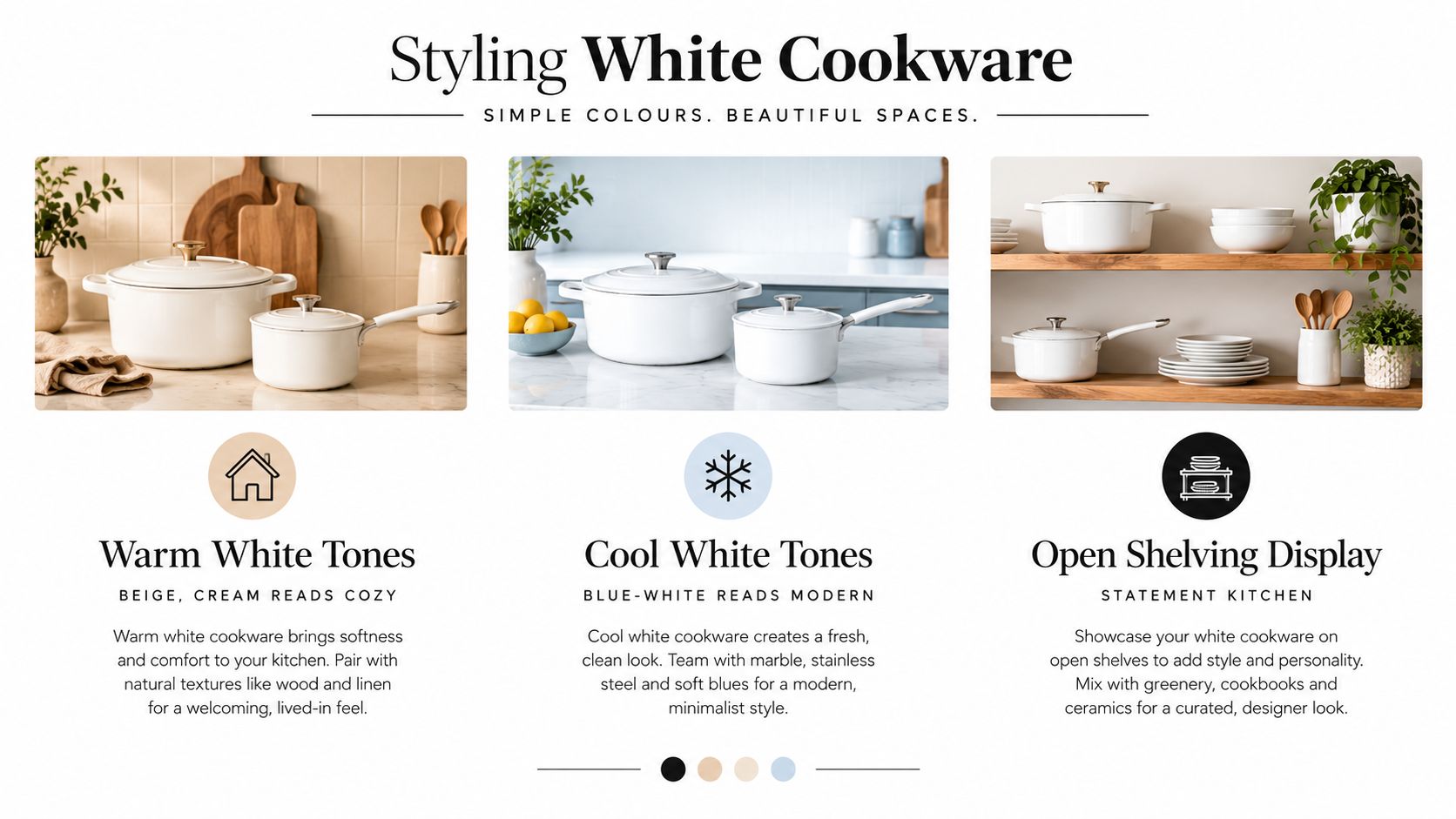
Three display approaches
Open shelving works when the pieces are used often and can be lifted without scraping them against neighbouring cookware. Group one large white pot with smaller stainless-steel or timber pieces rather than filling an entire shelf with identical shapes.
A heritage stove benefits from glossy enamel, black edging and restrained metal accents. Copper or brass can add warmth, but use those finishes as punctuation. Too many reflective surfaces compete with the clean shape of the cookware.
A minimalist kitchen needs variation in texture. Pair matte white ceramic with timber handles, woven linen or a dark serving board. The contrast gives the eye somewhere to land and prevents an all-white arrangement from looking flat.
Display also affects care. Heavy cast iron should sit where you can move it safely, not in a high cupboard where lifting encourages knocks against doors and shelves. If you want a dedicated cabinet, a glass-fronted option can protect the pieces while keeping them visible. A corner display cabinet with glass can be useful when the cookware is part of the room's visual composition rather than something hidden behind a door.
The best-looking arrangement is one you can maintain. Leave enough space to remove each pan without scraping the next one, keep handles from projecting into walkways and avoid displaying cookware that still has water trapped beneath a lid. White earns its place on show when the storage system makes daily use easy, not when it turns cooking into a careful ceremony.
A Pre-Purchase Checklist for White Pots and Pans
White is useful because it shows you more. It shows scorch marks, oil build-up, chips, staining and wear faster than darker cookware. That makes it easier to inspect. It does not make the pan safer by itself.
Before you buy, run through this checklist:
- Identify the surface. Find out whether you are buying vitreous enamel, ceramic-coated metal or polymer non-stick. White tells you almost nothing until you know which finish is on the pan.
- Check the cooktop. If you use induction, confirm the base is ferromagnetic and that the manufacturer approves that exact model for induction.
- Read the heat rating. Check limits for the body, lid, handles and coating. One weak component sets the true ceiling.
- Ask for compliance evidence. For ceramic or enamelled surfaces, request lead-and-cadmium migration documentation for the exact model. Ask whether testing aligns with AS 4371:2012 or an equivalent ISO-based method.
- Question chemical marketing. “PFOA-free” is narrow. It does not prove every broader PFAS-related claim. Australian consumer guidance also notes that “PFAS-free” marketing lacks a consistent, universally agreed substantiation framework CHOICE PFAS claims guidance.
- Match the maintenance. If you will not hand-wash a delicate coating or protect an enamelled rim, buy a tougher finish.
- Buy for your specific cooking. Choose for heat, food and storage habits first. Choose white second, for visibility and appearance.
Good white cookware earns its place by making problems easier to spot. Buy it for inspectability, then verify the material, the coating and the testing before you trust it in daily use.