

If you've been looking around for new cookware in Australia, you've probably noticed ceramic pots popping up everywhere. They're quickly becoming a go-to for home cooks who want a healthier, non-toxic alternative to the usual non-stick pans. But not all "ceramic" is the same. You'll find two main players on the shelf: 100% solid ceramic pots and ceramic-coated metal pots.
Understanding Ceramic Cooking Pots
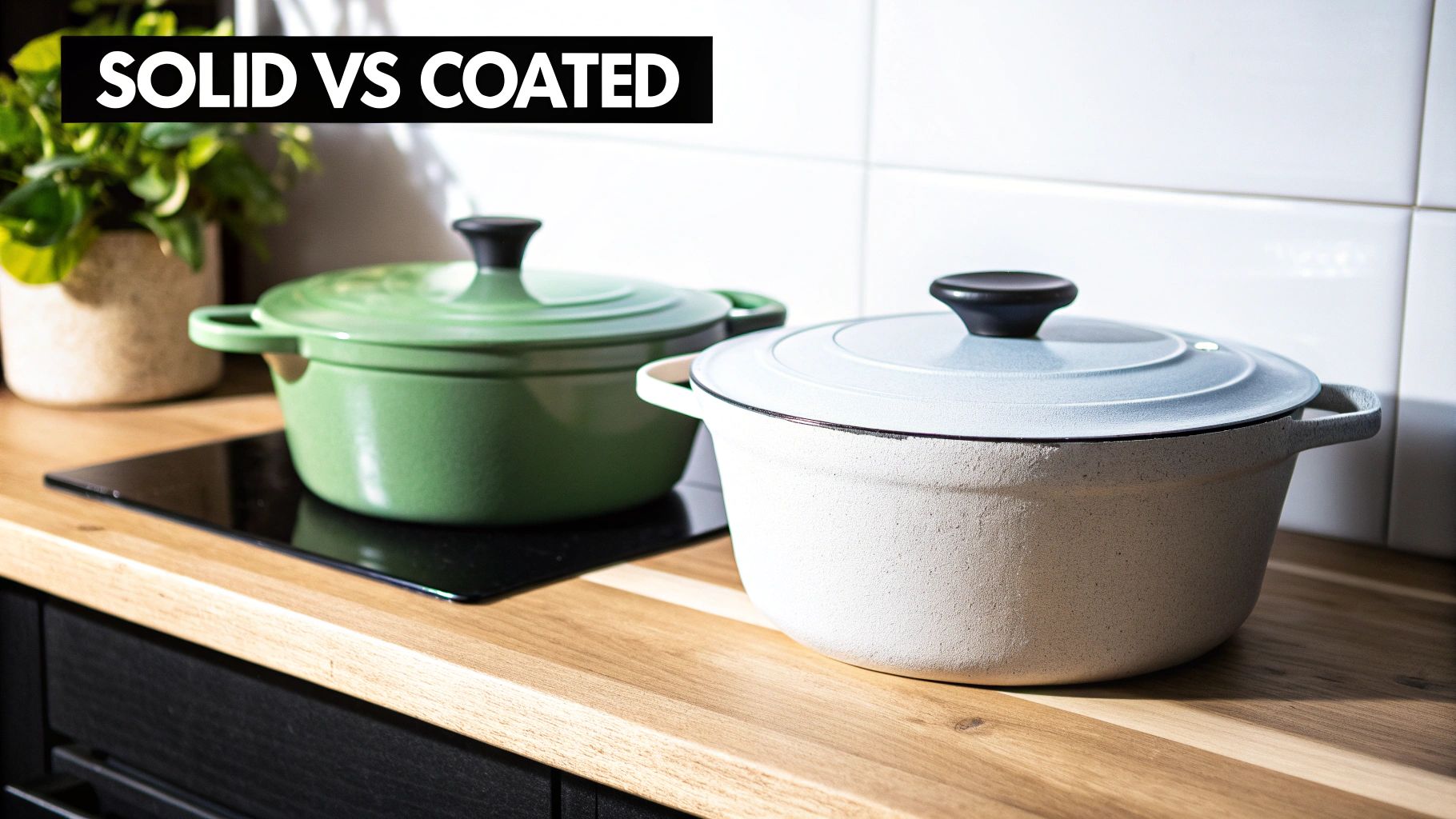
Before you buy, it’s worth getting your head around what you're actually looking at. The term "ceramic" can be a bit misleading because it covers two very different types of cookware, each built for a different job in the kitchen. Getting this difference is the key to choosing the right pot for you.
This isn't just a passing trend. The Australian ceramic cookware market hit USD 88.92 million in 2024, with pots leading the charge. This boom is fuelled by more of us cooking at home since the pandemic and a real shift towards wanting kitchen gear that's both eco-friendly and safe.
The Two Main Types of Ceramic Pots
The real difference comes down to how they're made. One is pure ceramic from top to bottom, while the other is a metal pot with a high-tech ceramic finish. Let's break down what that means for your cooking.
-
100% Solid Ceramic: Think of this as the traditional, authentic option. These pots are made entirely from natural clay and minerals, which are then fired at incredibly high temperatures in a kiln. They contain no metals or synthetic coatings, making them the purest form of ceramic cookware you can get.
-
Ceramic-Coated Metal: This is the modern, hybrid version. These pots start with a metal body—usually aluminium or stainless steel—and are then finished with a layer of ceramic non-stick coating. The idea is to give you the best of both worlds: the even heating of metal and the easy-release, healthy surface of ceramic.
The core difference is simple: solid ceramic is a natural, heat-retaining vessel perfect for slow cooking, while ceramic-coated is a lightweight, non-stick tool ideal for fast, everyday meals. Your cooking style will determine which is the better fit for your kitchen.
Key Construction and Performance Differences
How these pots are built directly affects how they'll behave on your stovetop. For example, that metal core in coated pots is what makes them work on certain cooktops. If you've got an induction stove, this is something you absolutely need to know. You can dive deeper into this in our guide to ceramic induction cookware. A solid ceramic pot, on its own, won't work on an induction cooktop unless it's been made with a special magnetic plate fused to its base.
To make things clearer, here's a quick look at how the two types stack up against each other.
Ceramic Pot Types at a Glance
| Feature | 100% Solid Ceramic | Ceramic-Coated Metal |
|---|---|---|
| Material | All-natural clay and minerals | Metal core (aluminium/steel) with a sol-gel ceramic coating |
| Heat Retention | Excellent; holds heat for a long time | Good; cools down faster than solid ceramic |
| Durability | Very durable but can chip or crack if dropped | Coating can scratch or wear out over time |
| Stovetop Use | Gas, electric, oven (not induction without a plate) | All stovetops, including induction (if the base is magnetic) |
| Best For | Slow cooking, stews, baking, soups | Sautéing, frying, everyday quick meals |
| Non-Stick | Naturally stick-resistant, but requires some oil | Excellent non-stick when new |
| Weight | Heavy and substantial | Lightweight and easy to handle |
This table should help you see at a glance which pot might be the better teammate for you in the kitchen. It really comes down to what you cook and how you cook it.
So, What Are the Real Benefits of Cooking with Ceramic?
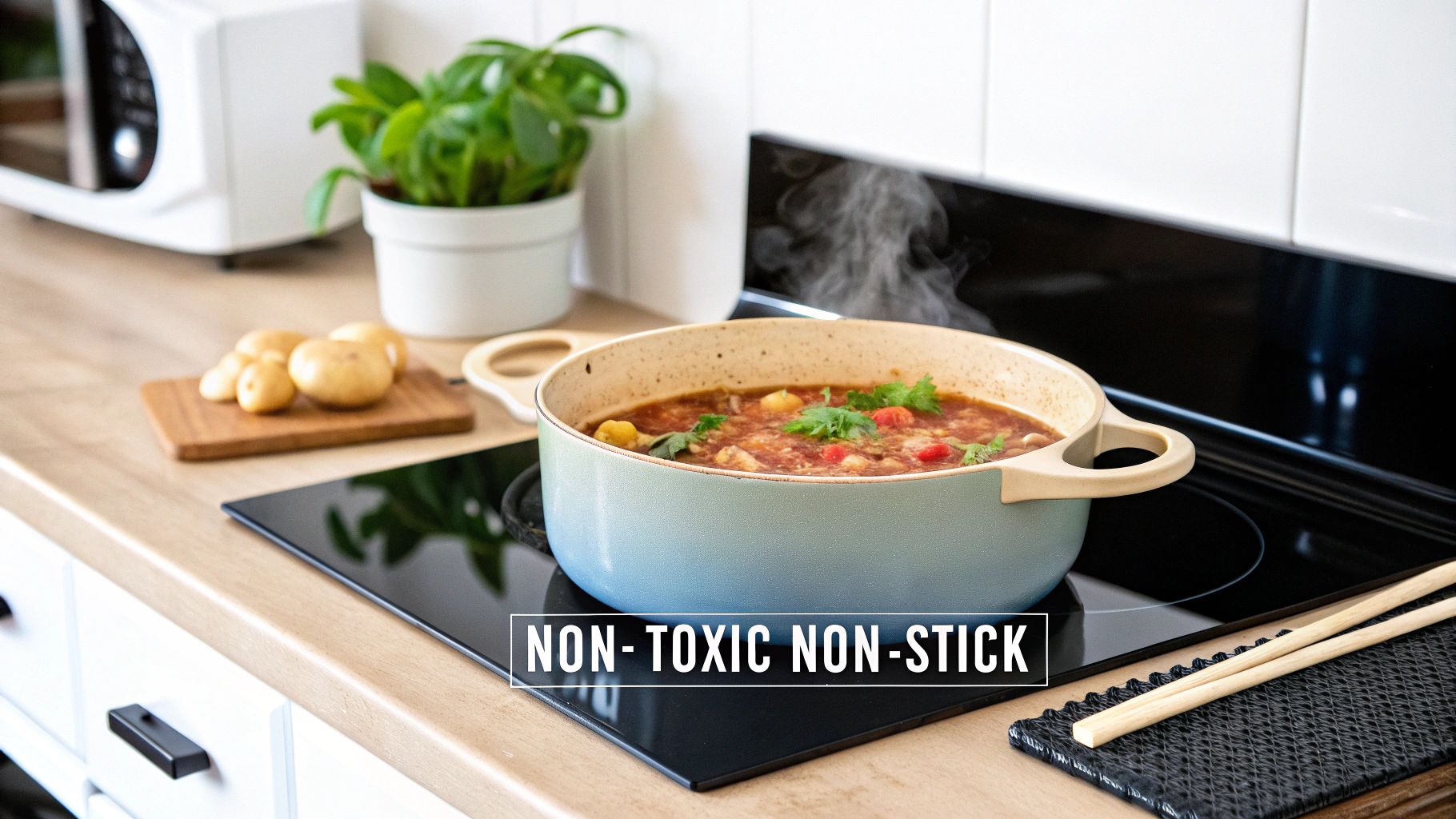
The buzz around ceramic cooking pots Australia wide goes far beyond their good looks. While the vibrant colours are certainly a drawcard, the real reasons home cooks are making the switch are much more about what happens on the inside—both in the pot and for the family. It's a shift toward a cleaner, more intuitive way of cooking.
At the heart of it is peace of mind. Let’s be honest, many of us have started to question traditional non-stick surfaces, with growing concerns around chemicals like PFOA and PTFE. High-quality ceramic cookware provides a fantastic, reassuring alternative made from natural, inorganic materials.
That means you can cook for your family without that nagging worry about synthetic compounds leaching into your food. For many health-conscious households, this non-toxic quality is the number one reason to make the change.
A Healthier Way to Cook Every Day
One of the first things you'll appreciate is the naturally slick surface of ceramic. This isn't just about making cleanup easier; it has a direct impact on the way you cook.
Because food releases so well, you can dramatically cut down on the amount of oil or butter you use for frying and sautéing. This simple tweak helps you create lighter, healthier meals without ever sacrificing flavour, making it a great ally for your dietary goals.
And when dinner's done, the cleanup is a breeze. Instead of reaching for a harsh scourer, a gentle wash with a soft sponge is usually all it takes. This not only saves you time and elbow grease but also helps protect the pot’s surface for the long haul.
Superior Heat Performance for Better Food
The true genius of ceramic cookware, particularly solid ceramic, is in how it handles heat. Think of it less like a metal pan and more like a small, personal kiln. It’s absolutely brilliant at absorbing, holding, and distributing heat with incredible evenness.
This ability to banish hotspots is a genuine game-changer. Imagine simmering a rich bolognese or a slow-cooked curry for a few hours. A ceramic pot spreads the warmth uniformly across the base and up the sides, allowing everything to cook gently and consistently without any risk of scorching.
This exceptional heat retention means your food keeps cooking even after you turn off the flame, and it stays piping hot when you bring it to the table. It’s perfect for serving up stews or braises straight from the pot.
This thermal efficiency also helps you nail that perfect sear. Once a ceramic pot is properly preheated, it holds its temperature steady, even when you add a cold steak or fillet of fish. The pan doesn't suddenly cool down, which is the secret to achieving that beautiful, caramelised crust while keeping the inside perfectly cooked.
The Key Advantages at a Glance
So, let's put it all together. Here’s what you can look forward to when you bring a ceramic pot into your kitchen:
- A Non-Toxic Cooking Surface: Cook with confidence knowing your pot is free from PFOA, PTFE, lead, and cadmium.
- Less Oil Needed: The naturally non-stick surface promotes healthier cooking with minimal fats.
- Effortless Cleanup: Food slides right off, making hand-washing a quick and simple task.
- Exceptional Heat Distribution: Say goodbye to hotspots and enjoy perfectly cooked food every single time.
- Excellent Heat Retention: Your meals cook more efficiently and stay warmer for much longer, on the stove and on the table.
- True Kitchen Versatility: Many ceramic pots are designed to go from the stovetop straight into the oven, making them ideal for one-pot wonders like roasts and casseroles.
Ultimately, choosing ceramic is more than just buying a new piece of cookware. It’s an investment in healthier habits, more flavourful results, and a much more enjoyable experience in the kitchen from start to finish.
Common Mistakes to Avoid with Ceramic Pots
While the ceramic cooking pots Australia cooks have come to love are fantastic, they aren't bulletproof. Getting the most out of them really comes down to understanding their unique quirks. If you sidestep a few common mistakes, you’ll keep your cookware in top shape for years to come.
The biggest weakness of any ceramic pot—whether it's solid ceramic or just coated—is its vulnerability to thermal shock. This is what happens when the pot is hit with a sudden, drastic change in temperature.
It’s the same reason a hot glass dish can crack if you plunge it into cold water. The material contracts too quickly, causing stress fractures. Tossing a hot-off-the-stove ceramic pot into a sink of cold water is a surefire way to damage it, creating tiny cracks that will worsen over time.
The Problem with High Heat
Another easy mistake is to treat your ceramic pot like it's a cast-iron skillet, blasting it with maximum heat from the get-go. Ceramic is a brilliant heat conductor and it holds that heat incredibly well, so it just doesn't need that kind of firepower.
Cranking the heat too high, especially on ceramic-coated pans, can cause oils to burn and polymerise on the surface. This leaves a sticky, gunky residue that completely negates the non-stick properties. Over time, it can also discolour the pot and stress the coating, shortening its life.
The golden rule for ceramic cookware is simple: stick to low to medium heat. You’ll be genuinely surprised by how efficiently the pot heats up and maintains its temperature, giving you a perfect sear or a gentle simmer without ever needing to go full blast.
Protecting the Surface and Structure
Just as crucial as heat management is using the right utensils and storing your pots properly. That beautiful, slick ceramic surface needs a bit of care to keep it performing at its best.
- Steer Clear of Metal Utensils: This one is non-negotiable. Metal spoons, whisks, and spatulas will absolutely scratch and chip the ceramic. These little abrasions might not seem like much, but they ruin the non-stick finish and create spots where food can get stuck.
- Stick to Softer Tools: Always reach for utensils made from wood, silicone, or nylon. These won't harm the delicate surface and will keep your pot’s coating in perfect condition.
- Store Them Smartly: Mindlessly stacking heavy pans on top of each other is a recipe for chips and scratches. A simple fix is to place a soft cloth, a piece of paper towel, or a proper pan protector between each pot to provide a soft cushion.
Cleaning for a Longer Lifespan
Finally, how you clean your pot is just as important as how you cook with it. Even if the box says it's "dishwasher-safe," your best bet for a long-lasting pot is always to wash it by hand.
The harsh detergents and intense heat of a dishwasher cycle can be incredibly abrasive, slowly wearing down the non-stick coating. A gentle wash with a soft sponge and a bit of mild dish soap is all you need. And remember to let the pot cool down completely before washing it to avoid that dreaded thermal shock we mentioned earlier.
By turning these simple tips into habits, you're not just avoiding damage—you're mastering the art of caring for your ceramic cookware.
How to Choose the Right Ceramic Pot for Your Kitchen
Diving into the world of ceramic cookware is a fantastic move for any home cook, but let's be honest—the sheer number of options can feel a bit much. Finding the perfect pot isn't just about picking a colour that matches your kitchen decor. It's about finding a true partner for your cooking adventures, one that aligns with your stove, your style, and what you love to cook.
So, let's cut through the noise and figure out which ceramic pot you'll be reaching for day after day.
Match the Pot to Your Cooktop
First things first, what are you cooking on? This is the most important question because it instantly narrows down your options, especially if you have an induction hob. In Australia, our kitchens usually have one of three main cooktop types.
-
Induction Cooktops: These clever cooktops use magnetism to create heat. For a pot to work, it needs a magnetic base. Most ceramic-coated pots with a steel or iron core are good to go, but you must check the label. A quick way to test? If a fridge magnet sticks firmly to the bottom, you’re in business. Pure, 100% solid ceramic pots won't work unless they have a special magnetic plate fused to the base.
-
Gas Cooktops: Gas gives you amazing heat control, and the good news is that almost all ceramic pots—both solid and coated—play nicely with a gas flame. The trick is to stick to low and medium heat. Direct flames can be quite intense, so always make sure the flame fits the base of the pot and doesn't lick up the sides, which can cause ugly discolouration over time.
-
Electric and Ceramic Glass Cooktops: These are the most forgiving of the lot. Solid ceramic and ceramic-coated pots both perform beautifully here, heating up evenly and holding that warmth for ages.
Once you know what works with your stove, you can think about the material itself.
Solid Ceramic vs. Ceramic-Coated
We’ve touched on this, but the type of ceramic construction really changes the game. Your choice here should come down to what you cook most often.
Think of a solid ceramic pot like a classic slow-combustion heater. It takes its time to warm up, but once it gets there, it holds that heat with incredible efficiency. This makes it the undisputed champion for slow-cooked lamb shanks, hearty winter stews, and even baking a crusty loaf of no-knead bread.
A ceramic-coated pot, on the other hand, is more like a reverse-cycle air conditioner. It heats up in a flash and responds quickly when you turn the temperature up or down. This makes it perfect for whipping up a weeknight stir-fry, searing a piece of barramundi, or simmering a quick tomato sauce.
Your cooking habits are your best guide. If you’re a "low and slow" cook who loves a one-pot wonder, solid ceramic is your soulmate. If you're all about quick, responsive cooking, a top-notch ceramic-coated pot is the way to go.
Size and Shape for Your Cooking Style
The right size and shape are just as critical as the material. A well-rounded kitchen usually has a few key players ready for action.
-
The Dutch Oven (approx. 5-7 litres): This is the ultimate workhorse for an Australian kitchen. It’s perfect for everything from a Sunday roast lamb to a massive batch of bolognese or baking your own sourdough. Its deep walls and heavy lid are designed to trap moisture, giving you unbelievably tender, flavourful results.
-
The Saucepan (approx. 1.5-3 litres): An absolute essential for daily tasks like boiling pasta, whipping up a gravy, or cooking quinoa. A smaller one is handy for reheating soup, while a larger one is a must-have for family meals.
-
The Sauté Pan (approx. 2.5-4 litres): With its wide, flat base and straight sides, this is your go-to for searing steaks or reducing a red wine jus. It gives you far more surface area to work with than a typical frying pan.
And don't forget the lid! A heavy, well-fitting lid is non-negotiable. It’s what locks in all that precious heat, moisture, and flavour—the secret to a great braise or simmer. Look for one with a sturdy, oven-safe knob.
Spotting Quality and Value
So, how do you separate the gems from the duds? Here are a few tell-tale signs of a pot that’s built to last.
-
Brand Reputation and Reviews: Do a quick search for brands known for quality in ceramic cooking pots Australia. Reading reviews from other Aussies is invaluable—you’ll quickly see how these pots handle real-world kitchen duties.
-
Warranty: A solid warranty (look for 5 years or more) is a great sign. It shows the manufacturer is confident in their product's durability and performance.
-
Weight and Feel: Pick it up. A quality pot should feel substantial and balanced, not flimsy or light. The base should be thick and perfectly flat to stop it from warping and ensure it heats evenly.
Thinking through your cooktop, your go-to meals, and these simple quality checks will help you choose a ceramic pot that you’ll not only love cooking with, but that will also become a cherished part of your kitchen for years to come.
Deciding can still feel like a big step, so we've put together a simple checklist to help you connect your needs with the right features.
Which Ceramic Pot Is Right for You?
| Consideration | What to Look For | Why It Matters in an Australian Kitchen |
|---|---|---|
| Your Cooktop | Check for "Induction Compatible" label or a magnetic base if you have an induction hob. | Induction is increasingly common in new homes and rentals; compatibility is non-negotiable. |
| Cooking Style | Solid Ceramic: For stews, roasts, bread. Coated: For searing, stir-frying, quick sauces. | Matches the pot's heat retention to your favourite meals, from a slow-cooked winter curry to a quick summer stir-fry. |
| Family Size | 1-2 people: 2-3 litre pots. 3-4+ people: 5-7 litre Dutch oven is a must. | Ensures you have enough room for a family-sized spag bol without overcrowding the pot. |
| Oven Use | Oven-safe temperature rating (over 220°C), including the lid and handles. | Essential for popular one-pot recipes that go from stovetop to oven, like a lamb shoulder or baked pasta. |
| Ease of Cleaning | A smooth, non-porous ceramic coating. Dishwasher-safe rating. | Let's face it, nobody wants to spend ages scrubbing after dinner. Easy cleaning means you'll use it more often. |
| Durability | Reputable brand, solid warranty (5+ years), thick base, and good online reviews. | A quality pot is an investment. You want one that can handle regular use without chipping or warping. |
Use this table as your guide when you're browsing online or in-store. Ticking off these boxes will give you the confidence that you're picking a pot that truly fits you and your kitchen.
Making Your Ceramic Cookware Last
You've brought home a beautiful ceramic pot; now, how do you keep it that way? Getting the most out of your cookware is all about proper care. Think of it less as a chore and more as a simple routine that will keep your pot performing flawlessly for years to come. With a little TLC, its non-stick surface will stay slick and its heat distribution will remain perfectly even.
Before you cook your first meal, give your new pot a quick wash. Just use warm, soapy water and a soft sponge to remove any dust from the factory or packaging. It's a small step, but it preps the surface and gets it ready for action.
The Golden Rule of Cleaning
Here’s the single most important tip I can give you: hand-wash your ceramic cookware. I know, I know—many pots say they’re "dishwasher-safe." But the intense heat and harsh detergents in a dishwasher are the arch-nemesis of a ceramic coating. Over time, they'll wear it down, making it less non-stick and causing discolouration.
A gentle hand wash is all it needs.
- Cool It Down: Never plunge a hot pot into cold water. That sudden temperature change can cause thermal shock, leading to tiny, invisible cracks in the ceramic. Let it cool down on the stovetop first.
- Go Soft: Stick to soft sponges or cloths. Steel wool, abrasive scourers, and harsh chemicals will scratch the surface, and once that happens, there's no going back.
- Keep it Mild: A little bit of gentle dish soap and warm water is all you need to cut through grease and food residue without being too aggressive.
If you're curious about the nitty-gritty of what makes some cookware genuinely okay for the dishwasher, you can learn more about the science behind dishwasher-safe pots and pans. It sheds some light on why certain materials are tougher than others.
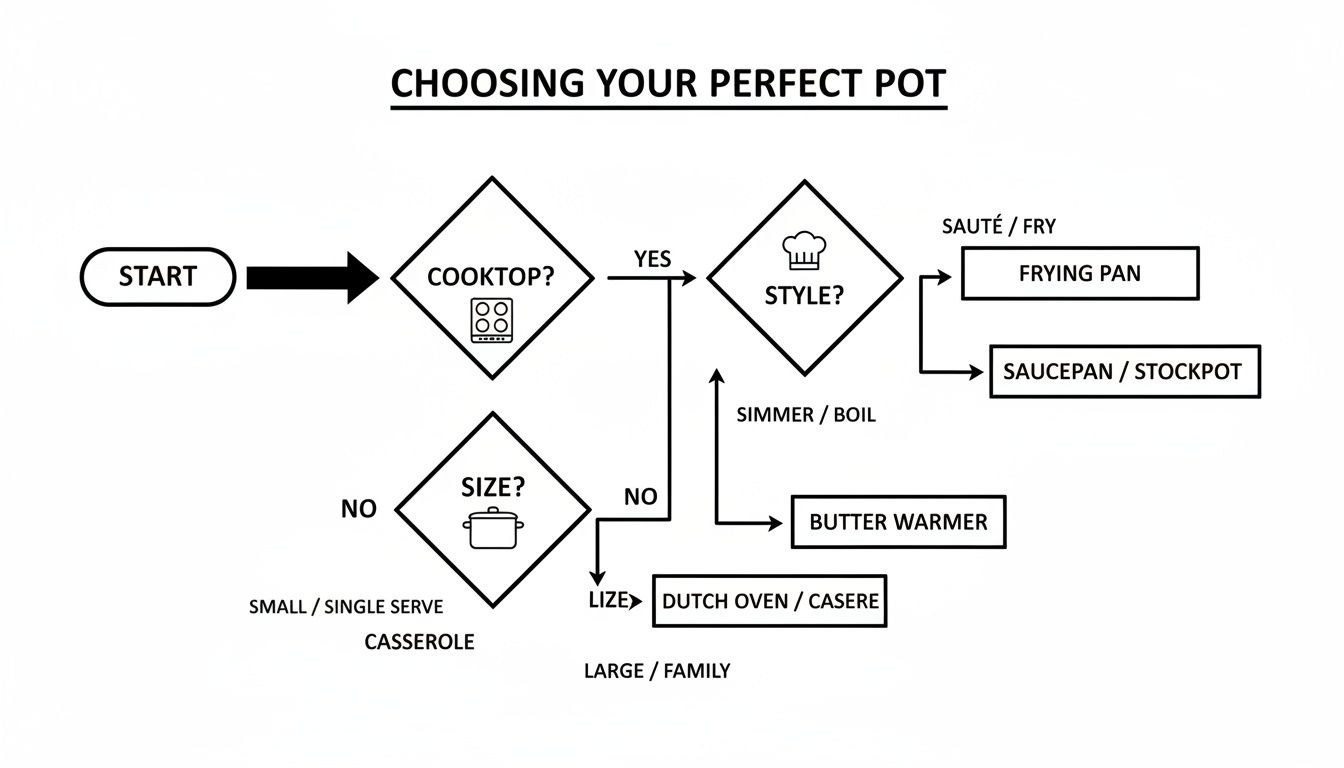
This decision tree is a great way to visualise what matters most when you're buying a new pot. It starts with your cooktop, then helps you narrow things down based on what and how you cook.
How to Deal with Stubborn, Stuck-On Food
It happens to the best of us—a moment of distraction, and now you have burnt food stuck to the bottom of your pot. Don't reach for a scourer! There’s a much gentler way to fix it.
Just fill the pot with enough water to cover the burnt bits, add a spoonful of baking soda, and bring it to a gentle simmer for a few minutes. The baking soda works wonders to lift the residue. Once the pot has cooled, you'll be able to wipe it clean with a soft sponge. Easy.
A Quick Word of Advice: Steer clear of aerosol cooking sprays. They seem convenient, but they contain propellants that can burn at low temperatures, leaving behind a sticky, gummy film that ruins your non-stick surface over time. Instead, use a small amount of a high-smoke-point oil like light olive, canola, or grapeseed oil.
Smart Storage to Avoid Scratches and Chips
Your cleaning routine is sorted, but what about storage? Stacking pots and pans directly on top of each other is a surefire way to get scratches and chips, especially around the rim.
To keep your collection of ceramic cooking pots Australia looking brand new, try these simple storage tricks:
- Use Pot Protectors: Pop a soft layer between your stacked pots. It can be a paper towel, a tea towel, or one of those felt protectors you can buy. This simple cushion prevents scratches from metal-on-ceramic contact.
- Hang Them Up: If you’ve got the wall or ceiling space, a hanging pot rack is a fantastic solution. It keeps everything separated, safe from damage, and right where you can see it.
- Store Lids Separately: Don't just toss lids inside the pots. They can slide around and scratch the interior. A simple lid organiser rack in a cupboard keeps them tidy and out of the way.
By making these simple habits part of your kitchen routine, you’re not just cleaning your cookware—you’re protecting your investment. You'll ensure every meal cooked in your ceramic pot is just as good as the first.
Exploring Other High-End Cookware Options
Ceramic pots are a fantastic addition to any health-conscious Aussie kitchen, but they're not the only game in town. It’s worth looking at the other top-tier materials out there to make sure you’re picking the perfect partner for your cooking style.
You’ve got the old-school champions, of course. Cast iron has a legion of fans who swear by its incredible heat retention and the naturally non-stick surface it builds up over time. Then there's stainless steel, the absolute workhorse of professional kitchens, loved for its sheer durability and how quickly it responds to temperature changes.
The Ultimate Upgrade: Pure Titanium
But what if you're looking for something that goes beyond surface coatings and offers pure, unadulterated performance for a lifetime? That’s where pure titanium cookware comes in. Think of it less as a purchase and more as a permanent investment in your kitchen.
Ceramic-coated pots are great, but they depend on a surface layer that can eventually wear down. Pure titanium, on the other hand, is completely different. It's an inert, non-reactive metal that doesn't need any coating at all. This means there’s nothing to scratch, chip, or degrade, ever. It won’t leach anything into your food or alter its flavour, guaranteeing total purity in every meal. To see how it's making waves in modern kitchens, you can check out the benefits of titanium cookware in Australia.
Titanium shifts the way we think about cookware—it’s not a disposable item, but a permanent kitchen tool. It combines the peace of mind of a non-toxic surface with unrivalled durability.
The other surprising thing about titanium is its amazing strength-to-weight ratio. When you pick up a titanium pot, it feels remarkably light and easy to manage, yet it’s incredibly tough and resistant to warping, scratching, or corrosion. For home cooks who want a high-performance solution that will genuinely last forever, titanium is the final word.
Got Questions About Ceramic Pots? We’ve Got Answers.
Here, we'll tackle some of the most common questions we hear from Aussie home cooks about ceramic pots. Think of it as a quick chat to clear up any lingering doubts, from safety to everyday use, so you can choose the right cookware for your kitchen with total confidence.
Are Ceramic Cooking Pots Genuinely Safe?
Yes, absolutely. High-quality ceramic cookware is widely considered one of the safest choices you can make. Pure ceramic is made from natural clay and minerals, which means it doesn't contain chemicals like PFOA and PTFE that you might find in some traditional non-stick pans.
Because of this, it won’t leach metals or toxins into your food, keeping your meals as pure and healthy as you intended. When you're looking at ceramic cooking pots in Australia, just make sure you stick with reputable brands that certify their products are lead and cadmium-free. That's how you get real peace of mind.
Can I Use My Ceramic Pot on an Induction Cooktop?
That's a great question, and it all comes down to what the pot is made of. A pot that's 100% solid ceramic won't work on an induction cooktop. Induction technology relies on magnetism to generate heat, and clay simply isn't magnetic.
However, many modern ceramic-coated pots are built differently. They often have a magnetic steel or iron base specifically so they can be used on induction hobs. The easiest way to know for sure is to check the product description or look for the induction symbol (it looks like a little coil) on the bottom of the pot before buying.
The Bottom Line: Solid ceramic is a no-go for induction cooktops. But most modern ceramic-coated cookware is designed to be induction-friendly. Always check the packaging or product details.
Why Is My Ceramic Pot Starting to Stick?
It’s a frustrating problem, but one that’s usually preventable. Food sticking to a ceramic-coated pan is often a sign that something in the cooking or cleaning process needs a tweak. The main culprit is often excessively high heat, which can cause oils to burn and leave behind a sticky residue. Another cause is an invisible film of microscopic food particles building up over time.
Scrubbing too hard with abrasive sponges or using metal utensils can also create tiny scratches that compromise that smooth, non-stick surface. To keep your pot in top shape, stick to low-to-medium heat, use oils with a high smoke point (like avocado or ghee), and always let the pot cool down completely before cleaning it gently.
How Do Ceramic Pots Compare to Titanium Cookware?
Ceramic pots are a brilliant choice if your priority is a non-toxic cooking surface and even heat distribution. They’re a genuinely healthy option for any kitchen. Their main trade-off, however, is long-term durability; the ceramic coating can wear down over time, and the pot can chip if it gets knocked around.
Titanium cookware, on the other hand, is in a different league when it comes to longevity. It's incredibly resilient, surprisingly lightweight, and because it's a pure metal, there's no coating to scratch or degrade. While ceramic is a fantastic healthy cooking tool, titanium is a true lifetime investment in performance and strength.
Ready to explore a cookware solution built to last a lifetime? Discover the purity and performance of Everti's titanium essentials.