

If there's one piece of cookware that truly earns its keep in the kitchen, it's a great large skillet with a lid. It’s the go-to for everything from a lightning-fast weeknight stir-fry to a rich, slow-simmered stew on a lazy Sunday. This isn't just another pan; it's a real investment in your cooking and your daily routine.
Why a Great Skillet Is Your Kitchen’s Secret Weapon
Think about the pan you grab most often. Nine times out of ten, it’s a skillet, right? It’s the ultimate kitchen workhorse, bridging the gap between simply frying an egg and creating complex, flavour-packed one-pan dinners. But here’s the thing: not all skillets are made equal. Knowing what separates a good one from a great one is the first step to levelling up your meals.
A top-notch skillet is all about control. It’s about managing heat, building deep flavours, and getting the same fantastic results every single time. It should feel like an extension of your own hands, letting you get that perfect, crusty sear on a steak, gently simmer a delicate sauce, or even bake a rustic cornbread. When you add a lid to the mix, its abilities expand even further, trapping heat and moisture to braise, steam, and stew like a champion.
More Than Just a Pan
It seems we’re all starting to realise the value of quality cookware. The Australian cookware market recently hit an impressive USD 664.44 million, and a big part of that is driven by health-conscious Aussies and a renewed love for cooking at home. In fact, since the pandemic, surveys show that 68% of Australian households are cooking more meals from scratch. It’s no wonder we’re all looking for reliable, do-it-all tools. You can dig into more of the data behind this home cooking trend at imarcgroup.com.
This shift back to the home kitchen comes with some pretty great perks:
- You're in control of your health: You decide exactly what goes into your food—less salt, better oils, it's all up to you.
- Deeper, richer flavours: The right pan lets you build incredible flavour through techniques like searing and deglazing.
- It’s easy on the wallet: Cooking at home consistently saves you money compared to restaurants or takeaway.
- A space for creativity: With a skillet you can trust, you'll have the confidence to try out new recipes and techniques.
A well-chosen skillet with a lid isn't really an expense. Think of it as a lifelong investment in healthier, more delicious meals made right at home. It simplifies your cooking and opens up a whole new world of culinary possibilities.
Choosing the Right Material for Your Cooking Style
When it comes to picking a large skillet with a lid, the material is everything. Seriously, it's the one choice that will define how you cook. It dictates whether you get a perfect, crispy-skinned salmon or a pale, steamed fillet. It's the difference between a healthy, clean meal and one that might have come into contact with unwanted chemicals.
Think of the skillet's material as its core personality. Each one has its own quirks, strengths, and a unique relationship with heat and food. The goal isn't to find the single "best" material, but the one that's the best fit for you—your cooking habits, your health priorities, and even how much time you're willing to spend on upkeep.
This handy decision tree can help you visualise which path to take based on what matters most to you in the kitchen.
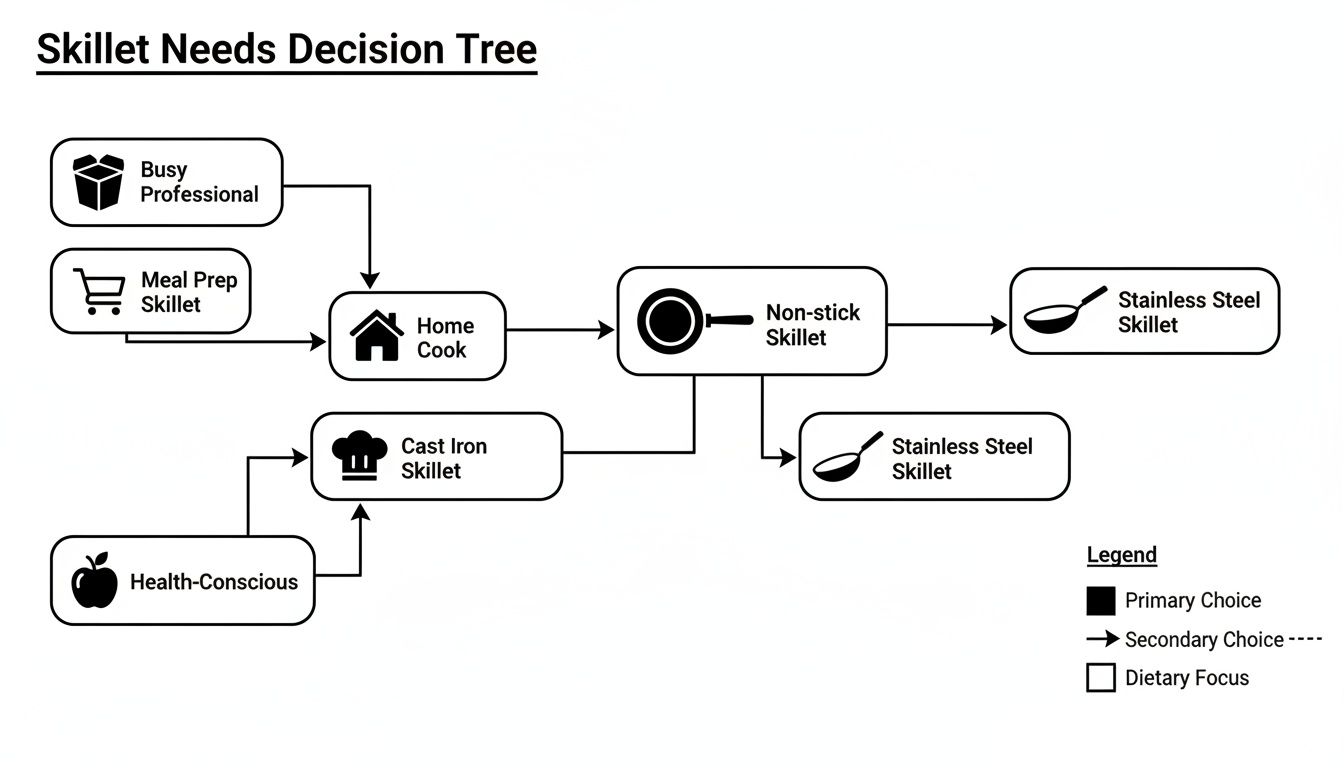
As you can see, a busy professional might lean towards convenience, while a health-conscious cook might prioritise the purity of the material above all else. Let's break down the big three.
Stainless Steel: The All-Rounder
Walk into almost any professional kitchen, and you'll see stainless steel pans everywhere. There's a good reason for that. This stuff is tough as nails, won't react with acidic ingredients (so your tomato sauce won't get a metallic tang), and can handle seriously high temperatures. It's your go-to for getting a deep, flavourful sear on everything from steak to scallops.
Now, stainless steel itself isn't the best at conducting heat evenly. That's its one little weakness. To get around this, quality pans are made with a core of a highly conductive metal, usually aluminium or copper, sandwiched between layers of steel. This clever construction gives you the best of both worlds: the robust, non-reactive surface of steel and the even heating of a superior conductor.
Key Takeaway: Stainless steel is for the cook who puts performance and longevity first. It takes a bit more skill (and a bit more oil) to master, but it rewards you with incredible searing power and will likely outlast your stove.
Cast Iron: The Flavour Builder
Cast iron is legendary for one thing: heat retention. Once it gets hot, it stays hot. This creates a powerful, unwavering cooking surface that is simply unbeatable for jobs like frying chicken, baking crusty cornbread, or putting a magnificent crust on a steak that other pans just can't replicate.
The real magic of cast iron, though, is its seasoning. With time and care, the pan develops a natural, non-stick surface from layers of polymerised oil baked into the iron. This seasoning not only makes it a dream to cook on but also adds a subtle, unmistakable depth of flavour to your food. Exploring the different types of skillets and griddles available really highlights how versatile this old-school material can be.
Non-Stick: The Convenient Choice
Nothing beats a non-stick skillet for cooking delicate foods. Think fluffy scrambled eggs, paper-thin crêpes, or a flaky piece of fish. The special coating ensures food just slides right off, which makes both cooking and cleanup an absolute breeze. For busy home cooks, that convenience is a massive win.
But this ease-of-use comes with a few trade-offs. Non-stick coatings are more fragile than raw metal. High heat and metal utensils are their enemies, and the surface can get scratched or wear out over time. There are also ongoing discussions about the chemicals used in some traditional coatings, which can degrade at very high temperatures. If you're weighing your options, understanding the pros and cons of different metals is key; you can read more about stainless steel vs carbon steel cookware in our detailed comparison.
Skillet Material Performance at a Glance
To make things even clearer, here's a quick side-by-side look at how these materials stack up against each other across the most important attributes.
| Material | Heat Distribution | Health & Safety | Durability | Maintenance |
|---|---|---|---|---|
| Stainless Steel | Good to excellent (with core) | Excellent; non-reactive | Very high; long-lasting | Moderate; can be scrubbed |
| Cast Iron | Good (heats slowly but retains well) | Excellent (when seasoned properly) | Extremely high; heirloom quality | High; requires seasoning |
| Non-Stick | Good to excellent (often aluminium base) | Good (but avoid high heat/scratches) | Low to moderate; coating wears out | Very low; easy to clean |
This table should help you quickly pinpoint which material's strengths align best with your needs and which trade-offs you're willing to accept.
How a Lid Unlocks Your Skillet's Full Potential
Think of a skillet without a lid like a convertible car with the top permanently down. It's fantastic for a high-speed sear, but its uses are pretty limited. That simple lid is what transforms your skillet from a one-trick frying pan into one of the most versatile tools in your kitchen. It’s the key to unlocking a whole new world of cooking techniques.
When you pop a lid on your skillet, you're completely changing the game. Instead of all that precious heat escaping into your kitchen, it gets trapped and bounces back onto your food. This creates a pocket of intense, even heat that cooks everything from all sides, not just from the hot surface at the bottom.
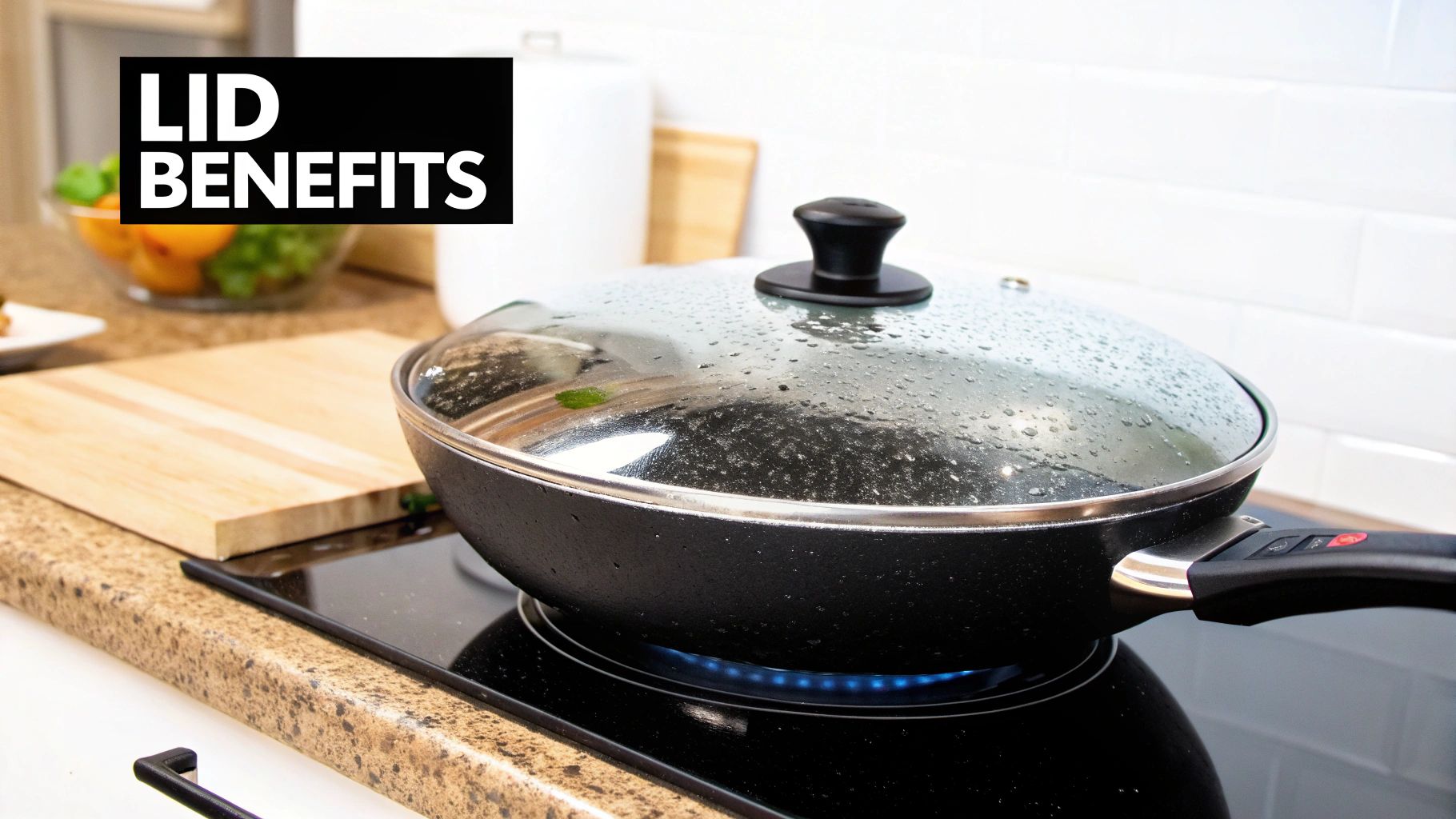
This one small action triggers a cascade of benefits, making a large skillet with a lid an absolute must-have for anyone serious about efficient, flavour-packed cooking.
Mastering Heat and Moisture
At its core, a lid is all about controlling two things: heat and moisture. By trapping the steam that comes off your food, a lid keeps meats juicy and tender, helps vegetables stay succulent, and stops your sauces from reducing into a thick paste. This moisture control is the secret behind so many cooking methods that are just impossible in an open pan.
This efficiency is something Aussies really appreciate, with most households now owning at least one quality skillet. A snug-fitting lid is a game-changer for energy efficiency, trapping heat so well it can slash cooking times by 20-30%. For busy families and professionals trying to get a healthy meal on the table fast, that's a huge win. You can dive deeper into these Australian cookware trends to see how our kitchens are evolving.
So, what does this actually mean for your weeknight dinners?
- Braising: You can get a beautiful, deep sear on a tough cut of meat, then pour in some liquid, cover it, and let it bubble away until it’s melt-in-your-mouth tender.
- Steaming: A splash of water in the bottom of the skillet, your veggies on top, and the lid on. The trapped steam cooks them to perfection in minutes, locking in all their colour, nutrients, and flavour.
- Simmering: A lid is your best friend for maintaining that gentle, consistent heat needed to simmer a bolognese for hours without it drying out.
The Great Debate: Glass vs. Metal Lids
Of course, not all lids are made equal. The material really does matter, and the two main players you’ll find are glass and metal. Each has its own pros and cons.
Glass Lids: The obvious win here is visibility. You can keep an eye on what’s happening inside without lifting the lid and letting all that precious heat and steam escape. This is perfect for more delicate jobs like poaching fish or simmering rice, where a stable temperature is absolutely critical.
Metal Lids: Usually made from stainless steel or cast iron, these lids are the workhorses. They're incredibly durable and can almost always handle much higher oven temperatures than glass lids can. They also tend to create a tighter seal, which is exactly what you want for serious, moisture-locking braises and stews.
A lid isn't just an accessory; it's a multiplier of your skillet's capabilities. It allows you to sear, sauté, braise, steam, and simmer all in one pan, turning a simple piece of cookware into a kitchen powerhouse.
Spotting the Design Details That Truly Matter
Once you’ve picked a material, the real magic is in the small stuff. It’s the thoughtful design choices that separate a decent skillet from one you’ll fall in love with and use every single day. These details might not jump out at you from a product photo, but they make all the difference when you’re actually cooking.
Think of it like buying a car. Two models might have the same engine, but it’s the one with the comfy seats, responsive steering, and a dashboard that just makes sense that you’ll actually enjoy driving. It’s the exact same story with a large skillet with a lid. The handle, the base, and the shape of the walls are what will make or break your cooking experience.
Handles That Offer Comfort and Control
You’re going to be holding this thing a lot, so the handle is a big deal. A badly designed handle can make a heavy pan feel clumsy and even dangerous, especially when it’s loaded with sizzling-hot food.
Here’s what to look for in a great skillet handle:
- Ergonomic Shape: It should feel natural in your hand, giving you a solid grip without making you bend your wrist at a funny angle.
- Oven-Safe Materials: A stainless steel or titanium handle is a must. This lets you sear a steak on the cooktop and then slide the whole pan straight into the oven to finish—a technique every home cook should have up their sleeve.
- Secure Attachment: Rivets are the tried-and-true standard for a reason. They create a super-strong bond that won't get wobbly over time. Welded handles look sleek, but make sure they come from a reputable brand known for quality.
- Helper Handle: For any skillet 12 inches or bigger, a small second handle on the opposite side is a godsend. It gives you two-handed control, making it so much easier and safer to lift and pour.
Why a Perfectly Flat Base Is Crucial
The bottom of the skillet is where all the action starts—it's the crucial link to your stove. If you have a modern induction or ceramic glass cooktop, a perfectly flat base isn’t just nice to have; it’s non-negotiable for getting the heat to transfer properly.
A warped or uneven base won’t make full contact with the heating element. This leads to annoying hot spots that scorch your food and cold spots where things just steam. A solid, heavy-duty base not only heats up more evenly but is also much less likely to warp from high heat, meaning your investment will actually last.
A skillet with a warped bottom is like trying to cook on a wobbly table. A perfectly flat base ensures a stable, consistent connection to the heat, which is the foundation of all great cooking.
Sloped Sides for Sautéing and Tossing
Last but not least, take a look at the pan’s walls. While straight, tall sides are good for deep-frying, a skillet designed for versatility will have gently sloped sides.
This shape makes it a breeze to get a spatula under a piece of fish or a pancake for a clean flip. The flared rim also helps moisture evaporate quickly when you’re reducing a sauce and makes it feel natural to toss vegetables just like a pro chef. For a pan that’s meant to be your everyday workhorse, those subtle curves are everything.
Cooking and Caring for Your Large Skillet
Buying a great large skillet is the first step, but really making it a lifelong kitchen partner comes down to how you use it and care for it. It's all about understanding how your pan responds to heat and knowing the right way to clean it, which is what will keep it turning out amazing meals for years, even decades, to come.
The secret to getting that perfect, crispy sear on your food isn't just about blasting the heat. It’s about pre-heating your pan correctly. The trick is to pop your dry skillet on the burner over medium heat for a few minutes. Here's a simple test: flick a drop of water onto the surface. If it just sizzles and evaporates straight away, it's not quite hot enough. What you're looking for is for that drop of water to form a little bead, like mercury, that dances across the pan. That's when you know it's at the perfect temperature to start cooking.
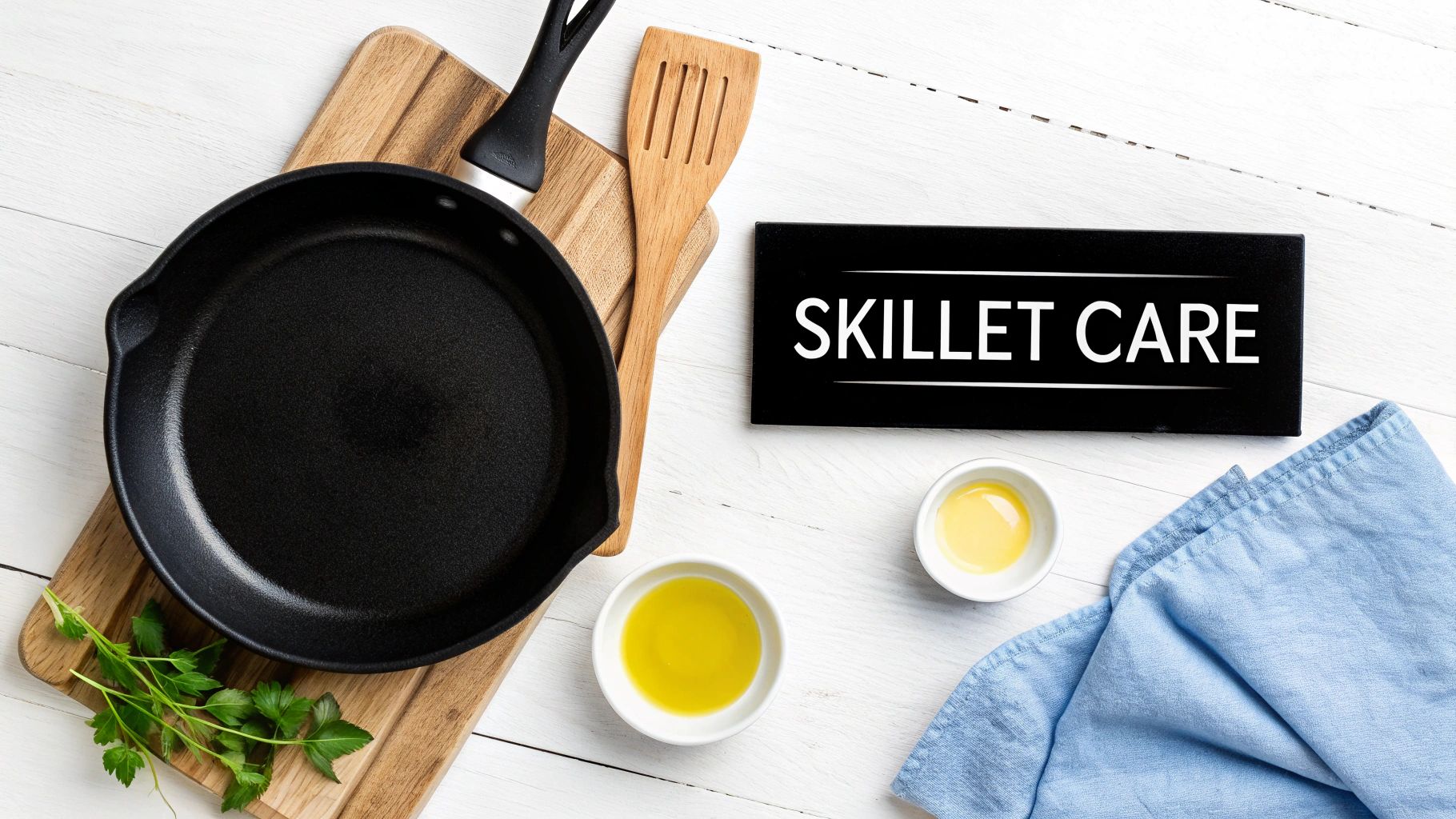
Once you’ve got the pre-heating down, a whole world of cooking techniques opens up. For instance, knowing how to cook salmon in pan with that perfect crispy skin becomes a whole lot easier.
Material-Specific Care Instructions
Just as every material cooks a little differently, they all need their own unique kind of TLC. Following the right care routine is the key to protecting your investment and keeping your pan in top shape.
-
Cast Iron: The number one rule here is to avoid harsh soaps. They'll strip away that beautiful seasoning – the natural, non-stick layer you build up with every use. After cooking, just scrub it out with hot water and a stiff brush. If you have some stubborn stuck-on bits, you can simmer a bit of water in the pan or use coarse salt as a gentle abrasive. The most important part? Always dry it completely on the stove over a low heat, then wipe a whisper-thin layer of cooking oil inside while it's still warm.
-
Non-Stick: These pans need a gentle touch. Always stick to wooden or silicone utensils to prevent scratches, and make sure the pan cools down completely before you wash it. A soft sponge and some mild dish soap are all you need; anything abrasive will ruin the coating in a heartbeat. For a deeper dive, our guide to caring for a https://everti.com.au/blogs/news/non-stick-frying-pan-with-lid has some extra tips.
-
Stainless Steel & Pure Titanium: These are your low-maintenance workhorses. They can handle a good scrub and are generally fine to go in the dishwasher. If you get some discolouration or burnt-on food, a simple paste of bicarbonate of soda and water will get it looking new again. Titanium is especially easy to care for since it's so non-porous and resists corrosion like a champ.
The Art of Deglazing
One of the most satisfying techniques you can master with your skillet is deglazing. After you've seared a piece of meat or some veggies, you'll see all those little browned bits stuck to the bottom of the pan. Those bits are called the fond, and they are pure, concentrated flavour.
Don't scrub away those browned bits—they are culinary gold! Deglazing the pan is the secret to creating rich, complex pan sauces with incredible depth in just a matter of minutes.
Here’s how it works: take your main ingredients out of the hot pan, then pour in a splash of liquid – wine, stock, or even just water works. As the liquid hits the hot pan and starts to sizzle, use a wooden spoon to scrape up all those delicious browned bits from the bottom. The liquid lifts them right off, creating an instant, flavourful base for a restaurant-quality sauce. It’s a simple move that turns your skillet into a complete meal-making machine.
Why Pure Titanium Is the Ultimate Choice for Healthy Cooking
When you put health, performance, and longevity at the top of your kitchen wish list, pure titanium really stands out from the crowd. It’s not just another metal pan; it’s a conscious choice that brings complete peace of mind, especially if you want to be absolutely certain about what’s going into your family's food.
Think about it. Coated pans inevitably degrade over time, but a large skillet with lid made from pure titanium is in a different league entirely. Cookware like Everti's SGS-verified 99.9% pure titanium skillets feature an uncoated surface. This means zero BPA, zero microplastics, and zero hidden chemicals. The surface that touches your food is completely inert and non-toxic, so you can be confident nothing will ever leach into your meals.
This commitment to purity is a game-changer for everyday cooking. You can simmer acidic tomato sauces or whip up a citrus glaze without a second thought about metallic tastes or the chemical reactions that can happen with other pans. It’s the perfect clean slate for whatever you’re inspired to create.
Built to Last a Lifetime of Pure Performance
The great thing about titanium is that its benefits go well beyond being non-toxic. It's a truly remarkable material—incredibly strong yet surprisingly light, which makes it a genuine pleasure to use. A large skillet feels perfectly balanced and easy to handle, not heavy and awkward, even when it’s brimming with food.
Better yet, it's exceptionally resistant to corrosion and rust. This is a massive plus, especially in Australia's humid coastal areas where rust can be the downfall of lesser cookware. On top of that, Everti's titanium essentials have natural antibacterial properties, which have been verified by SGS testing to reduce bacterial growth by up to 99.9% compared to other common surfaces.
Choosing pure titanium is an investment in certainty. You get a skillet that is not only built to last a lifetime but also actively contributes to a cleaner, safer, and more hygienic cooking environment from the very first use.
A Surface That Puts Your Food and Health First
At the end of the day, the real appeal of pure titanium comes down to its integrity. There are no coatings to scratch, no chemicals to worry about, and no mysterious materials hidden in layers. It directly answers the growing demand for clean, simple, and reliable kitchen tools. If you’re searching for cookware that truly aligns with a healthy lifestyle, getting to know the benefits of pure titanium cookware is the best place to start.
Here’s a quick rundown of what makes it so special:
- Completely Non-Toxic: The surface is free from BPA, PFOA, and any microplastics.
- Naturally Hygienic: Its inherent antibacterial qualities help keep your cooking surface cleaner.
- Corrosion-Proof: It will never rust, guaranteeing a long life even in damp climates.
- Lightweight Strength: You get incredible durability without the back-breaking weight of cast iron.
Investing in a pure titanium skillet means you’re choosing a piece of cookware that will perform beautifully for decades while actively supporting your family’s health and well-being.
Got Questions About Large Skillets? We've Got Answers.
Choosing the right cookware can feel like a big decision, and it often brings up a few questions. Let's clear up some of the most common things people ask when they're on the hunt for the perfect large skillet with a lid.
What’s the Best Size for a "Large" Skillet?
For most households, especially a family of 3 to 5, the sweet spot is a skillet that's between 26 cm and 30 cm (that's about 10 to 12 inches). This gives you enough room to cook several pieces of chicken or fish, or whip up a one-pan dinner without everything piling on top of itself.
Think about it this way: overcrowding a pan is the number one reason food ends up steaming instead of getting that beautiful, crispy sear. Giving your ingredients some personal space is the secret to a golden-brown crust and perfectly even cooking.
Can I Use My Metal Spatula on This Thing?
That all comes down to what your skillet is made of. If you've got a non-stick or ceramic-coated pan, keep metal utensils far, far away. They'll scratch and ruin the surface in no time.
On the other hand, some materials are tough enough to handle it.
- Stainless Steel: Go for it. These pans are built like tanks.
- Cast Iron: A good metal spatula is practically a requirement for getting that great scrape.
- Pure Titanium: This stuff is incredibly durable and scratch-resistant, so metal tools won't be a problem.
Here's a simple rule to live by: if the pan has a special coating, play it safe with wood or silicone. If it's a solid slab of metal, you're generally good to go.
Is an Oven-Safe Skillet Really a Must-Have?
You can certainly get by without one, but an oven-safe skillet opens up a whole new world of cooking. It’s what lets you get a perfect sear on the stovetop and then transfer the whole pan to the oven to finish cooking gently.
This stovetop-to-oven method is a game-changer for so many recipes—think thick-cut steaks, fluffy frittatas, cheesy baked pastas, and even those giant, gooey skillet cookies. It's a feature that takes a simple frying pan and turns it into one of the most versatile tools in your kitchen.
Ready to invest in a skillet that puts health and durability first? Explore the pure titanium collection from Everti and discover cookware designed to last a lifetime.